Tom Burgess and Patrick Hazlewood’s relationship
My PolicemanTom Burgess and Patrick Hazlewood’s relationship is the novel’s concealed emotional center: a powerful attachment that develops alongside Tom’s marriage to Marion and is constrained by a society in which same-sex love could bring disgrace and legal punishment. The relationship is shown through Marion’s and Patrick’s accounts, which illuminate different parts of the bond while exposing the cost of a life divided between private desire and public respectability. Its consequences continue long after the choices of the 1950s, returning in the silence and caregiving of 1999.
Introduction and Growing Attachment
Marion first encounters Patrick as the curator Tom has praised to her: Keeper of Western Art at Brighton Museum and Art Gallery, a cultured but approachable man with ideas for making the museum more open to the public. When Marion and Tom meet him, Patrick speaks about lunchtime concerts and bringing schoolchildren into the galleries. Marion likes him, and she recognizes Tom’s intense attentiveness as he listens. Tom, she concludes, likes Patrick too; his concentration seems to her unlike ordinary politeness, as though he is absorbing every phrase and gesture.
The first meeting therefore carries a double meaning. For Marion it is a pleasant introduction to Tom’s friend, and Tom even tells her that she has started something after they leave the museum. In retrospect, however, the meeting marks the beginning of an attachment she cannot yet name. The two accounts make that difference in knowledge part of the relationship’s structure: Marion records what she observes without understanding its full significance, while Patrick’s journal later makes clear how much emotional importance he has already attached to Tom.
By the spring, Marion and Tom see one another at least weekly, usually in Patrick’s presence. Tom has kissed Marion’s cheek and held her hand, but these gestures do not satisfy her growing desire for a settled future. Her impatience is sharpened by the pressure she feels as an unmarried woman: she fears being judged as a woman left on the shelf and does not want the life associated with Julia, a single teacher who works for her own living. Her wish to secure Tom in marriage develops within that pressure, while the meetings with Patrick continue around it.
Patrick’s journal, dated 29 September 1957, records his decision to write again despite knowing that putting desire on paper is dangerous. He says he has met someone, identifies himself as thirty-four, and insists that he has not given up. His account presents his attachment as deliberate and persistent rather than casual: he wants more than brief encounters and believes that patience may allow him and Tom to become friends. The contrast with Marion’s account is sharp. She experiences an apparent courtship with Tom; Patrick records a private hope that Tom will choose a deeper connection with him.
Secrecy, Marriage, and Public Risk
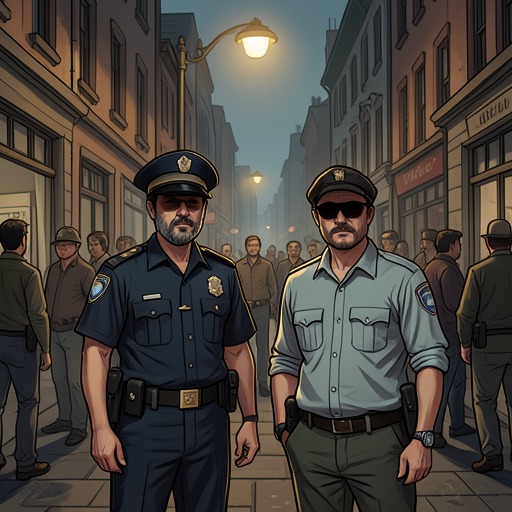
Patrick describes Tom as his policeman, a phrase that binds affection to danger. Tom’s position in the police force makes the relationship especially precarious in a period when men of “minority status” faced condemnation by society and the law. The novel’s account frames marriage to a woman as the safer public course for a policeman, even as Tom’s attachment to Patrick remains powerful. Their intimacy therefore has to coexist with a respectable outward life that cannot openly acknowledge it.
The Brighton Criminal Investigation Department scandal of October 1957 intensifies Patrick’s anxiety. Newspaper reports accuse the Chief Constable and a detective inspector of conspiracy. Patrick initially feels satisfaction that senior police officers are facing public disgrace, but then worries that ordinary, honest members of the force will bear the consequences of their superiors’ conduct. His concern turns quickly to Tom and the pressure the scandal may bring upon him. Patrick can do nothing but wait for Tom to return, a small instance of how the risks surrounding the relationship shape even periods of separation.
Tom and Marion marry on 29 March 1958 after an engagement of less than a month. Marion remembers the heavy rain and initially interprets it as a kind of baptism into a new life. In retrospect, she questions Tom’s haste, wondering whether he wanted the marriage completed before he could change his mind. The wedding does not erase the relationship with Patrick; rather, it formalizes the public division that has already been gathering around Tom. Marion’s hopes for marriage and Patrick’s continuing attachment to Tom become entangled in an arrangement none of them can openly resolve.
Exposure and Consequences
The relationship’s public danger becomes explicit in the courtroom. Patrick’s account of his trial describes a prosecution in which Laurence Cedric Coleman gives evidence against him, and a prosecutor directly puts the allegation that Patrick had an indecent relationship with Marion’s husband. Marion answers no when asked whether she denies that Patrick is a homosexual. The exchange exposes the hidden connection in the language of accusation and legal procedure. The courtroom’s warning that the case would contain material considered offensive to ladies, followed by the women’s rapid departure from the public gallery, also shows the atmosphere of shame surrounding the proceedings.
For Patrick, the trial and imprisonment turn the private bond into a source of profound isolation. In prison he receives a short formal letter from Marion requesting permission to visit. He has heard nothing from Tom since his arrest and can barely bear to consider Tom’s silence; at first he even hopes Tom might appear in the Scrubs to serve a sentence, simply so that he could see him. Patrick allows himself to wonder whether Marion might carry a message from Tom. The hope itself registers how thoroughly the relationship has been reduced to waiting, inference, and absence.
The Relationship in Later Life
In November 1999, Marion is caring for Patrick after his strokes. She insists that he come to her home, though Tom had not wanted him there. She hopes Tom will join them, look at Patrick, and recognize that Patrick still loves him. Instead, Tom withdraws further: after Marion tries to have Patrick sit at the family table, Tom stops breakfasting with them. Marion, who once experienced Tom’s absence as a relief, now wants him beside her and Patrick, hoping that his presence might break the silence between them.
Marion’s later travels reveal how the relationship continues to occupy her imagination. She takes an organized trip to Verona and visits Venice alone, a city she has never mentioned to Tom because it is among the words they no longer speak after Patrick took him there. As she walks through Venice, she imagines Tom and Patrick arriving together, crossing bridges, waiting for water buses, and sharing the city’s sights. These are Marion’s imagined scenes, not a firsthand account of their trip; their importance lies in how she revisits the relationship she once only partly understood. The visit becomes a catalyst, and she seeks Patrick out and brings him back.
Narrative and Thematic Significance
The relationship is reconstructed through two acts of writing: Marion and Patrick each write about the man at the center of their lives. Their accounts do not offer an uncomplicated romance. They show an attachment with emotional force but limited freedom, in which public marriage, professional danger, legal exposure, and private longing continually press against one another. Tom’s attentiveness to Patrick at the museum, Patrick’s journaled resolve not to give up, and Marion’s later effort to reunite the two men form a sequence of recognition, concealment, and belated care.
The novel also refuses to make the passage of time a simple resolution. Marion’s marriage to Tom lasts for decades, but neither duration nor respectability settles what remains between Tom and Patrick. In 1999, Patrick’s need for care brings the concealed past into the household, while Tom’s silence shows that proximity does not guarantee reconciliation. Marion’s decision to bring Patrick home gives their connection renewed presence, but the evidence leaves the hoped-for reunion uncertain. The relationship’s lasting significance lies in that unresolved tension: a love powerful enough to organize three lives, yet repeatedly forced into secrecy and silence by the world around it.