Jenifer and Eric's Arranged Engagement Revelation
My Vampire Love (Completed)Jenifer and Eric's Arranged Engagement Revelation is the decisive disclosure that converts a private family secret into the central conflict of Jenifer's life. At seventeen, Jenifer learns that Eric's father, Dr. Wilson, has kept her alive since birth by supplying the medication that controls her illness, but that this help was conditional: if Eric chose her, she would marry his son. The revelation makes survival itself resemble a debt, and marriage the demanded repayment. It also redefines Jenifer and Eric's relationship, since Eric has known about the arrangement since birth while Jenifer has been the only person excluded from the decision.
Causes and Hidden Bargain
Jenifer's parents explain that doctors once gave her only days to live. Dr. Wilson intervened, providing the medication that allowed her to survive and made her strong enough to live a life that appeared ordinary. His assistance was not presented as an open-ended gift. He helped on the condition that, when Jenifer reached seventeen, she would marry Eric if Eric decided to do so. Her parents therefore understand the arrangement as the price of refusing death: without Dr. Wilson's help, Jenifer would have died at birth; with it, she has been raised under an undisclosed matrimonial obligation.
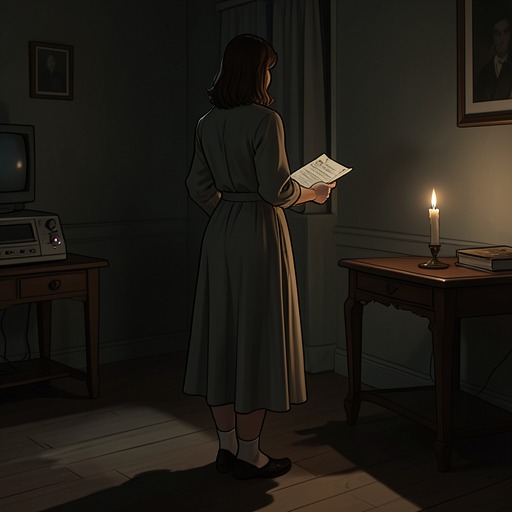
The disclosure is made in Jenifer's mother's old living room, in the presence of her parents and Eric's parents. Jenifer notices the visual contrast between the two families: Eric's mother, with her long blonde hair, bright blue eyes, flawless skin, and almost angelic beauty, seems radically out of place in the stuffy room. That contrast anticipates the larger revelation that the Wilsons belong to a world whose power has shaped Jenifer's ordinary human life from behind the scenes. The event is not merely a surprise engagement announcement; it is an exposure of the hidden system through which medicine, family loyalty, and marriage have been joined.
The Revelation and Immediate Rupture
When Jenifer's mother tells her that she is engaged to Eric, Jenifer is rendered temporarily speechless. Her stomach tightens, her jaw drops, and she stares blankly at her parents. Her father then confirms that the arrangement has existed since her birth. The explanation does not initially produce the expected explosion of anger. Jenifer instead describes herself as blank and cold, as though the years of pain she has learned to suppress have temporarily turned emotional shock into numbness.
That numbness breaks when her parents insist that they had no choice. Her mother and father repeat that Dr. Wilson saved Jenifer and that they owe him everything. Jenifer hears the claim differently: the adults have concealed the terms of her survival and converted her continued existence into a reason she must surrender her future. She accuses her mother of keeping her in the dark and lying throughout her life. The event's value shift is therefore from apparent security to betrayal. The medication that once signified rescue becomes evidence of dependence, while the engagement becomes a threat to freedom.
Eric's role intensifies the rupture. When Jenifer turns to him, she realizes that his earlier words and behavior have been shaped by knowledge she did not possess. Eric admits that he has known about the arrangement since birth. Jenifer concludes that everyone knew about her wedding except her. In anger, she tells him that he may have her if he chooses, but promises to make their married life hell; at the doorway, she recalls his earlier assertion that she hated him and sarcastically congratulates him on the engagement. Her response is not consent but defiance, an attempt to reclaim agency by making the imposed marriage emotionally unlivable.
Freedom, Illness, and the Supernatural Stakes
Jenifer's refusal is inseparable from her illness. She has survived by refusing to speak about overwhelming pain and by hiding inside a numb fog. When she stops taking the small brown pills, she understands that her body will begin shutting down: within days she may be confined to bed and then die. At one point, death appears to her as a possible escape from pain, guilt, and heartbreak. Her later act of taking three pills from the bottle, dropping them into the toilet, watching them dissolve into faint pinkish-red water, and flushing them away gives the engagement revelation a physical consequence. Her rejection is not symbolic only; it places her life in immediate danger.
Jenifer also tries to conceal the seriousness of her condition from Eric. She tells him that she has always been sick but is otherwise like everyone else, and that the miracle pills prevent ordinary symptoms such as fainting, vomiting, and unexplained nosebleeds from meaning that her body is failing. The explanation is both a defensive lie and an accurate account of how medication has allowed her to pass as normal. The engagement thus rests on a contradiction: Jenifer wants to be treated as an autonomous person, yet the treatment that permits that autonomy is controlled by the family whose bargain denies it.
The later explanation of the arrangement adds a supernatural dimension. Eric tells Jenifer that she is the first human who can become a true pure blood because of the illness with which she was born. She is consequently both the most endangered and the most protected human. She must marry Eric before she turns eighteen because, at eighteen, she is expected to awaken and become a vampire. The marriage is connected not only to family obligation but also to bloodline continuity: Eric's blood already runs through her veins, and their future child is expected to be a pure blood. Her body is therefore treated as a site of medical intervention, supernatural transformation, and the production of a stronger vampire lineage.
From Coercion to Emotional Reinterpretation
Jenifer initially distinguishes freedom from happiness. When Eric asks why she is fighting the possibility that they could be happy together, she answers that she would rather be miserable for her entire life and free than happy in a marriage she never wanted. Her objection identifies the core ethical problem of the arrangement: even a loving outcome cannot erase the coercive conditions under which the choice was made. Eric's hope that their happiness might make the arrangement acceptable does not answer her fear of being trapped.
The relationship nevertheless develops inside that conflict. Eric watches Jenifer closely after she faints, grows increasingly worried about her health, and becomes involved in preventing her self-destructive decisions. During one crisis, Jenifer submerges herself completely in a bathtub to drown out the voice outside the door. In another confrontation, Eric accuses her of trying to kill herself again and says that he cannot spend his life wondering whether she will shoot herself or jump from a building. His response combines love with surveillance and desperation with pressure. The arranged engagement is therefore never separated cleanly from Jenifer's medical vulnerability: Eric's desire to protect her can also resemble the control already exercised over her body.
The emotional direction changes when Jenifer recognizes what Eric means to her. She realizes that she cannot sleep when he is absent, cannot breathe properly when she does not know whether he is safe, and feels physically anxious when he is away. The realization arrives with startling force: she understands that she is in love with Eric Wilson. This does not erase the original coercion, but it changes the personal meaning of the promised marriage. What began as an imposed future becomes a relationship in which Jenifer eventually discovers reciprocal attachment, even though the discovery is shadowed by her inability to separate love from the conditions that first bound them together.
Consequences and Final Reframing
The revelation governs the novel's later movement from hostility toward commitment. Jenifer's resistance is repeatedly expressed through refusal, secrecy, and bodily risk, while Eric's attachment appears through insistence that she return to him and through his declaration that he loves her. Their conflict reaches a point at which the marriage is no longer only an external obligation but also the structure within which they must decide whether affection can become a chosen bond.
By the wedding, Jenifer can call Eric her husband, though she acknowledges that becoming Mrs. Eric Wilson will take time to feel natural. The ceremony includes a ten-tier plain white cake decorated with cream and white flowers, a first dance as husband and wife, and the song "All My Life" by K-ci and Jojo, which Eric selected after hearing Jenifer sing it. The wedding is described as enormous, beautiful, and widely discussed, but its perfection does not come from the dress, decorations, or scale. It comes from the person held tightly in Jenifer's arms. The ending therefore reframes the engagement revelation without entirely resolving its moral contradiction: Jenifer's imposed marriage becomes, in her later understanding, a declaration of love and belonging, yet the story preserves the fact that her freedom was withheld until love developed inside the cage.