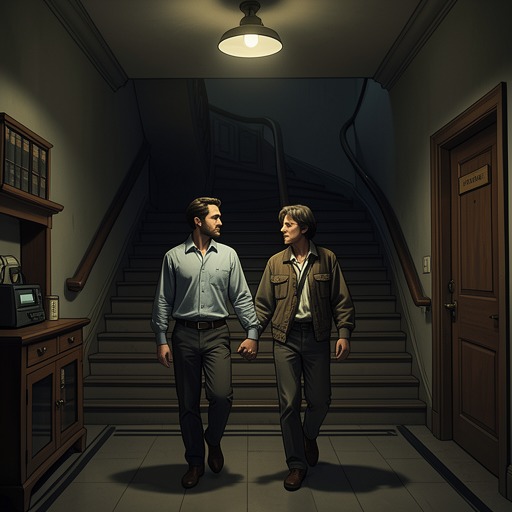
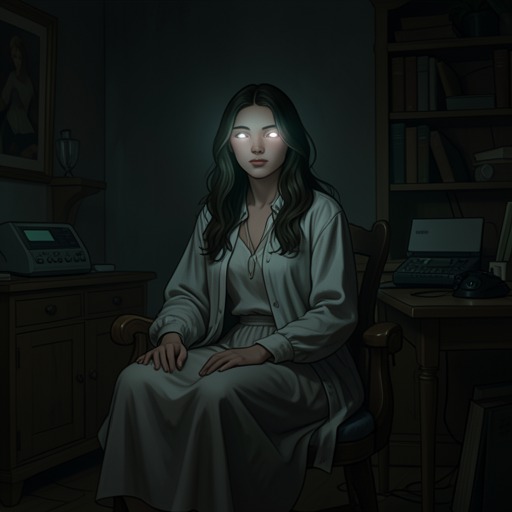
Jenifer and Eric's Wedding Day
My Vampire Love (Completed)Jenifer and Eric's Wedding Day marks the point at which Jenifer stops treating her marriage to Eric Wilson as an imposed fate and claims it as her own choice. The wedding is still surrounded by the pressures that made it necessary—her impending eighteenth-birthday awakening, her rare status as a human capable of becoming a true pureblood vampire, and the desire to preserve vampire supremacy—but its decisive meaning changes when Jenifer recognizes that she loves Eric and chooses to marry him for that reason rather than because Katalin, her parents, or the Underworld require it.
Causes and Background
The wedding grows out of a conflict between freedom and supernatural obligation. Jenifer has been told that she must marry Eric before she turns eighteen because, at awakening, she will become a vampire, and their union could produce a pureblood child. Her illness makes her an unprecedented case: no ordinary human had previously been capable of becoming a true pureblood, so she is simultaneously one of the most endangered humans and one of the most heavily protected individuals in the supernatural world. Marriage therefore functions as political strategy, bloodline preservation, and personal confinement at once.
Jenifer understands the coercive structure clearly enough to resist it. When Eric asks why she fights the bond between them, she says that she would rather be miserable for her entire life and free than happy inside a marriage she never wanted. Her refusal is not simple indifference to Eric. It is a defense of self-determination against an arrangement made before she could consent, even though Eric has treated her with kindness and has repeatedly tried to reduce the harm the arrangement causes her.
By the eve of the ceremony, however, Jenifer's feelings have changed in a way she can no longer deny. She realizes that she cannot sleep when Eric is absent, cannot breathe properly when she does not know whether he is safe, and experiences the physical agitation of love as butterflies, a pounding heart, and painful nervous energy. The recognition is abrupt but not unsupported: the wedding becomes the culmination of a long movement from resistance, through attachment and dependence, to an emotionally acknowledged love.
The Ceremony and Its Crisis
On the night before the wedding, Jenifer prays for the first time since Daren died, asking for courage and strength to reach the altar without surprises. She still does not want the wedding in the abstract, and she knows she is not ready to be married or to become a wife. Yet she decides that she will walk down the aisle because she loves Eric and does not want to cause him further pain. The decision remains morally unsettled: it is an act of love made within a system that has limited her choices.
The ceremony presents that contradiction through Jenifer's body. In a hand-stitched white gown covered with cream and gold beads and sequins, she looks to herself like a princess or a perfect doll rather than the ordinary seventeen-year-old girl who had recently lived in Trinidad. The dress and the lavish setting make the event appear complete and ceremonial, while her panic exposes the private cost beneath the spectacle. As her father leads her toward Eric beneath lights and flowers, her heart pounds violently, her fingers sweat around the bouquet, her throat constricts, and her body finally stops her at the aisle.
At that instant, the threatened wedding becomes a vision of catastrophe. Katalin appears behind Jenifer with a blue, pulsing shield, and the vampires bow as the doors slam shut. The scene turns the ceremony's promise of union into an image of violence, death, and supernatural power. Jenifer experiences the consequences of not marrying Eric as though she has lived them: Eric and the people she loves are dead, and the loss repeats the devastation associated with Daren's death. The wedding thus becomes a test in which the value at stake shifts from freedom to life, then from life to the meaning of love itself.
The vision ends when Jenifer finds herself back in the exact position in which she stopped, still holding the bouquet, still wearing an untainted dress, and still holding her father's arm. Nothing in the physical ceremony has changed; what has changed is her understanding. She recognizes that the horror was a vision of what might happen if she refused to marry Eric, not an event that has actually occurred. The experience does not erase the coercion surrounding the marriage, but it forces her to confront the depth of her attachment and the unbearable possibility of losing him.
Choice, Vows, and Transformation
After the vision, Jenifer continues down the aisle. Her father tells Eric to take care of her, and Eric leads her up the three steps to the priest. The gesture converts the wedding from a procession toward an imposed destiny into a handover witnessed by family and community, while Jenifer's own movement supplies the consent that the earlier arrangement could never provide. Her relief at finding Eric alive and smiling is inseparable from the vision's simulated grief: she has seen his last breath and heard his heart stop, and his continued presence now feels miraculous.
Jenifer's vows explicitly revise the meaning of the day. She tells Eric that he is her life, that he stayed with her while she was hurting and angry, and that he brought light into a world that had been falling apart. She acknowledges that the love was not immediate, but insists that it is real now. Most importantly, she declares that she wants to marry him not because Katalin or her parents are forcing her, but because she wants to share the rest of her life with Eric Wilson. The statement does not deny the history of pressure; it distinguishes her present choice from the conditions that first produced the engagement.
Eric answers her love, and the kiss makes the public ceremony emotionally secondary. The crowd's applause, exclamations, and the priest's complaint about the unfinished wedding recede into background noise as Jenifer holds Eric. The wedding becomes sacred to her not because the decorations or supernatural grandeur confer meaning upon it, but because the ritual now expresses a reciprocal bond she has finally accepted.
Aftermath and Significance
The remainder of the wedding passes in a blur, but its concrete rituals confirm the new social status that Jenifer has entered. She and Eric cut a ten-tier white cake decorated with cream and white flowers, share their first dance as husband and wife, and hear the song "All My Life" by K-ci and Jojo, which Eric requested after hearing Jenifer sing it. The extravagant scale of the celebration makes the ceremony a major public event, yet Jenifer separates spectacle from significance: the dress, decorations, size, and reputation of the wedding do not make it perfect.
For Jenifer, perfection comes from the identity of the person she marries. The day closes the distance between the frightened girl who wanted freedom at any cost and the awakened pureblood vampire who chooses love without pretending that the path to that choice was harmless. Her wedding to Eric is therefore both an incorporation into the Wilson family and a personal act of self-definition. She begins the day fearing that she is being turned into someone she does not recognize; she ends it as someone who can name what she wants, accept the danger of loving another person, and make the marriage emotionally hers.
The day also gathers the story's recurring structures into one ritual. Bloodline, family trees, twinship, forbidden attachment, protection, death, and awakening all converge in the aisle. Daren's death remains part of the emotional background, while the vision makes Eric's possible death immediate enough to transform Jenifer's understanding. The wedding does not resolve every contradiction between romantic fulfillment and institutional control, but it dramatizes a crucial change: a relationship that began as an arranged engagement becomes, in Jenifer's interpretation, a chosen lifelong bond. Its final promise is consequently less that coercion never existed than that love has become the meaning she assigns to the future.