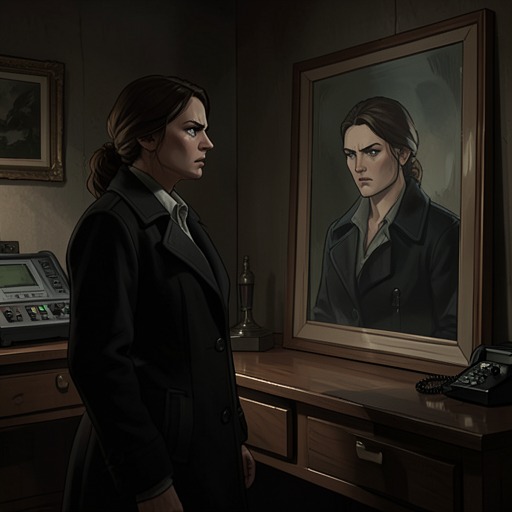
Jenifer's refusal to take the medication
My Vampire Love (Completed)Jenifer's refusal to take the medication is a recurring action in which treatment becomes inseparable from coercion, despair, and concealed supernatural design. The pills keep her alive, but they also embody the fact that her body has been managed since childhood for purposes she was never permitted to understand. Her decision to reject them therefore threatens not only her health but the vampire order that has made her illness part of an experiment in producing pure-blood vampires.
Immediate Causes and Psychological Crisis
Jenifer's refusal emerges from an already severe emotional collapse. After the night that shattered her, she avoids speaking about what happened because silence is the only survival method she knows. She suppresses the overwhelming ache, hides inside a numb fog, and regards emotional blankness as the condition that allows her to rise each morning. Her grief and guilt are not presented as passing sadness: the narration connects them directly with thoughts of taking a gun and shooting herself, making the medication refusal part of a sustained suicidal crisis rather than an isolated act of noncompliance.
The crisis is intensified by physical weakness. After several days without the small brown pills, Jenifer understands that her body is beginning to shut down; she expects that a few more days will leave her bedridden and eventually dead. The possibility of death appears to her as an escape from pain, guilt, and heartache. This reasoning is deliberately unstable: she does not reach a clear decision, but allows exhaustion and bodily deterioration to carry her forward. She falls asleep without caring whether she wakes, while her weakness makes ordinary movement dangerous and leaves her swaying against the bed frame and struggling halfway down the stairs.
The Destruction of the Pills
The refusal becomes concrete after Jenifer vomits and Eric asks whether she took her medication. She answers no, then takes control of the medicine bottle when he tries to open it. After securing herself in the bathroom, she removes three brown pills and studies them in her hands before dropping them into the toilet. They dissolve in the water, staining it a faint pinkish-red, and she flushes them away before replacing the bottle and returning to Eric.
The scene makes concealment part of the action. Jenifer lies about being fine, rejects food by saying she is not hungry, and shuts herself in the bedroom to sleep. Her refusal is thus neither a public declaration nor an openly negotiated choice; it is a private attempt to reclaim control over a body watched by Eric and regulated by medication. The pills' color and dissolution also give the act a material finality. What had seemed like ordinary medicine is revealed through the red stain as something connected to blood, even before the full explanation of its origin is disclosed.
Medical Dependence and Hidden Blood
Eric initially understands the refusal through its immediate medical consequences. Jenifer explains that she has aplastic anemia, a condition in which her bone marrow cannot produce blood. Without the medication, she could die from an ordinary flu or bleed to death from a wound that would not normally be fatal. Her body cannot make red blood cells, white blood cells, or platelets, so the pills are not optional relief but the mechanism that has allowed her to live as though she were like everyone else.
The later revelation transforms the meaning of the refusal. Eric explains that the pills are actually his blood, confined to a weaker, smaller form. That blood heals Jenifer without changing her yet, and it has been sustaining her throughout her life. A refusal that first appears to reject treatment therefore also rejects an intimate biological dependence on Eric and the secret arrangement surrounding her survival. The action exposes the violence of a cure that is simultaneously care, concealment, and preparation for transformation.
Jenifer's body has been made central to a political experiment. The vampires began seeking a way to create pure-blood vampires because purebloods preserve vampire dominance over witches, shifters, and other supernatural species. Earlier attempts involving mothers, fetuses, and pregnancy produced hybrids rather than the desired result. The experiment required a child unable to produce blood cells, so that vampire blood could be supplied and made to function within the child's body. Jenifer's severe aplastic anemia is the reason she was selected, making her both the first living subject capable of becoming a true pureblood and the most endangered and protected human in the story.
Escalation and Intervention
The medication refusal does not remain a single bathroom action. Jenifer's health repeatedly registers the consequences through vomiting, fainting, nosebleeds, exhaustion, and the threat of bodily failure. She insists to Eric that illness has always been part of her life and that symptoms do not necessarily mean her body is failing, but the explanation also functions as an effort to make him accept a danger she has normalized. Eric's worry becomes watchfulness; he begins monitoring her as though waiting for the next collapse, while Jenifer experiences that vigilance as another pressure surrounding her body.
Her self-destructive impulse later reaches beyond the pills. In a desperate attempt to silence an unwanted voice and escape contact, she slides beneath the bathwater until her entire body is submerged. A white, glowing fog appears, and Eric's voice reaches her through it. The episode connects medication refusal with a broader pattern of seeking disappearance: Jenifer repeatedly moves toward unconsciousness, drowning, or death when pain becomes unbearable. Eric responds with an emotional plea, insisting that she return and promising that he would even find a way out of the unwanted wedding. His intervention is intimate but also possessive, binding survival to the demands of love and relationship.
The pattern is eventually named directly when Eric accuses Jenifer of trying to kill herself again. He says he cannot spend the rest of his life wondering whether she will shoot herself or jump from a building, while Jenifer denies the attempt and is urged to be honest. The exchange shows the limits of romantic rescue. Eric's love keeps him present and desperate, but his fear also turns into surveillance and confrontation; Jenifer remains caught between being protected, being controlled, and trying to determine whether continued life can belong to her.
Wider Consequences and Significance
The refusal threatens a future built around Jenifer's body. She is expected to awaken as a vampire at eighteen, when dormant pure-blood power becomes active, and her survival is tied to the possibility of producing an exceptionally strong pure-blood child with Eric. The vampires' desire to remain at the top of the supernatural hierarchy makes her medication, awakening, marriage, and potential reproduction parts of one system. Her decision to destroy the pills interrupts that system at its most basic level: she refuses the substance that keeps the experiment viable.
At the same time, the action reveals that Jenifer's apparent weakness is politically valuable. Her illness is treated not simply as a condition requiring care but as the biological opening through which a species might reproduce its supremacy. The distinction between healing and manufacturing becomes impossible to maintain. The pills preserve her life, yet they also preserve an order that has concealed the truth from her; rejecting them is therefore both medically perilous and symbolically resistant.
The action remains tragic because it does not produce uncomplicated freedom. Jenifer's refusal harms the body she is trying to reclaim and places Eric in a position of urgent intervention. Her silence protects her from feeling but isolates her from assistance; her rejection of the pills asserts agency while also advancing the possibility of death. The recurring pattern of pills, blood, numbness, and attempted disappearance makes the refusal a central expression of her conflict: she wants release from the pain and systems that define her, yet every route toward release carries consequences for her body, her relationships, and the supernatural hierarchy built around her.