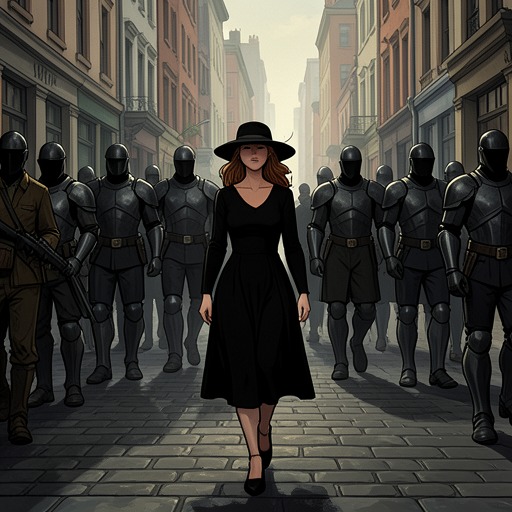
Mates chosen at birth
My Vampire Love (Completed)Mates chosen at birth is a hereditary marriage system within the supernatural bloodlines, designed to keep each lineage untainted by assigning partners before the individuals involved can choose for themselves. Its decisive significance lies in the way it converts intimacy into a political and biological institution: families preserve power through marriage, while individual desire must either submit to, resist, or reinterpret the arrangement.
Definition and Bloodline Purpose
Mates chosen at birth is presented as an established rule among the bloodlines. Partners are selected from birth so that the family line will remain pure, making marriage part of the wider struggle over lineage, succession, and supernatural authority rather than a private decision between two people. The Wilson family’s immense genealogy, displayed in a secret stone archive filled with hundreds of bookcases, glass showcases, and a wall covered with millions of connected names reaching back to Lilith, gives the system a material image: ancestry is not merely remembered but mapped, preserved, and used to organize the present.
The system is also connected to the hierarchy of supernatural species. Vampires currently rule the Underworld because purebloods hold power, although witches once controlled it through their numbers. The fear that witches, shifters, or another species might regain dominance leads the vampires to protect and reproduce pureblood strength. In this context, bloodline marriage is not simply a family custom. It is one method by which an established species attempts to preserve political control across generations.
The Arrangement of Jenifer and Eric
The system governs Jenifer Kate Lawrence’s relationship with Eric Wilson before either of them has meaningfully consented to it. Jenifer’s parents explain that she has been engaged to Eric since birth. Eric’s father, Eric Wilson, helped keep Jenifer alive on the condition that, when she reached seventeen, she would marry his son if Eric chose to do so. The arrangement therefore rests on both hereditary expectation and a life-saving debt: Jenifer’s survival is made inseparable from the marriage demanded in return for the medication supplied since her birth.
The arrangement is especially coercive because Jenifer believes she is an ordinary seventeen-year-old human girl suffering from aplastic anemia. Her bone marrow cannot produce red blood cells, white blood cells, or platelets, leaving her vulnerable to infection and potentially fatal bleeding without her pills. She later learns that the medication is actually Eric’s blood, weakened and confined so that it heals her without yet transforming her. Her illness, treatment, and future marriage have consequently been bound together by decisions made by adults and bloodline authorities long before she could understand the terms.
The revelation produces emotional numbness before open anger. Jenifer recognizes the brutal choice imposed on her: death at birth or marriage to a stranger she might hate for the rest of her life. Eric’s parents then refuse to postpone the wedding. Invitations have already been sent, the venue has been chosen, and the ceremony is fixed for just over a month later. The system thus operates through completed arrangements and narrowing time, leaving Jenifer to confront a future that has been prepared around her rather than chosen by her.
Earlier Generations and the Possibility of Attachment
Eric’s mother explains that the system did not automatically create love. Her own mate was Eric’s father, a man she initially hated because the life of the bloodlines had been forced upon her. Her father had become a priest in an attempt to escape the Midnight Society, but he died without freeing her from the world he rejected. She and Eric’s father began as enemies, fought constantly, and were once so unprepared for the arrangement that she stabbed him with a kitchen knife.
Their story supplies the system’s central precedent and its most troubling consolation. Eric’s mother eventually realized that she might not love his father at the beginning, yet their marriage could work and they could become happy. She later came to love him, but the sequence matters: affection followed the imposed arrangement rather than preceding it. Her experience becomes an argument that a forced beginning does not necessarily determine the emotional ending, while also revealing how the system asks its subjects to adapt themselves to an obligation they never selected.
That example is used to explain why Eric and Jenifer’s pain should not be treated as unique. Eric’s mother understands that Eric is suffering, but she also insists that Jenifer is suffering throughout the same process. The system distributes its pressure across the arranged couple, even though Jenifer bears the sharper loss of autonomy because she discovers the engagement as a seventeen-year-old with no prior knowledge of the decision.
Resistance, Rivalry, and the Limits of the Rule
The rule becomes most visible when Daren violates it. Daren was not supposed to form a romantic relationship with Jenifer; his permitted connection to her was meant to remain friendship. Instead, he fell in love with her, promised her a lifetime, and acted against a direct command from Katalin. His disobedience demonstrates that mates chosen at birth is enforced as a rule with penalties, not merely offered as cultural guidance.
Daren’s opposition also exposes a conflict between bloodline duty and personal loyalty. He was described as a fighter who, if he had survived, would have found a way to marry Jenifer even if doing so required breaking every rule and separating from the Underworld. His relationship with Jenifer therefore represents the strongest form of resistance available within the system: not a rejection of intimacy, but a demand that intimacy be governed by mutual commitment rather than hereditary assignment.
The revelation that Daren’s apparent return was actually his twin sister Dina intensifies the consequences of this conflict. Jenifer briefly believes she has seen Daren alive, only to learn that Dina caught her before she fainted. The discovery reopens the grief of Daren’s death and makes his broken rule more painful: the love he promised was real, but it cannot now become the marriage he intended. The system survives the individual who challenged it, while the emotional consequences remain with those left behind.
From Imposed Marriage to Chosen Commitment
Jenifer’s relationship with Eric eventually changes the meaning of the arrangement without erasing its coercive origin. At first, Eric is a stranger selected by a system that has already exchanged Jenifer’s survival for the possibility of marriage. By the time of the wedding, however, Jenifer understands herself as a pureblood vampire, one of the rarest purebloods to exist, and recognizes that the world surrounding her is no longer the ordinary human world she knew in Trinidad.
Her transformation makes the wedding a scene of radical discontinuity. Only a few months earlier, she had been living with her aunt, dating Daren, and regarding herself as an ordinary human girl. Now she stands before a full-length mirror in a hand-stitched wedding gown covered with cream and gold beads and sequins, unable to recognize the girl reflected there. The image of a perfect princess or Barbie doll captures the system’s ideal surface: beauty, purity, ceremony, and a body made presentable for a dynastic future. Yet Jenifer’s uncertainty about the person in the mirror shows that external perfection does not automatically produce an internal identity.
The decisive change occurs when Jenifer explicitly distinguishes her present commitment from the original compulsion. She tells Eric that she loves him and wants to marry him, not because Katalin or her parents are forcing her, but because she wants to share the rest of her life with him. Her declaration does not make the arranged system innocent; instead, it marks an attempt to reclaim choice from within an arrangement that began without it. The marriage becomes emotionally voluntary only after Jenifer has recognized the difference between inherited obligation and personal desire.
Narrative Significance
Mates chosen at birth structures the book’s central argument about whether love can emerge from an institution built on control. It links family, medicine, species survival, political supremacy, and marriage, showing that the same blood that heals Jenifer also marks her as a subject of a larger reproductive order. Jenifer’s body is preserved, transformed, and positioned for a bloodline future before she understands what is happening to her.
At the same time, the narrative refuses to reduce every arranged relationship to the same outcome. Eric’s parents move from hostility to love; Daren resists the system because his attachment to Jenifer becomes stronger than obedience; and Jenifer ultimately accepts Eric through a choice she insists is her own. These contrasting paths make the rule an unstable structure rather than an all-powerful destiny. It can command whom people are expected to marry, but it cannot by itself dictate whether the resulting relationship becomes hatred, rebellion, accommodation, or love.