Werewolf Execution Law
My Vampire Love (Completed)Werewolf Execution Law is the Underworld rule requiring werewolves to be killed on sight. The law rests on the belief that an awakened werewolf curse destroys a person’s control during the week of the full moon, making the transformed individual a lethal danger while also placing the entire species outside ordinary legal protection.
Definition and Rationale
The rule is explained through the distinction between werewolves and other supernatural beings. Werewolves are born human, but an inherited curse awakens and takes over; during the week of the full moon, they change into wolves and hunt. Once the transformation begins, they cannot control when they shift, what they do, or whom they attack. The condition is therefore described not merely as a physical alteration but as the loss of the human self to bloodlust.
Underworld society calls werewolves the “Cursed Species” because the curse is understood to make violence unavoidable. The law’s justification is consequently preventive rather than punitive: execution is authorized because a werewolf may become an uncontrollable killer, not because every individual has already committed a specific offense. In this system, the possibility of future violence is enough to erase the person’s claim to safety.
Operation Within the Underworld
The law functions alongside other supernatural hierarchies and restrictions. Eric explains that the ruling order is dominated by vampires, while witches, shifters, and other species remain possible rivals for power. Katalin can invoke the authority of that order against Eric, and Dean’s pack is assigned to guard Jenifer from Underworld matters. These details show a world in which legal commands are enforced through species-based power structures rather than through a single neutral authority.
The werewolf rule is especially severe because it treats an entire condition as a capital offense. Eric insists that werewolves are unlike lycans or shifters because they have no control once the curse takes hold. He compares the transformation to a rabid animal on a bloodlust mission and argues that a human companion would die if exposed to the transformed Brandon. Under the law, the distinction between a dangerous act and a dangerous identity disappears: Brandon is threatened because he is a werewolf, even when he is still himself.
Brandon’s Concealment and the Human Cost
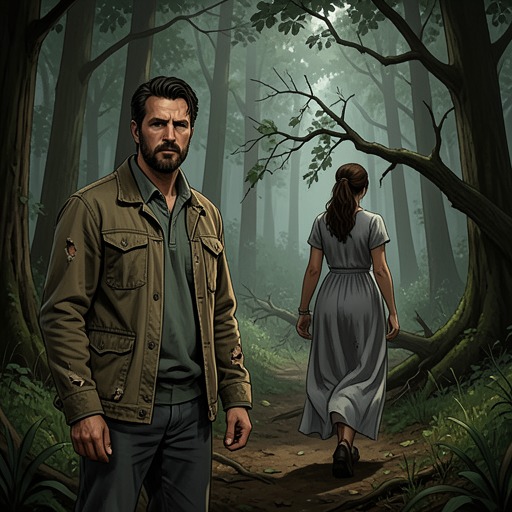
Brandon’s identity brings the rule into intimate conflict with loyalty and love. He tells Jenifer that he cannot return to Kris because he is a werewolf. His fear is not abstract. He believes that he could kill Kris in a heartbeat, lose control without warning, and begin a killing spree. Until he finds a way to control the transformation, he considers himself too dangerous to remain near anyone and asks that Kris continue to believe he is dead.
Eric reinforces this fear by pointing out that Kris is human and carrying Brandon’s child. The law thus operates through a chain of threatened lives: Brandon fears killing Kris, Eric fears the death of Kris and the baby, and the Underworld treats Brandon himself as disposable. Jenifer resists the conclusion that concealment is morally right. She believes Kris loves Brandon for who he is rather than for what species he belongs to, and that Kris should know he is alive even if a relationship between them is impossible.
The dispute exposes the rule’s central cruelty. Brandon has not been reduced to his curse in Jenifer’s eyes, yet he has internalized the law’s judgment so deeply that he treats his own disappearance as an act of protection. Eric, by contrast, accepts the legal reasoning because the consequences of a single uncontrolled transformation could be fatal. The law therefore divides the survivors before it ever reaches Brandon: one side prioritizes the right to know and the possibility of trust, while the other prioritizes containment.
Violence, Enforcement, and Moral Contradiction
The wider narrative illustrates how supernatural rules are enforced through direct violence. Zoryiaa cuts off Brandon’s little finger while Zane compels her to continue, leaving Jenifer to witness the bloodshed and fear that Brandon may be dead. Later, Jenifer attacks Zane with extreme force after recalling that he tortured Brandon and forced her to choose between Brandon and Daren. She kills Zane and Zoryiaa, but the result does not feel like freedom to her; it leaves her feeling trapped, horrified, disgusted, and monstrous.
That aftermath complicates the apparent logic of execution law. Jenifer’s revenge answers violence with violence, yet she recognizes that killing people who deserved punishment has not restored what was lost. Her self-condemnation suggests that a system built on immediate destruction can reproduce the very loss of self it claims to prevent. The law declares that werewolves become monsters when they lose control, while the surrounding world repeatedly creates conditions in which other characters also act through rage, coercion, torture, and lethal force.
Narrative Significance
Werewolf Execution Law gives Brandon’s survival the structure of a legal emergency. His secret is not simply a private revelation between friends; it is evidence that could place him under a death sentence. The rule transforms ordinary questions of honesty, romance, friendship, and parenthood into questions of jurisdiction and survival.
Its most important effect is to expose the instability of species-based justice. The Underworld treats the werewolf curse as proof that a person cannot be trusted with life, while Jenifer continues to distinguish Brandon’s character from the condition imposed on his body. The resulting conflict does not resolve the law’s danger, but it refuses to let the law’s certainty become the whole moral truth. Brandon’s fear, Kris’s absence, the unborn child, and Jenifer’s insistence on recognition all reveal what the execution rule suppresses: a werewolf may be dangerous, but the legal category also contains a person capable of love, fear, responsibility, and moral choice.