Werewolves
My Vampire Love (Completed)Werewolves are the “Cursed Species” of the Underworld: humans whose inherited curse awakens and transforms them into murderous wolves during the week of the full moon. Unlike ordinary Shifters or Lycans, they cannot control when or where the transformation occurs, and their loss of agency makes them targets of an uncompromising execution law. The creature therefore carries two meanings at once: it is a terrifying bodily condition and a legal identity that can erase a person’s claim to protection, love, and ordinary life.
Definition and Distinction
Werewolves begin as humans. Their condition is hereditary: once the curse runs through a family and awakens, the afflicted person changes every night during the week of the full moon, becoming a wolf that hunts. The transformation is not presented as a chosen ability or a stable alternate form. It is a curse that takes over the person, replacing deliberate control with bloodlust.
The narrative carefully separates Werewolves from related supernatural beings. Shifters are born with an inherited ability to change completely into animals, while Lycans are made when a werewolf bites a human during the human’s first full moon and remain half human and half wolf. Werewolves, by contrast, appear as wolves only during the designated full-moon period, but their defining danger is not merely their appearance. It is the fact that they cannot control the transformation or their conduct once it begins.
Threat and Underworld Law
The first direct encounter with the species is staged as a horror of recognition. Jenifer initially sees only two rows of sharp, bloody teeth and cannot determine whether the creature is human or animal. Fear freezes every muscle in her body before understanding arrives: the beast is the very species that wants her dead. The werewolf is not a familiar, softened version of a monster but a deadly presence whose growls make its intention unmistakable.
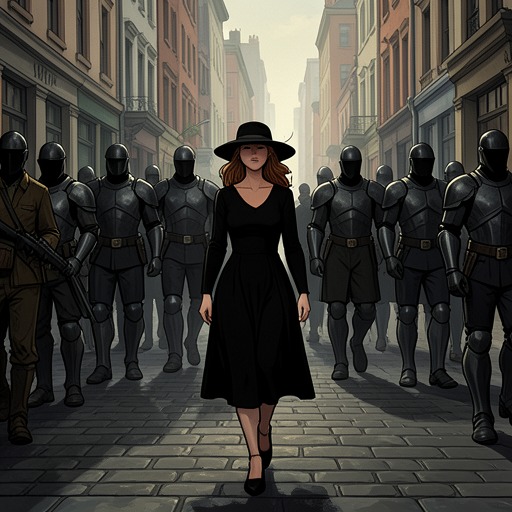
The Underworld treats this loss of control as a legal justification for extermination. Werewolves are called the “Cursed Species,” and Underworld law requires that they be killed on sight because they cannot govern when they shift, what they do afterward, or whom they attack. The rule gives supernatural law a starkly preventive logic: punishment does not wait for a specific crime in the present scene, because the awakened curse is taken as proof of an unavoidable future danger.
This law exists within a wider hierarchy of competing supernatural authorities. Vampires currently rule the Underworld, but their dominance is described as historically contingent: witches once held power, and control could shift to witches, Shifters, or another species. Against that unstable background, the execution of Werewolves reveals how the ruling order protects itself by classifying an uncontrollable population as inherently disposable. The species is not simply feared by individuals; it is institutionally condemned.
Brandon’s Werewolf Identity
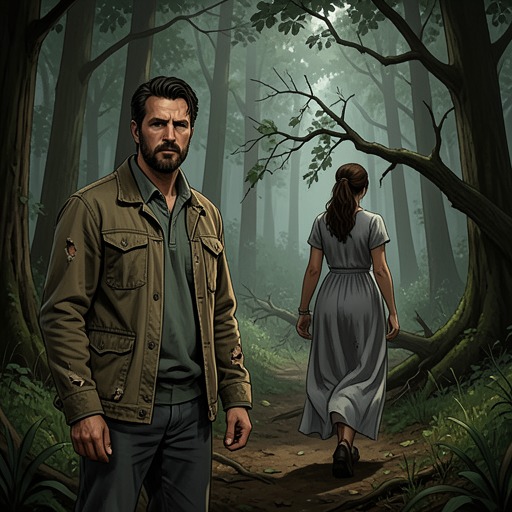
Brandon’s revelation transforms the category from an external monster into an intimate crisis. He tells Jenifer that he is a werewolf, and the confession explains why he refuses to return to Kristen or reveal that he is alive. He believes that remaining near her would expose her to a danger he cannot promise to contain, even though his feelings for her remain central to his decision.
Brandon’s fear is specifically tied to Kristen’s human vulnerability and her pregnancy. Because Kristen is human and carrying Brandon’s child, he believes that a single uncontrolled transformation could kill both mother and baby. He describes the wolf as capable of killing everything in its path, like a rabid animal driven by bloodlust. In his view, separation is not rejection but protection; staying dead to Kristen is safer than allowing her to discover that he survived.
The practical impossibility of control is emphasized repeatedly. Brandon says that he could kill Kristen in a heartbeat and that he cannot safely remain around anyone until he finds a way to control himself, although he considers such control impossible for Werewolves. Eric supports this warning, distinguishing the condition from being a Lycan or Shifter because Werewolves have no control once the change occurs. The condition thus destroys the ordinary meaning of responsibility: Brandon may love Kristen and intend no harm, yet the supernatural curse makes intention insufficient protection.
Survival, Secrecy, and Moral Conflict
Jenifer refuses to accept that danger alone makes concealment morally right. Brandon has already been believed dead, and she argues that Kristen deserves to know he is alive regardless of what he has become. Her position rests on the belief that Kristen loves Brandon for who he is rather than for a safe or socially acceptable identity. Jenifer’s comparison with Daren makes the principle personal: even if reunion were impossible, she would still want to know that someone she loved had survived.
The conflict exposes the gap between legal classification and personal recognition. Underworld law sees an awakened Werewolf as a threat to be killed immediately; Brandon sees himself as a threat who must voluntarily disappear; Jenifer sees the same person as someone whose relationships and choices still matter. None of these positions erases the physical danger. Instead, the scene forces the danger to coexist with affection, loyalty, pregnancy, and the right to know the truth.
Brandon’s condition also explains why his survival cannot be treated as a simple rescue or return. His being alive is initially a source of relief, but survival immediately creates a new obligation: he must be kept away from those he loves because the curse may turn him against them. The apparent restoration of a person becomes, paradoxically, a threat to the life he wants to reclaim.
Narrative Significance
Werewolves give the supernatural world one of its harshest boundaries between identity and agency. Shifters can choose to change, Lycans occupy a physically divided state, and Werewolves are defined by involuntary surrender. That distinction makes the curse especially tragic: the person remains emotionally recognizable while the body becomes legally and physically untrustworthy.
Through Brandon, the species becomes more than a monster category. It tests whether love can survive a body that cannot guarantee restraint, whether a person can remain morally legible after losing control, and whether a law designed to prevent violence becomes another form of violence against those it condemns. The werewolf’s appearance is therefore both literal and structural. It is the creature behind the bloody teeth, the hidden identity that must be concealed, and the legal label that threatens to reduce a living person to an execution order.