pregnancy
My Vampire Love (Completed)Pregnancy becomes a powerful state of continuity and peril in the novel when Kris is revealed to be carrying Brandon’s child. The discovery briefly turns grief toward hope: Brandon may be gone from Kris’s life, but the child preserves a living part of him. At the same time, the pregnancy intensifies the conflict over whether Brandon can safely return, because his transformation has made his presence potentially lethal.
Discovery and Immediate Significance
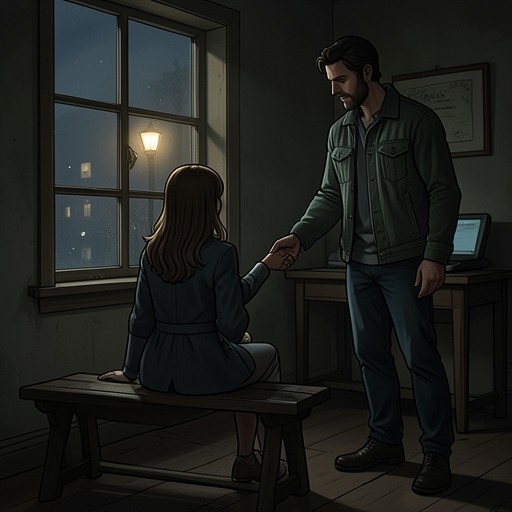
Eric discovers that Kris is pregnant before Kris herself knows it. He initially mistakes the changes in her body language and movement for illness, then realizes what they signify while she is talking with Jenifer Kate Lawrence. Eric keeps the discovery confidential, insisting that Kris must find out on her own rather than being told by someone else.
For Jenifer, the news is astonishing and emotionally restorative. She understands the unborn child as “a part of him,” meaning a remaining physical connection to Brandon. In the middle of loss, that connection produces a small but genuine hope: Brandon is not entirely absent while Kris carries his child. Pregnancy therefore functions not only as a medical fact but as a form of emotional survival, allowing the dead or missing person to remain present through another body.
Pregnancy and Grief
The pregnancy is disclosed against a background of severe emotional repression. After a previous traumatic night, Jenifer has survived by refusing to speak about the pain and by retreating into numbness; she recognizes silence as the only method that keeps her from killing herself. Within that atmosphere, Kris’s pregnancy becomes a rare counterforce to despair. It does not erase Brandon’s loss, but it changes the meaning of his absence by giving the survivors a future that contains him.
Jenifer’s response is especially significant because she does not treat the child as an abstract symbol. She imagines the baby as extraordinary and special, and identifies it concretely as Brandon’s continuation. The pregnancy thus redirects mourning away from finality without pretending that the original relationship can simply be restored.
Brandon’s Refusal to Return
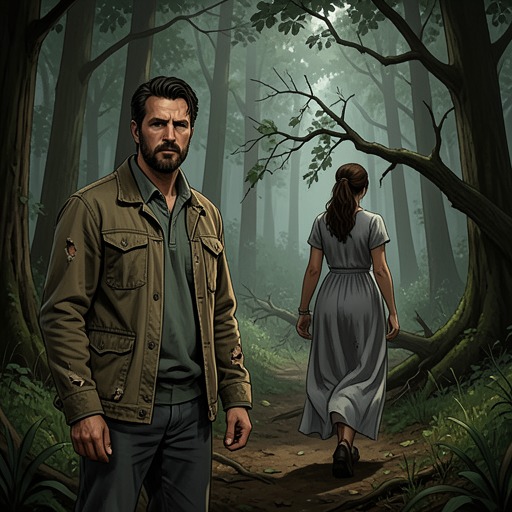
Jenifer later confronts Brandon with the pregnancy, shouting the news after he denies caring about Kristen. Brandon has been changed rather than killed, but he refuses to return to Kris. His reason is the uncontrollable violence associated with his new werewolf condition. Eric explains that werewolves differ from lycans and shifters because they have no control over themselves, while Brandon admits that he could kill Kris in an instant.
Brandon’s fear makes the pregnancy part of a moral dilemma rather than a straightforward reunion device. He believes that remaining dead in Kris’s understanding is safer than allowing her to discover that he is alive and dangerous. He worries that he could lose control, begin a killing spree, and endanger not only Kris but anyone near him. The unborn child raises the stakes of that decision: a reunion might restore a family, but Brandon’s uncontrolled nature could place the pregnant Kris and the child in immediate danger.
Conflict Over Secrecy and Protection
Jenifer rejects the idea that Brandon should remain hidden. She believes Kris loves him deeply enough that his transformation would not outweigh the fact that he is alive. Even if Kris could no longer live with him, Jenifer considers the truth preferable to leaving her to mourn someone who survives. Her own comparison with Daren makes the principle personal: if Daren were in Brandon’s position, she would want to know, even if being together were impossible.
The disagreement exposes two competing forms of protection. Brandon and Eric define protection as concealment, separation, and the prevention of physical harm. Jenifer defines it as the preservation of Kris’s right to know what happened to the father of her child. Pregnancy makes that conflict sharper because Kris is not grieving alone; she is carrying a future that depends upon a truth being withheld from her.
Biological States and Institutional Violence
The novel also links pregnancy to its wider preoccupation with bodies being controlled, altered, and used by supernatural institutions. Jenifer’s own severe aplastic anemia was not merely an illness but the reason she was selected for an artificial pure-blood experiment. Researchers needed a newborn unable to create blood cells so that vampire blood could generate new blood within the child; earlier attempts involving pregnant mothers had produced hybrids instead.
This history gives pregnancy a darker structural significance. The pregnant body can be treated as a site of experimentation, inheritance, and transformation, while the unborn child can be made to bear the consequences of decisions imposed by others. Jenifer’s illness is similarly reduced by the experimenters to a biological opportunity, even though living with it means fainting, vomiting, and suffering unexplained nosebleeds. The contrast between Kris’s pregnancy and Jenifer’s engineered bodily history shows how intimate reproduction and illness are both vulnerable to systems that value supernatural bloodlines over individual autonomy.
Narrative and Thematic Significance
Pregnancy creates a narrow passage between death and continuation. It gives Jenifer hope after Brandon’s disappearance, but it cannot resolve the danger of his altered body or guarantee a family reunion. The child connects Kris to Brandon while simultaneously making Brandon’s self-exile more consequential, since his absence now affects both a mother and an unborn child.
The state also extends the novel’s recurring tension between bodily instinct and conscious choice. Vampire blood can heighten emotion and strengthen the body, while Jenifer later fights against the awakened vampire part of herself even though doing so means resisting the most basic impulse to survive. Against these transformations, Kris’s pregnancy represents another form of bodily change—one that promises life but is surrounded by secrecy, grief, and danger. Its significance lies precisely in that double force: pregnancy preserves what loss threatens to erase, yet it also makes every decision about truth, violence, and protection carry consequences for someone not yet able to choose.