Event 1
Jenifer and Eric's Arranged Engagement Revelation

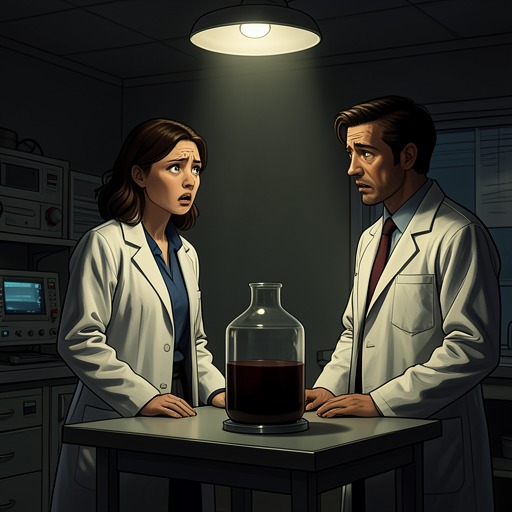
[Jenifer and Eric's Arranged Engagement Revelation](entity:event-recall-event-jenifer-eric-6e258b737417) is the decisive disclosure that converts a private family secret into the central conflict of Jenifer's life. At seventeen, Jenifer learns that Eric's father, [Dr. Wilson](entity:character-recall-character-dr-wilson-0f6ada28222a), has kept her alive since birth by supplying the medication that controls her illness, but that this help was conditional: if Eric chose her, she would marry his son. The revelation makes survival itself resemble a debt, and marriage the demanded repayment. It also redefines Jenifer and Eric's relationship, since Eric has known about the arrangement since birth while Jenifer has been the only person excluded from the decision.
## Causes and Hidden Bargain
Jenifer's parents explain that doctors once gave her only days to live. Dr. Wilson intervened, providing the medication that allowed her to survive and made her strong enough to live a life that appeared ordinary. His assistance was not presented as an open-ended gift. He helped on the condition that, when Jenifer reached seventeen, she would marry Eric if Eric decided to do so. Her parents therefore understand the arrangement as the price of refusing death: without Dr. Wilson's help, Jenifer would have died at birth; with it, she has been raised under an undisclosed matrimonial obligation.
The disclosure is made in Jenifer's mother's old living room, in the presence of her parents and Eric's parents. Jenifer notices the visual contrast between the two families: Eric's mother, with her long blonde hair, bright blue eyes, flawless skin, and almost angelic beauty, seems radically out of place in the stuffy room. That contrast anticipates the larger revelation that the Wilsons belong to a world whose power has shaped Jenifer's ordinary human life from behind the scenes. The event is not merely a surprise engagement announcement; it is an exposure of the hidden system through which medicine, family loyalty, and marriage have been joined.
## The Revelation and Immediate Rupture
When Jenifer's mother tells her that she is engaged to Eric, Jenifer is rendered temporarily speechless. Her stomach tightens, her jaw drops, and she stares blankly at her parents. Her father then confirms that the arrangement has existed since her birth. The explanation does not initially produce the expected explosion of anger. Jenifer instead describes herself as blank and cold, as though the years of pain she has learned to suppress have temporarily turned emotional shock into numbness.
That numbness breaks when her parents insist that they had no choice. Her mother and father repeat that Dr. Wilson saved Jenifer and that they owe him everything. Jenifer hears the claim differently: the adults have concealed the terms of her survival and converted her continued existence into a reason she must surrender her future. She accuses her mother of keeping her in the dark and lying throughout her life. The event's value shift is therefore from apparent security to betrayal. The medication that once signified rescue becomes evidence of dependence, while the engagement becomes a threat to freedom.
Eric's role intensifies the rupture. When Jenifer turns to him, she realizes that his earlier words and behavior have been shaped by knowledge she did not possess. Eric admits that he has known about the arrangement since birth. Jenifer concludes that everyone knew about her wedding except her. In anger, she tells him that he may have her if he chooses, but promises to make their married life hell; at the doorway, she recalls his earlier assertion that she hated him and sarcastically congratulates him on the engagement. Her response is not consent but defiance, an attempt to reclaim agency by making the imposed marriage emotionally unlivable.
## Freedom, Illness, and the Supernatural Stakes
Jenifer's refusal is inseparable from her illness. She has survived by refusing to speak about overwhelming pain and by hiding inside a numb fog. When she stops taking the small brown pills, she understands that her body will begin shutting down: within days she may be confined to bed and then die. At one point, death appears to her as a possible escape from pain, guilt, and heartbreak. Her later act of taking three pills from the bottle, dropping them into the toilet, watching them dissolve into faint pinkish-red water, and flushing them away gives the engagement revelation a physical consequence. Her rejection is not symbolic only; it places her life in immediate danger.
Jenifer also tries to conceal the seriousness of her condition from Eric. She tells him that she has always been sick but is otherwise like everyone else, and that the miracle pills prevent ordinary symptoms such as fainting, vomiting, and unexplained nosebleeds from meaning that her body is failing. The explanation is both a defensive lie and an accurate account of how medication has allowed her to pass as normal. The engagement thus rests on a contradiction: Jenifer wants to be treated as an autonomous person, yet the treatment that permits that autonomy is controlled by the family whose bargain denies it.
The later explanation of the arrangement adds a supernatural dimension. Eric tells Jenifer that she is the first human who can become a true pure blood because of the illness with which she was born. She is consequently both the most endangered and the most protected human. She must marry Eric before she turns eighteen because, at eighteen, she is expected to awaken and become a vampire. The marriage is connected not only to family obligation but also to bloodline continuity: Eric's blood already runs through her veins, and their future child is expected to be a pure blood. Her body is therefore treated as a site of medical intervention, supernatural transformation, and the production of a stronger vampire lineage.
## From Coercion to Emotional Reinterpretation
Jenifer initially distinguishes freedom from happiness. When Eric asks why she is fighting the possibility that they could be happy together, she answers that she would rather be miserable for her entire life and free than happy in a marriage she never wanted. Her objection identifies the core ethical problem of the arrangement: even a loving outcome cannot erase the coercive conditions under which the choice was made. Eric's hope that their happiness might make the arrangement acceptable does not answer her fear of being trapped.
The relationship nevertheless develops inside that conflict. Eric watches Jenifer closely after she faints, grows increasingly worried about her health, and becomes involved in preventing her self-destructive decisions. During one crisis, Jenifer submerges herself completely in a bathtub to drown out the voice outside the door. In another confrontation, Eric accuses her of trying to kill herself again and says that he cannot spend his life wondering whether she will shoot herself or jump from a building. His response combines love with surveillance and desperation with pressure. The arranged engagement is therefore never separated cleanly from Jenifer's medical vulnerability: Eric's desire to protect her can also resemble the control already exercised over her body.
The emotional direction changes when Jenifer recognizes what Eric means to her. She realizes that she cannot sleep when he is absent, cannot breathe properly when she does not know whether he is safe, and feels physically anxious when he is away. The realization arrives with startling force: she understands that she is in love with [Eric Wilson](entity:character-recall-character-eric-wilson-066c261d0b81). This does not erase the original coercion, but it changes the personal meaning of the promised marriage. What began as an imposed future becomes a relationship in which Jenifer eventually discovers reciprocal attachment, even though the discovery is shadowed by her inability to separate love from the conditions that first bound them together.
## Consequences and Final Reframing
The revelation governs the novel's later movement from hostility toward commitment. Jenifer's resistance is repeatedly expressed through refusal, secrecy, and bodily risk, while Eric's attachment appears through insistence that she return to him and through his declaration that he loves her. Their conflict reaches a point at which the marriage is no longer only an external obligation but also the structure within which they must decide whether affection can become a chosen bond.
By the wedding, Jenifer can call Eric her husband, though she acknowledges that becoming Mrs. Eric Wilson will take time to feel natural. The ceremony includes a ten-tier plain white cake decorated with cream and white flowers, a first dance as husband and wife, and the song "[All My Life](entity:expression-recall-expression-all-my-life-9549d82e6daa)" by K-ci and Jojo, which Eric selected after hearing Jenifer sing it. The wedding is described as enormous, beautiful, and widely discussed, but its perfection does not come from the dress, decorations, or scale. It comes from the person held tightly in Jenifer's arms. The ending therefore reframes the engagement revelation without entirely resolving its moral contradiction: Jenifer's imposed marriage becomes, in her later understanding, a declaration of love and belonging, yet the story preserves the fact that her freedom was withheld until love developed inside the cage.
Event 2
The Hawaii Trip and Eric’s Proposal

[The Hawaii Trip and Eric’s Proposal](entity:event-recall-event-eric-13db59fe08b4) is a turning point in [Jenifer Kate Lawrence](entity:character-recall-character-jenifer-kate-lawren-c3c9710de488)’s relationship with [Eric Wilson](entity:character-recall-character-eric-wilson-066c261d0b81). The journey initially appears to be an unexplained removal from ordinary life, but it opens into a carefully staged revelation: [Hawaii](entity:location-recall-location-188f4fba33f9) resembles a place from Jenifer’s dreams, Eric’s blood has kept her alive through her medication, and her eighteenth birthday will bring an involuntary transformation into a vampire. Eric’s proposal therefore carries two meanings at once. It offers love and protection in personal terms, while also binding Jenifer more tightly to the arrangement imposed on her by the Wilson family.
## Causes and Hidden Obligations
Jenifer’s marriage has already been determined by a bargain made before she could understand or consent to it. Doctors had given her only days to live, and Eric Wilson’s father supplied the medication that preserved her life on the condition that, when Jenifer reached seventeen, she would marry his son if Eric chose to do so. The arrangement converts medical rescue into a lifelong obligation: Jenifer understands that the alternatives presented to her were death in infancy or marriage to a stranger she might hate. Her parents insist that they had no choice, but the explanation leaves Jenifer feeling blank, cold, and physically threatened rather than grateful.
The pills themselves embody that bargain. When Eric gives Jenifer three small brown tablets supplied by his father, she refuses them despite his warning about what will happen. Later, alone in the bathroom, she drops three pills into the toilet; they dissolve and stain the water faint pinkish-red before she flushes them away. Her refusal is not merely a rejection of medicine. It is an attempt to reject the exchange through which her life has been purchased at the price of her future. Yet the cost is immediate: Jenifer knows that without the pills her body will begin shutting down, that a few more days may leave her bedridden, and that death might seem like an escape from pain, guilt, and heartbreak.
## The Journey to Hawaii
Eric wakes Jenifer on an airplane but refuses to tell her where they are going. She arrives in a dark room beside him, then discovers the destination by opening heavy curtains. Outside lies a transparent greenish-blue ocean, warm sunlight, grass, towering trees, and a beach reached directly from the house. The setting is not simply unfamiliar; it is the house from Jenifer’s dream. Its baby-blue walls and white frames produce an intense sense of déjà vu, as though Eric has reached into her mind and reproduced a scene she had previously known only through sleep.
The dreamlike landscape temporarily suspends the ordinary world, but it does not release Jenifer from the forces governing her life. The beauty of Hawaii heightens the contrast between apparent freedom and hidden control. She has been carried across the world without being told the destination, and the idyllic house becomes the site where the most consequential constraints on her future are disclosed. The journey thus functions as both escape and enclosure: it removes Jenifer from familiar surroundings while bringing her closer to the truth about her body and her promised marriage.
## The Proposal and the Choice
When Jenifer returns to the bedroom, Eric is kneeling before her with a small open teal velvet box. He tells her that he knows she is being forced into the relationship and does not yet love him, but says that he cares for her and that their first collision at school felt as though everything had fallen into place. He asks her to let him make her happy for the rest of her life and promises to love her, never take her for granted, and never hurt her.
The language of the proposal is deliberately gentler than the arrangement that makes it necessary. Eric acknowledges the coercion instead of pretending that the engagement is freely born, and he frames his own promise as an effort to transform an imposed future into a humane one. Nevertheless, Jenifer cannot experience the moment as an uncomplicated romantic choice. She is shocked, unable to move or breathe, and takes the ring from the box because she believes she has no choice. She places it on the bedside table rather than wearing it, climbs into bed, and turns away from him. Her response preserves the central contradiction of the scene: Eric offers tenderness, but the institution surrounding the offer still denies her freedom.
## Blood, Awakening, and Political Stakes
The proposal becomes more intelligible after Eric explains what the medication really is. The pills contain his blood, reduced to a weaker form that heals Jenifer and keeps her alive without yet changing her. [Katalin](entity:character-recall-character-katalin-e39147da8831)’s earlier reference to Jenifer consuming blood from one of the oldest bloodlines therefore refers to Eric. The medicine is not an ordinary treatment but a controlled form of vampire blood, making Jenifer’s survival dependent on the very supernatural system into which she is being drawn.
Eric identifies Jenifer as the first human who can be made into a true pure blood because of the illness with which she was born. That exceptional condition makes her simultaneously the most endangered human and the most protected one. She will change whether she wants to or not, and Eric explains that she must marry before she turns eighteen because that is when she will awaken as a vampire. The threat from the werewolves is consequently linked to her biological and supernatural potential: through Jenifer, stronger pureblood vampires may be produced, preserving the vampires’ position at the top of the food chain. The proposal is therefore personal only on the surface. Beneath the promise of mutual happiness lies a struggle over bloodline power, reproduction, and the future hierarchy of supernatural species.
## Resistance, Reinterpretation, and Consequences
Jenifer explicitly states that she would rather be miserable and free than happy and trapped in a marriage she never wanted. This principle remains the moral pressure beneath the Hawaii scene. The trip does not erase her resistance, and the ring does not prove that coercion has become consent. Instead, the event places emotional attachment inside a structure Jenifer continues to distrust. Her later understanding changes when she recognizes that she is in love with Eric Wilson. The realization is expressed through bodily signs of attachment: she cannot sleep when he is absent, struggles to breathe when she does not know whether he is safe, and feels butterflies in her stomach. Love shifts from something imposed from outside to something she experiences as her own, even though it develops within the imposed arrangement.
The engagement is subsequently formalized through a ball announced on thick paper with elegant gold script and a black widow spider emblem. What began as a private proposal becomes a public family celebration, involving several hundred people and turning Jenifer’s disputed future into a social fact. At her eighteenth-birthday gathering, a baby-blue box and sealed letter from Daren are also presented to her; the gold hand band spelling her name in diamonds becomes a separate reminder of the attachments and losses that complicate her bond with Eric. By the wedding, Jenifer and Eric cut a ten-tier white cake, dance as husband and wife to “[All My Life](entity:expression-recall-expression-all-my-life-9549d82e6daa),” and enter the public identities of Mr. and Mrs. Eric Wilson. [The Hawaii proposal](entity:action-recall-action-the-hawaii-proposal-fd95271cbe1e) is thus the scene in which the wedding’s emotional and political trajectory is set: a forced promise gradually becomes a chosen love, but never without the lingering cost of the freedom Jenifer was denied.
Event 3
The Wilson Engagement Ball
[The Wilson Engagement Ball](entity:event-recall-event-wilson-4b42c72c1804) is the Wilson family’s formal celebration of the arranged engagement between [Jenifer Kate Lawrence](entity:character-recall-character-jenifer-kate-lawren-c3c9710de488) and [Eric Wilson](entity:character-recall-character-eric-wilson-066c261d0b81). Its decisive significance lies in the contrast between ceremony and consent: Jenifer’s parents accepted the arrangement because Eric Wilson’s father had supplied the medication that kept her alive, while the ball turns that private bargain into a public spectacle. Eric’s tenderness gradually complicates the coercion, but the event first makes Jenifer understand that marriage to a stranger is no longer an abstract threat; it has become a social reality witnessed by an entire supernatural community.
## Causes and Background
The ball follows the revelation that Jenifer has been engaged to Eric since birth. Her parents explain that Mr. Wilson helped preserve her life on the condition that, when she reached seventeen, she would marry his son if Eric chose to do so. The medication had been provided since her birth, leaving Jenifer to confront a brutal exchange between survival and autonomy: without the Wilson family’s intervention, she would have died, but the price of living was the possibility of being married to someone she did not know and might eventually hate.
Eric does not present the evening as a casual party. He asks Jenifer to let his mother spend the day with her because the ball is described as a celebration of their engagement. He gives Jenifer a thick, hard invitation whose smooth gold script and black widow spider emblem make the occasion resemble an exceptionally wealthy wedding announcement. The invitation’s elegance intensifies rather than dispels her panic: if this is only the engagement celebration, the prospect of the actual wedding seems even more overwhelming.
The scale of the event is deliberately misleading. Eric initially assures Jenifer that it will not be large, then reduces “a few hundred people” to something he expects will calm her. When Jenifer finally approaches the staircase, he asks whether she truly wants to continue and watches for any sign that she will accept his offer to abandon the dance. Her repeated assurances that she is fine conceal physical distress, including unsteady breathing and a heart racing under the pressure of the crowd below.
## What Happens
Eric leads Jenifer through the corridor toward the staircase while music and conversation rise from downstairs. She stops just beyond the balcony, aware that one more step would expose her to everyone below. Although Eric has implied that the gathering belongs to both of them, he admits that the invitation’s message is not the whole truth: the guests have come chiefly to meet Jenifer. When she tries to pull away, he tightens his grip and continues guiding her. The revelation changes the descent from a shared entrance into a public presentation.
The setting is staged as a royal spectacle. Jenifer experiences the room as unreal and fairy-tale-like, a grand environment organized around royalty rather than ordinary domestic life. Eric takes two glasses from a waiter’s tray and hands one to her before addressing the assembled crowd. He introduces her as “Miss Jenifer Kate Lawrence - my wife to be,” speaking with warmth, pride, and apparent love. His gaze remains fixed on her even while he thanks the guests for attending and invites them to celebrate. Laughter and applause follow, and Eric begins introducing Jenifer to the people in the room so rapidly that their faces and names blur together.
The ceremony also reveals that the guests’ response to Jenifer is governed by a hierarchy she does not yet understand. While [Jason](entity:character-recall-character-jason-907de5833184) is joking with her and Eric, the entire room abruptly becomes silent and cold. The crowd stares at the three of them with horror and confusion, then begins to bow in a chainlike sequence. Jenifer realizes that the bowing is not directed at her and Eric but at a hooded girl standing beyond the doorway. Eric immediately moves beside Jenifer, wraps an arm around her waist, and pulls her close protectively before asking [Katalin](entity:character-recall-character-katalin-e39147da8831) to enter. The interruption punctures the ball’s celebratory surface and exposes the threatening authority operating beneath it.
The event’s ceremonial atmosphere is connected to the wider Wilson family inheritance. Elsewhere in the same household, Eric leads Jenifer down a staircase into a vast stone room filled with hundreds of stacked bookcases, glass showcases, and a family tree carved into the walls. Millions of names are joined by vines and extend back, in Eric’s account, to Lilith. This bloodline archive gives the engagement ball a larger context: Jenifer is not merely being introduced as Eric’s romantic partner but being positioned before an ancient family structure whose power depends on ancestry, marriage, and succession.
The ball’s social world is also contrasted with Jenifer’s ordinary adolescent life. She later enters a new school under the scrutiny attached to being labeled a “trouble child,” attends English with Miss Mathsion, and is overwhelmed by classmates’ attention. She spends time with [Charde](entity:character-recall-character-charde-4bdac312a268), [Amelia](entity:character-recall-character-amelia-d47b5f584b5b), and [Emily](entity:character-recall-character-emily-79a1b5f3c22d) at The Ranch, a bar owned by Charde’s cousin Dillon, and discusses blood-drinking as an unfamiliar aspect of her future vampire existence. Amelia subsequently reveals that she has signed Jenifer and Eric up as a couple for the opening dance at the Masquerade, a smaller social performance that echoes the engagement ball’s insistence on pairing them publicly.
## Participants and Stakes
Jenifer is the unwilling center of the ball. Her body records the conflict before she can articulate it: her stomach tightens when the engagement is announced, her breathing becomes unsteady before the descent, and her heart pounds when the guests turn to stare. The event therefore makes the stakes physical. Freedom, dignity, and control over her future are not abstract values; they are experienced as the inability to take one more step into a room where everyone already believes they know her role.
Eric occupies an ambivalent position. He is the person who brings Jenifer into the crowd and, by his own admission, lies about the purpose of the gathering. His decision to hold her hand more tightly when she tries to stop underscores the pressure built into the presentation. At the same time, he repeatedly checks whether she wants to withdraw, stays close when the room becomes threatening, and introduces her with visible affection rather than embarrassment. The ball thus stages both sides of his relationship with Jenifer: he is an agent of the institution that claims her, but he also behaves as someone emotionally invested in protecting and cherishing her.
Jason provides a brief countercurrent of humor and informality. He links hands with Jenifer, jokes that she will regard him as a bad influence, and claims that he encourages Eric to do the right thing even when Eric’s attempts to escape trouble make matters worse. His teasing temporarily allows Jenifer to participate as a person rather than as a ceremonial object. The sudden silence that follows his unfinished remark shows how fragile that ordinary intimacy is inside the Wilson family’s hierarchy.
Katalin’s arrival alters the meaning of the entire gathering. The guests bow to her, and Eric’s protective tightening around Jenifer signals that her presence carries danger as well as authority. The ball therefore contains two simultaneous audiences: the public assembled to witness Jenifer’s placement beside Eric, and the more powerful figure whose entrance makes the assembled guests immediately submit.
## Consequences and Aftermath
The ball forces Jenifer to move from private disbelief to public recognition. Earlier, the arrangement is something her parents explain and she struggles to comprehend; at the celebration, hundreds of people are already treating her as Eric’s future wife. Eric’s announcement gives the relationship a title before Jenifer has freely chosen it, while the crowd’s applause supplies social approval that she cannot easily oppose without opposing the entire room.
Yet the event does not leave the relationship emotionally unchanged. Eric’s public declaration is not merely administrative. He speaks of Jenifer with warmth and pride, and his attention remains fixed on her while he addresses the guests. Later, the couple’s connection develops through gestures that are more personal than the ball’s formal display. During a dance, Eric kisses Jenifer, and for a moment their fears of Zane and Katalin disappear. He then has the DJ play “[So High A.O.A](entity:expression-recall-expression-so-high-a-o-a-6bccf3487587)” by Machel Montano, a Trinidadian Soca song Jenifer loves and has not heard in a long time. His effort to learn the song and arrange it for her convinces her that he notices and values her individual tastes rather than only the role assigned to her by their families.
That movement from imposed identity toward chosen attachment culminates in Jenifer’s later declaration to Eric. She tells him that he brought light into a dark and lonely period, helped her when she could not breathe, and held her together when she felt broken. Most importantly, she says that she wants to marry him because she loves him, not because Katalin or her parents force her to. [The engagement ball](entity:action-recall-action-the-engagement-ball-2ca9f70e687e) begins with Jenifer being announced as Eric’s future wife before she has consented; its eventual emotional consequence is that she reclaims the same future as a decision she can affirm.
## Narrative Significance
The ball is a romance midpoint in which a contractual relationship acquires emotional possibility without erasing its coercive origin. The arrangement begins as a life-saving bargain made by adults, becomes an embarrassing and frightening public performance, and later undergoes a reversal when Jenifer chooses Eric for herself. The event’s central tension is therefore not simply whether the engagement will proceed, but whether a future imposed through bloodline, debt, and family authority can be reinterpreted as mutual love.
Its imagery combines adolescent social ritual with supernatural aristocracy. The formal invitation, champagne-like glasses, dance, applause, and rapid introductions resemble an elite coming-of-age celebration, while the black widow emblem, ritual bows, ancient family tree, and Katalin’s threatening entrance reveal a world ruled by inherited power. Jenifer’s ordinary school life, friendships, bar outings, popular music, and later Masquerade dance do not replace that hierarchy; they press against it, giving her informal spaces in which she can joke, choose companions, and be recognized beyond her engagement.
The ball also dramatizes a recurring contrast between appearance and truth. The invitation promises a celebration “to our engagement,” but Eric admits that the guests have come to meet Jenifer. The room appears perfect and royal, yet Jenifer feels trapped and physically overwhelmed. Eric’s public performance is both a lie and an expression of genuine feeling: he manipulates her into entering, but he also presents her with warmth and pride. By the time Jenifer promises marriage freely, the ceremony’s original meaning has been challenged from within. The ball remains a symbol of family control, but it also becomes the first major public stage on which an imposed bond begins its transformation into a chosen commitment.
Event 4
Jenifer’s Premature Awakening Crisis
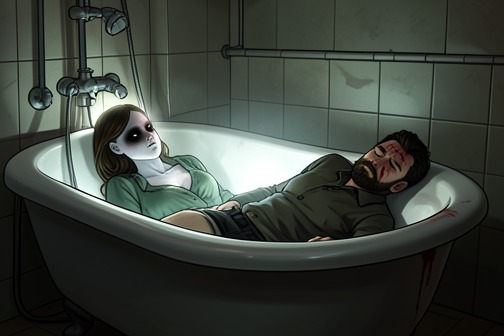
[Jenifer’s Premature Awakening Crisis](entity:event-recall-event-jenifer-aeb0502c64fd) is the first catastrophic eruption of Jenifer’s vampire nature before the expected age of eighteen. It begins as a bodily and psychological collapse rather than a controlled transformation: submerged in a bathtub, she encounters a strange white light, reacts to Eric as a threat, develops vampire-black eyes, and nearly dies because her body has not completed the necessary stages. The episode’s decisive significance lies in its reversal of the usual survival imperative. Jenifer must resist the awakened vampire within her in order to live, while Eric’s blood keeps her alive at a cost that leaves him unconscious and nearly dead.
## Causes and Background
The crisis grows out of the medical condition that has governed Jenifer’s life. She has severe aplastic anemia, and the brown pills made by Eric’s father have allowed her to function as an apparently ordinary human despite recurrent fainting, vomiting, and unexplained nosebleeds. Jenifer knows that refusing the medication is not a harmless act: her body begins shutting down, and she understands that a few more days without the pills could leave her bedridden and lead to death. Her refusal is therefore both a rejection of control and a direct physical threat. On one occasion she takes three pills from the bottle, watches them dissolve into a faint pinkish-red stain in the toilet, flushes them away, and then lies to Eric that she is fine.
Her emotional condition intensifies the danger. After a traumatic night that she refuses to discuss, Jenifer survives by suppressing feeling and surrounding herself with a numb fog; she recognizes that without this emotional blankness she might take a gun and shoot herself. The possibility of death becomes an imagined escape from pain, guilt, and heartache rather than an abstract medical risk. Eric later identifies her behavior as another suicide attempt and tells her that he cannot continue wondering whether she will shoot herself or jump from a building. The premature awakening thus occurs within an already established crisis of medication refusal, suicidal ideation, grief, and concealed bodily decline.
The supernatural explanation is connected directly to that illness. Eric explains that vampire blood can strengthen and fuel the body once it takes effect, and that [Katalin](entity:character-recall-character-katalin-e39147da8831) gave Jenifer almost thirty times the amount of blood to which she was accustomed. The larger revelation is that Jenifer’s aplastic anemia made her suitable for the artificial pure-blood experiment: the researchers needed a newborn unable to create blood cells so that vampire blood could make more cells within the child. Her illness is therefore simultaneously a lived disease, a source of vulnerability, and the condition that made her valuable to the experiment. What appears to be a medical treatment has prepared a delayed supernatural transformation.
## The First Shift
The immediate trigger takes place in the bathroom. Jenifer retreats into the bathtub while someone outside continues calling and banging at the door. Seeking complete isolation, she slides beneath the water until her entire body is submerged. The water temporarily silences the external voice, but the withdrawal opens onto an abnormal vision: a foggy, glowing white light that does not behave like ordinary light, accompanied by the sense that Eric is smiling at her.
Eric’s voice commands her to return, and she jerks upward from the water with her throat and lungs burning. At that moment the bathroom door explodes into pieces, leaving Eric in the shattered doorframe. His eyes are completely black and his fangs are emerging, so Jenifer sees through his human appearance to the danger beneath it. Her body responds before conscious thought can intervene. She moves sharply, precisely, and with startling speed, placing herself before the tub and preparing to kill him before he can kill her.
The transformation becomes undeniable when Jenifer looks into the mirror and sees that her own eyes are completely vampire-black. She is not yet eighteen and had believed that she still had time before the awakening. The discovery destroys that expectation. Eric tells her that she is not ready, that her body has not passed through the required stages, and that she will die unless she calls the vampire state back. His warning makes the event more than an unveiling of hidden identity: premature knowledge itself becomes fatal because the transformation is incomplete.
## Blood, Rescue, and Reversal
Jenifer loses consciousness while the awakened part of her continues to consume her from within. She experiences the crisis from a dislocated perspective, looking down at herself while knowing that she is neither dreaming nor dead. Eric’s freezing hand remains wrapped around hers, and the pain feels as though sand rather than blood is moving through her veins. Her need for blood becomes the condition of consciousness, and consciousness is in turn required for her to reverse the awakening.
Eric supplies the necessary blood from his own body. He inserts a needle into his arm, connects it to a clear plastic tube, and places the other needle in Jenifer. His blood immediately begins flowing through her. The transfusion does not remove the pain, but it eases it enough to keep her from disappearing completely. When [Avi](entity:character-recall-character-avi-3ed8503ef349) questions why the pills are not being used, Eric answers that they are not strong enough and insists that he will continue giving blood for as long as necessary.
The rescue is also dangerous because Eric gives beyond his limits. He begs Jenifer to return and tells her that he loves her, that she is all he has and all he needs, and that he would even find a way out of the wedding rather than lose her. His declaration binds survival to their relationship while revealing how desperate the arrangement has become. Eric’s attachment is not passive reassurance: he continues the transfusion until exhaustion overwhelms him. He insists that he will not stop because he cannot lose her, then collapses to the floor, still and unresponsive, after giving her enough blood to leave him incapacitated.
## Choosing to Live
Eric’s collapse forces the crisis into an ethical decision. The vampire part of Jenifer has awakened forcefully and initially treated Eric as prey or an enemy, yet his blood and sacrifice have become the means of preserving her life. Jenifer understands that allowing the vampire state to continue may cost Eric his life, repeating the pattern of another person dying for her. She therefore rejects the instinct that tells her to survive at any price.
The reversal is agonizing rather than triumphant. Everything within Jenifer recoils from banishing the vampire, and the harder she fights the awakened instinct, the greater the pain becomes. She describes the struggle as opposition to the most basic impulse a person possesses: survival. Her decision is not simply to become human again, nor is it a clean acceptance of supernatural identity. It is an act of deliberate resistance to a form of life that has arrived before she is capable of bearing it. Her eyes finally snap open, but awakening to consciousness leaves every cell aching, breathing torturous, her body freezing while her head burns.
Her first conscious action is to pull the needle from her hand because she no longer wants Eric’s blood. She then forces herself upright on shaking legs. This gesture marks a complicated recovery of agency. Jenifer does not merely receive rescue; she interrupts the mechanism of rescue when she understands its cost. Yet the crisis does not resolve her wider suicidal danger. Afterward Eric accuses her of trying to kill herself again, while she denies it in a whisper. The argument shows that returning from the premature awakening has not erased the depression, secrecy, or distrust that made the emergency possible.
## Consequences and Significance
The crisis changes the meaning of Jenifer’s illness. The fainting, weakness, pills, blood, and bodily pain are no longer separate medical details but parts of an unstable system joining human disease to vampire transformation. The medication keeps her within ordinary human limits, while vampire blood amplifies her body and emotions. Earlier, Eric had tried to reassure her that illness did not mean her body was failing; the awakening proves that her body is undergoing a different and far more dangerous process than either of them had openly acknowledged.
It also makes emotional intensity physically consequential. After receiving the excessive dose of vampire blood, Jenifer’s emotions are heightened, turning jealousy and attachment into impulses she experiences as nearly murderous. During the crisis, fear, instinct, desire for blood, and the wish to live pass through her body before she can name or govern them. The transformation therefore externalizes a conflict already present in her relationships: the need for protection can become control, and love can become a reason to endure coercion, secrecy, and self-destruction.
Narratively, the event is a threshold crossed too soon. Jenifer has been treated as a patient, an experimental subject, and someone whose future is regulated by age, blood, medication, and arranged obligations. The premature awakening briefly strips away those arrangements and exposes a body acting with its own force. Her eventual choice to call the vampire state back does not restore a simple normality; it establishes that survival will require conscious negotiation among illness, supernatural inheritance, grief, and responsibility to others. The crisis ends with Jenifer alive but injured, Eric collapsed from saving her, and the underlying question of whether she truly wants to live still unresolved.
Event 5
Eric and Jenifer’s Reconciliation

[Eric and Jenifer’s Reconciliation](entity:event-recall-event-eric-jenifer-a3e6d25b38d7) marks the movement from rupture to renewed attachment after their relationship has been strained by concealment, illness, suicidal despair, and the suffocating expectations of their impending marriage. Its decisive significance lies in its double movement: Jenifer and Eric return to one another through touch, desire, and an explicit declaration of love, yet the scene also exposes how fragile that reunion remains when love is entangled with surveillance, coercion, guilt, and the fear of death.
## Causes and Background
The immediate conflict grows out of Jenifer’s refusal to be transparent about her health and her medication. When Eric discovers that she has discarded three of the tiny brown pills by dropping them into the toilet, where they dissolve into faint pinkish-red water, she conceals the act by insisting that she is fine. Her body, however, is already beginning to shut down: she understands that several more days without the medication could leave her bedridden and eventually dead. Death appears to her not merely as a threat but as a possible escape from pain, guilt, and heartbreak.
Jenifer’s crisis is also rooted in trauma. After Daren’s death, she avoids school, ignores calls and messages, flees when people come to the house, and repeatedly parks outside the old cemetery without finding the words to say goodbye. She describes herself as empty and survives by refusing to speak or feel, believing that numbness is the only barrier between her and taking a gun to herself. This emotional withdrawal makes Eric’s concern more intense, but it also turns his concern into a form of constant watchfulness that Jenifer experiences as confinement.
The quarrel therefore becomes a struggle over both truth and freedom. Jenifer accuses Eric of lying after realizing that he has withheld information from her, while Eric answers that she has also lied by claiming to be well and by making herself impossible to read. His anger is sharpened by the knowledge that her apparent calm may conceal another suicide attempt. The argument moves from verbal accusation to physical aggression when Jenifer throws a hard object, then a lamp, and finally a picture at him. Eric tells her that he cannot spend his life wondering whether she will shoot herself or jump from a building. The confrontation makes reconciliation necessary, but it also establishes that reunion cannot be understood as a simple cure.
## The Break and the Decision to Return
Before the reconciliation, Eric declares that the time for talking is over. He reminds Jenifer that they had promised to speak honestly with one another, but that she broke the promise, and he asks her to stay away from him. When she pleads that she never intended to hurt him, he replies that she did hurt him and says that he hates her. Jenifer accepts the possibility that loving her is a curse and decides that distance may be best for both of them.
Her explanation of the marriage reveals why separation feels like another form of death. She says that the marriage is suffocating her and locking her back into a dark closet, where each passing day kills another piece of her. She has considered literal death preferable to endlessly wishing for it, and she admits that this is why she did what she did. At the same time, she insists that she does not hate Eric and never wanted to hurt him. Her words do not resolve the conflict, but they transform her actions from inexplicable betrayal into an expression of unbearable entrapment.
The turn comes when Jenifer follows Eric instead of allowing the separation to stand. After hearing the kitchen door slam, she runs outside and calls for him. Eric catches her and turns her toward the house, but her view is blocked by his golden-brown eyes. The image recalls their first meeting at school, when his eyes were the first feature of him that she noticed. This visual return to their beginning gives the reconciliation a deliberate structure: after the relationship has been damaged by secrets and death, Jenifer reaches back toward the original recognition that drew her to him.
## Reconciliation Through Touch and Speech
Jenifer intends to tell Eric that she is finished fighting and that she no longer wants either of them to keep secrets. Before she can speak, he pulls her close and kisses her. She returns the kiss forcefully while still keeping it gentle, and the physical response overwhelms the immediate anger and pain. Her heartbeat and pulse slow; the distress does not seem healed so much as temporarily removed, as though it had never existed. The scene presents bodily contact as a direct form of regulation when language has failed them.
The setting changes with the rising sun. Jenifer and Eric stand in brightening light, although the direct sunlight begins to burn her eyes so severely that she later drags him into the [pool house](entity:location-recall-location-c2864fb1ff37). Eric’s eyes have turned completely black, resembling [Katalin](entity:character-recall-character-katalin-e39147da8831)’s eyes, but Jenifer is not afraid because she recognizes that he remains Eric regardless of the change in color. Her refusal to let the altered appearance sever recognition parallels her refusal to let anger permanently redefine him. She tells him that she does not want to fight anymore, and he agrees that they should stop fighting.
The reconciliation becomes explicit when Eric admits that he loves her even when he hates her. The statement preserves the contradiction rather than hiding it: resentment and devotion coexist, and love has survived the breach without making the breach insignificant. Their renewed kissing is charged with desire, but it also functions as a movement away from violence. The earlier thrown objects shattered against the room and the desk; now touch restores a connection that argument had broken.
## Consequences and Unresolved Danger
The reunion does not end the practical or psychological crisis. Jenifer still cannot tolerate prolonged exposure to direct sunlight, and she and Eric still need to discuss bloodlines and experiments in the pool house. The reconciliation therefore opens a conversation rather than replacing one. It gives them enough temporary trust to remain together while leaving the larger structures of secrecy, experimentation, illness, and [arranged marriage](entity:state-recall-state-948bf01dd058) in place.
Later episodes show why the reconciliation must not be treated as proof that Jenifer’s suicidal risk has disappeared. She submerges herself completely in a bathtub, finding the silence beneath the water pleasant because it drowns out the voice outside the door. In another crisis, Eric tells her that she has tried to kill herself again and confesses that he cannot continue living in fear that she will shoot herself or jump from a building. His intervention is driven by love, but it is also desperate and controlling; the relationship becomes the site where protection, dependence, and the demand for honesty collide.
Eric’s plea reaches its most intense form when he tells Jenifer that he loves her, that she is all he has and all he needs, and that he will do anything to keep her from leaving, even finding a way out of the wedding. Jenifer remains divided by grief for Daren: loving Eric feels like moving on without someone who died for her, and she fears that accepting this love would betray the dead. The reconciliation thus creates emotional possibility without producing clean closure. Its warmth is real, but it exists beside mourning, self-destructive impulses, and the continuing pressure of the wedding.
## Narrative Significance
As an event, Eric and Jenifer’s Reconciliation is a value shift from hatred, isolation, and threatened death toward intimacy and mutual acknowledgment. The shift is not a triumph over suffering so much as a temporary reorganization of it. Jenifer moves from numb concealment to speech about why she acted, then from speech to chosen pursuit when she refuses to let Eric disappear. Eric moves from accusation and withdrawal to physical closeness and an admission that love persists through anger.
The scene also belongs to a larger pattern of trauma and recurrence. Jenifer repeatedly wakes screaming, refuses her mother’s attempts to make her talk, hides in closets and fears enclosed spaces, and relives Daren’s death through silence and memory. Her reconciliation with Eric does not remove these patterns; it briefly provides a person whose touch and presence can interrupt them. The later meeting with [Kris](entity:character-recall-character-kris-f1d0a283c15e) becomes another movement out of numbness, when Jenifer finally feels grief fully and cries that Kris was absent when she needed her. Read against that return of feeling, the reconciliation matters because it begins to break the defensive silence that had allowed Jenifer to survive but had also isolated her from everyone around her.
The event’s significance is therefore both romantic and ethically unsettled. Eric and Jenifer recover closeness, but the text places that closeness alongside medication refusal, drowning, surveillance, guilt, and unresolved bereavement. Their kiss confirms attachment; it does not make the underlying danger disappear. The reconciliation is strongest when understood as a fragile decision to remain connected and to resume the conversation, not as a final resolution of the forces that made separation seem like the only way either of them could breathe.
Event 6
The Frozen Lake Date

[The Frozen Lake Date](entity:event-recall-event-0cb1b4a1e5f6) is a decisive stage in the growing relationship between [Eric Wilson](entity:character-recall-character-eric-wilson-066c261d0b81) and [Jenifer Kate Lawrence](entity:character-recall-character-jenifer-kate-lawren-c3c9710de488). Eric takes Jenifer to the Wilson lake house and leads her into an impossible winter landscape: a lake frozen solid beneath a warm afternoon sun, surrounded by giant trees and thousands of candles. The date joins spectacle with vulnerability. Eric uses magic to create a crystal rose that lasts only until midnight, then asks Jenifer to trust him on the ice. By the evening’s end, Jenifer has moved from discomfort with Eric’s extravagance to open gratitude and physical affection, describing the experience as the most fun she can remember having.
## Setting and Preparation
The date begins at the Wilson lake house, a bright, warm wooden building illuminated by amber lights. Its dark-brown walls and floors make the place feel both luxurious and almost unreal to Jenifer. Eric offers her food first, but she resists the scale of the arrangement, explaining that she would have been happy with a simple movie and a large bucket of buttered popcorn. Her response establishes the central tension of the evening: Eric expresses affection through elaborate preparation, while Jenifer instinctively values ordinary closeness and worries that his efforts are unnecessary.
Eric nevertheless continues with a carefully arranged experience. He takes Jenifer outside, where cold air replaces the warmth of the house and the ground becomes slippery beneath her feet. The transition is staged as a revelation. When Eric tells her to open her eyes, she sees that the lake has been frozen solid despite the afternoon sun. Tall trees stand around it, and what appear to be thousands of candles burn at the edge without being extinguished. There is no wind; the scene is defined by stillness, artificial order, and beauty that seems almost heavenly to Jenifer.
## The Crystal Rose and Magical Display
The frozen setting is not merely decorative. Eric explains that a spell [Avi](entity:character-recall-character-avi-3ed8503ef349) placed on him allows him to create the scene’s most intimate gift. He takes one of Jenifer’s hands, places it palm-up over his own, and covers it with his other hand. Warmth drains from her palm until it becomes freezing cold; when he uncovers it, a tiny crystal rose lies in her hand.
The rose has a long elegant stem, thorns, and two leaves, and it shines in the sunlight like diamonds. Jenifer is afraid to touch it because its beauty appears fragile. The object condenses the date’s larger contrast: the rose is delicate but made through supernatural power, romantic but temporary. Eric tells her that it will end at midnight, giving the gift a fixed limit and making the evening feel like a fleeting interval rather than a permanent transformation. The rose therefore functions as both a romantic offering and a reminder that even extraordinary happiness has an appointed ending.
## Trust on the Ice
Eric then turns the date into a practical demonstration of trust. Jenifer has never ice-skated and is convinced that she will fall, drawing on her history of repeatedly tumbling down her parents’ stairs. Her fear is comic in expression but genuine in consequence: the frozen lake converts Eric’s beautiful surprise into a physical risk she cannot manage alone.
Eric answers by standing in front of her and holding her shoulder. He reminds her that she said she trusted him and tells her that it is time to prove it, promising that he will not let her fall. Jenifer agrees while still imagining death and even jokes that she will have the right to haunt him if she ends up dead. Eric pulls her slowly across the ice, maintaining the protective role he has claimed.
The promise is repeatedly tested. Jenifer stumbles, but Eric catches her wherever he is on the ice. Even when he attempts a trick and lands on his own body while gliding, his momentary failure does not break the pattern of care; when Jenifer begins to fall, he catches her with her head only inches from the ice. The date’s emotional movement depends on this repetition. Trust is not established by Eric’s words alone but by his continuous physical response to Jenifer’s instability.
## Dinner, Conversation, and Emotional Opening
The meal takes place on a deck furnished with large white tables, but Eric selects the smallest one. It is covered with a white tablecloth and candles, and a shiny silver tray concealed beneath a red cloth holds several different dishes. Eric pulls out a chair for Jenifer, uncovers the tray, names unfamiliar foods, and lets her choose the meal that sounds best to her.
The dinner shifts the evening from spectacle to inquiry. Eric asks Jenifer thousands of questions about what she likes and dislikes, the music she listens to, the things she has done, and the books she has read. His strongest curiosity concerns the people in her life, including her friends in [Trinidad](entity:location-recall-location-trinidad-251dc9261d47) and the few friends she has made where she now lives. The questions make the date an attempt to know Jenifer’s history rather than merely impress her, although his interest in [Kris](entity:character-recall-character-kris-f1d0a283c15e) unsettles her because it touches an emotionally sensitive part of her life.
After dinner, Eric takes Jenifer back onto the lake. The return to skating shows that the conversation has not replaced the earlier test of trust; the two forms of intimacy continue together. Eric’s care remains active and embodied, while Jenifer’s increasing ease allows the date to become playful rather than merely intimidating.
## Consequences and Narrative Significance
Jenifer ultimately remembers the evening as perfect and says that she cannot remember ever having so much fun. Her laughter and giggling mark a clear change from the hesitation with which she entered the lake house and the fear with which she first faced the ice. The extravagant setting succeeds not because it makes her surrender her preferences, but because Eric repeatedly adjusts the experience around her vulnerability: he catches her, answers her questions, serves her food, and gives her time to absorb the impossible landscape.
At the end of the evening, Jenifer wraps her hands around Eric’s waist, thanks him, and kisses him. That gesture is the date’s decisive emotional consequence. Earlier, she had objected that the house and arrangements were unnecessary; by the conclusion, she accepts the affection expressed through them and answers it directly. The event thus moves their relationship from staged romantic presentation toward mutual affirmation.
The date also gains retrospective weight from the wider narrative. Jenifer later encounters painful reminders of her past, including a magazine photograph that causes her to break down, and she receives a birthday gift and letter connected to Daren. She is also eventually transported through [Katalin](entity:character-recall-character-katalin-e39147da8831)’s touch to the place in Trinidad where Daren’s tombstone stands. Against those later memories of exposure, loss, and mourning, the frozen lake remains a preserved image of temporary happiness. Its candles, crystal rose, and midnight limit anticipate the book’s recurring tension between love that feels absolute and circumstances that can end it. As an event, it is both a romantic turning point and a fragile memory held against the story’s darker revelations.