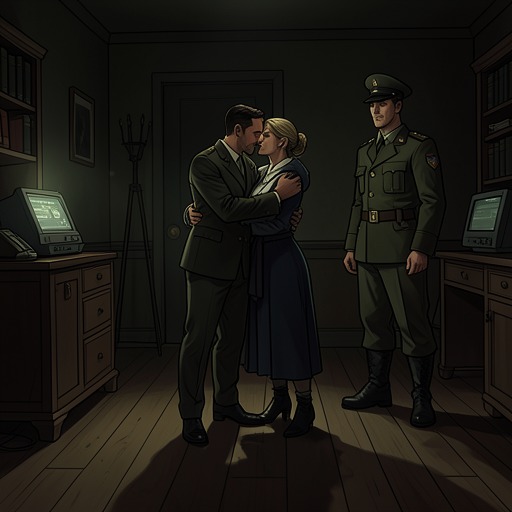
Pack Loyalty Rule
My Vampire Love (Completed)The Pack Loyalty Rule is the governing principle that makes a supernatural pack more than a collection of fighters: its real foundation is trust and loyalty. In the conflict surrounding Jenifer, the rule becomes both a practical survival lesson and a test of leadership, contrasting dependable collective protection with a leader’s dependence on sheer numbers.
Definition and Scope
The rule is stated in opposition to the idea that a pack becomes stronger simply by acquiring more members. Katalin explains that a pack is about trust and loyalty, not numbers. The principle therefore treats internal allegiance as the essential measure of collective strength, while size alone remains unreliable and potentially deceptive.
The rule operates within a wider network of supernatural law and obligation. Dean and his pack are assigned to guard Jenifer specifically from Underworld matters, but Eric distrusts Dean because Dean could turn against them. Katalin answers that Eric has no choice because the arrangement was ordered, placing the pack’s protective function under a formal command even as personal confidence in its members remains uncertain.
Katalin’s Demonstration
The rule is most forcefully applied when Katalin confronts Zane. She first identifies the danger facing those who are wanted dead: they must recognize when an opponent is merely stalling them. She then connects that warning to pack organization, rejecting the assumption that a leader can assemble a loyal force in the same way that a fictional captain gathers a crew.
Her lesson immediately becomes action. At her signal, almost half of Zane’s pack turns against him. Members draw daggers and knives, attack one another, and slit each other’s throats; nearly a quarter of the pack collapses to the floor at once. The scene converts an abstract maxim into visible evidence: a large group without genuine loyalty can be dismantled from within faster than an outside enemy could destroy it.
Conflict with Other Rules
The Pack Loyalty Rule exists beside, and sometimes collides with, the laws governing the other supernatural groups. Werewolves are described as humans afflicted by an inherited curse that awakens and forces them to transform during the week of the full moon. Once awakened, the curse removes their control and drives them toward bloodlust; Underworld law consequently classifies them as the Cursed Species and requires that they be killed on sight.
This contrast shows two different grounds for collective judgment. Werewolf law treats uncontrollable transformation as a reason for extermination, while the Pack Loyalty Rule evaluates a group through its relationships and conduct. A pack may possess many capable bodies and still fail because its members do not trust one another; a protective pack, by contrast, is defined by the reliability of its allegiance.
Protection and Consequences
The rule also clarifies why packs matter to the plot beyond battlefield strength. Dean’s pack is entrusted with watching Jenifer while Eric is constrained by Underworld authority. Their role is not simply to add numbers to Eric’s side but to provide a coordinated protective boundary around Jenifer, whose existence is already central to the balance of power between supernatural species.
Katalin’s later command demonstrates another hierarchy operating over the assembled supernatural forces. When she enters, the vampires bow, and her shield opens the double doors; she orders everyone to arise and leave, and the vampires immediately comply, followed by the humans. The obedience of that crowd shows the power of command, but the earlier collapse of Zane’s pack shows that command alone cannot create loyalty. Authority can move a group; trust is what holds one together.
Narrative Significance
The Pack Loyalty Rule gives the book a recurring measure for distinguishing genuine protection from dangerous spectacle. It exposes the weakness beneath Zane’s apparent strength, explains the importance of Dean’s assigned guardianship, and frames pack politics as a question of allegiance rather than population. Its most memorable image is not a united army advancing, but a mass turning inward: the pack disintegrates because its members were never bound securely enough to remain a pack.