
The Trial as a Conflict of Stories
Native SonThis thread traces the battle between Max’s structural explanation and Buckley’s racialized account of Bigger Thomas in court.
increasing Bearing strength in each event
 decreasing
Bearing strength in each eventdecreasingThe Prosecutor’s Portrait
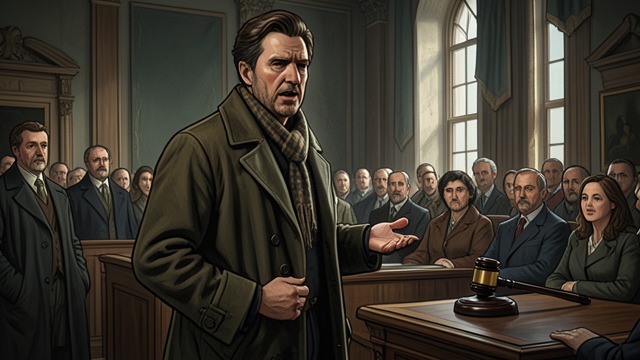
A Defendant Made Monstrous
Buckley’s claim
Buckley describes Bigger as a predatory animal and insists that the crimes demand death. He presents the prosecution’s evidence as a clear moral story with little room for uncertainty.
Public emotion enlisted
He invokes the safety of homes and women while speaking in a courtroom surrounded by an angry crowd. His argument makes racial fear appear to be neutral concern for law and order.
Max’s Structural Argument
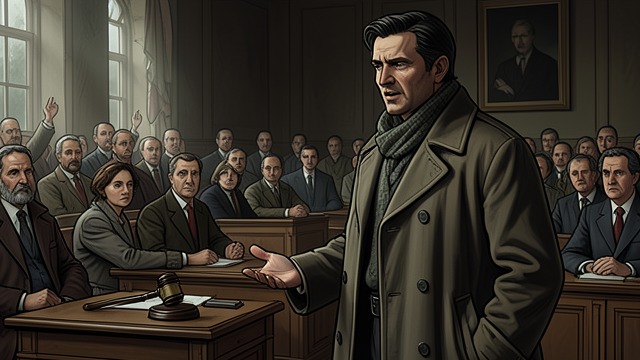
Conditions Before the Crime
A broader account
Max connects Bigger’s constrained housing, education, and employment to the anger and isolation that shaped him. He asks the court to consider how the country has produced conditions it now condemns.
Context and responsibility
Max does not claim that the murders are harmless; he asks the court to consider their causes and consequences before choosing punishment. His argument challenges the idea that execution can resolve the underlying conflict.
The Mob at the Window
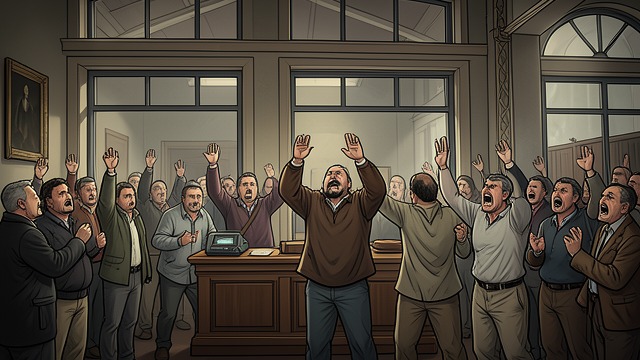
Pressure Enters the Courtroom
A crowd used rhetorically
Buckley opens the window so that the mob’s calls for violence reach the courtroom. Max objects that the display threatens the court’s independence.
Justice under intimidation
The crowd is not simply outside the case: its presence becomes part of the argument for punishment. The judge’s decision will be made within a public atmosphere already saturated with fear and racial hostility.
Evidence Made into Spectacle
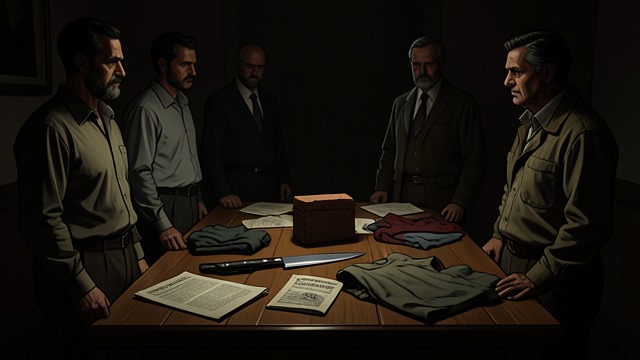
Objects Tell Partial Stories
A parade of proof
The prosecution displays the knife, brick, pamphlets, clothes, and other objects, while witnesses recount fragments of Bigger’s actions. The evidentiary process is prolonged despite his guilty plea.
The body as public argument
The presentation turns the crimes into spectacle and repeats the sexualized account of Mary’s death. The volume of evidence threatens to substitute emotional force for a careful distinction between proven facts and public assumptions.
A Sentence in the Name of Order
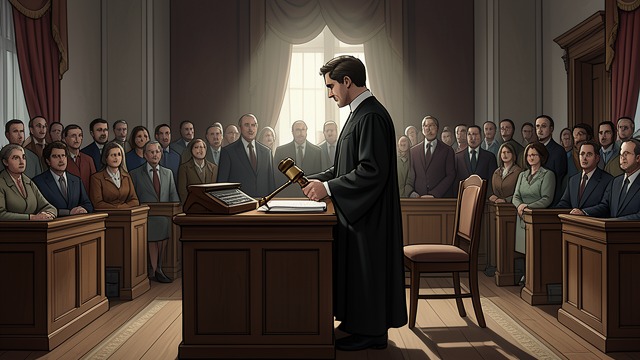
A Court Chooses Death
Formal judgment
The judge sentences Bigger to death, citing the disturbance of the public mind. The ruling follows a hearing in which Max’s account of structural causes is answered by Buckley’s appeal to safety and public order.
Conflict remains
The court resolves the immediate question of punishment but not the racial, economic, and political conditions argued over in the room. The sentence turns a social crisis into the fate of one young man.
At the opening of the sentencing hearing
During Max’s closing address
During Buckley’s closing address
Across the days of testimony
At the judge’s final ruling
