
Law, Mob, and the Threat of Death
Native SonThis thread traces the conflict between legal procedure and mob violence, showing how the threat of lynching shadows Bigger Thomas’s path through court.
increasing Bearing strength in each event
 decreasing
Bearing strength in each eventdecreasingA Mob Nearly Takes Him
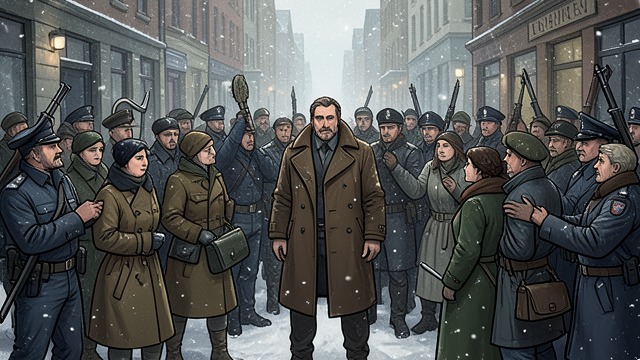
Justice Before the Station
Capture in the street
The crowd surrounds Bigger and shouts for him to be killed while police drag him through the snow. Officers must hold the crowd back to keep him alive long enough for formal custody.
Law under threat
The arrest begins with an attempted public punishment. From the outset, legal protection is compromised by the mob’s belief that racial vengeance is legitimate.
A Crowd Outside the Hearing
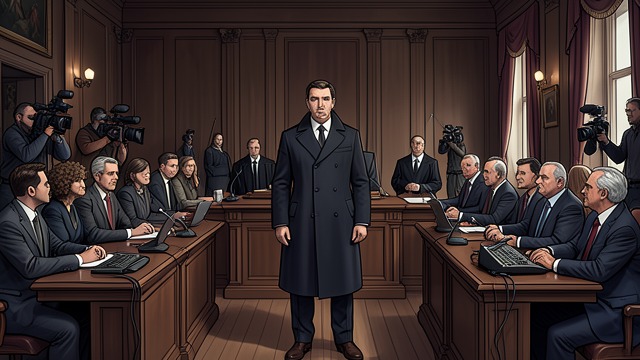
The Audience Presses In
A room full of hostility
Reporters and spectators fill the inquest as officials display evidence and question witnesses. Bigger feels the crowd’s gaze as a demand that he be made into a symbol.
Public feeling shapes procedure
The hearing may follow formal rules, but its atmosphere rewards sensational claims about race and sexuality. The process appears less insulated from the crowd than the law requires.
Troops Surround the Trial
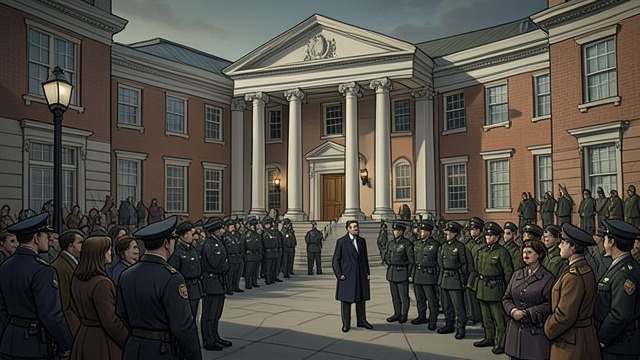
The Court Fortified
Military protection
Illinois National Guard troops surround the courthouse while a hostile crowd gathers outside. Bigger sees the forces that are meant to protect the proceedings and also testify to the depth of public unrest.
A courtroom under pressure
The trial proceeds in the shadow of possible violence. Max’s argument must address not only the judge but the social force represented by the people beyond the windows.
Buckley Opens the Window
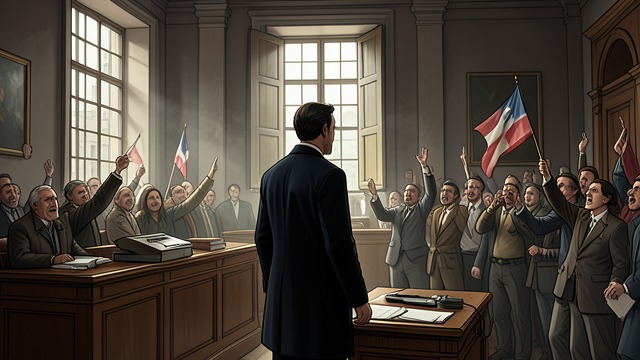
Mob Emotion Made Audible
The prosecutor invokes the crowd
Buckley opens a window so the crowd’s calls for death enter the courtroom. He presents the mob as evidence of public fear and as a reason to impose the harshest penalty.
Max objects to intimidation
Max argues that the scene threatens the court’s independence. The exchange exposes how the prosecution turns the crowd’s coercive presence into an argument for its own preferred outcome.
Death Under Public Pressure
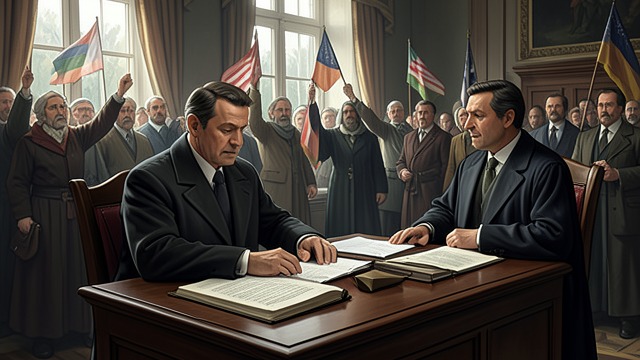
The Law Follows the Crowd
A sentence pronounced
The judge sentences Bigger to death and cites the unprecedented disturbance of public feeling. Bigger hears the ruling as confirmation of what he has feared since his capture.
Security’s contradiction
The state presents death as protection of the public, yet the sentence cannot answer the violence already surrounding the trial. Legal order appears to depend on yielding to the very mob pressure it claims to control.
Immediately after Bigger falls from the rooftop
At the public inquest
The morning Bigger’s sentencing hearing begins
During the prosecutor’s final argument
When the judge announces sentence
