
The Religious Visit
Native SonThis thread traces Bigger Thomas’s rejection of the religious consolation offered by his mother and Reverend Hammond, and the fragile meaning he later seeks elsewhere.
increasing Bearing strength in each event
 decreasing
Bearing strength in each eventdecreasingPrayer at Breakfast

A Faith He Cannot Share
Familiar ritual
Bigger’s mother prays over the family’s breakfast and sings hymns while trying to hold the household together. Bigger experiences the ritual as an irritant and turns away from its promises.
An inherited distance
The scene presents religion as a source of endurance for his mother but not as a language Bigger trusts. His rejection is bound to his conviction that faith has not altered the material conditions of their lives.
A Cross in the Cell
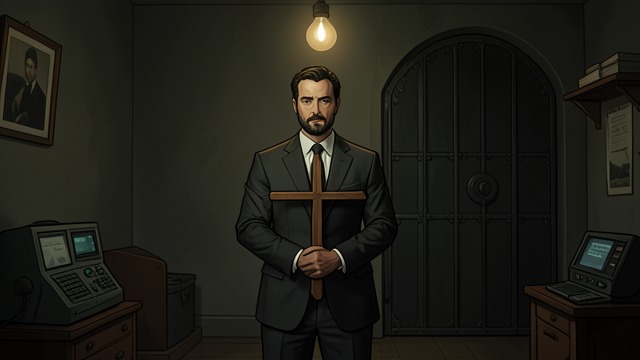
An Appeal to Surrender
The preacher’s message
Reverend Hammond prays with Bigger, recounts the fall from Eden, and presents Jesus’s suffering as a model of love, forgiveness, and submission. He gives Bigger a wooden cross to hold.
A consolation that wounds
Bigger feels the preacher’s words as a demand to accept a world that has excluded him. The cross awakens awe and guilt, but it does not yet offer a way to reconcile his anger with the religious life his mother cherishes.
A Brief Promise
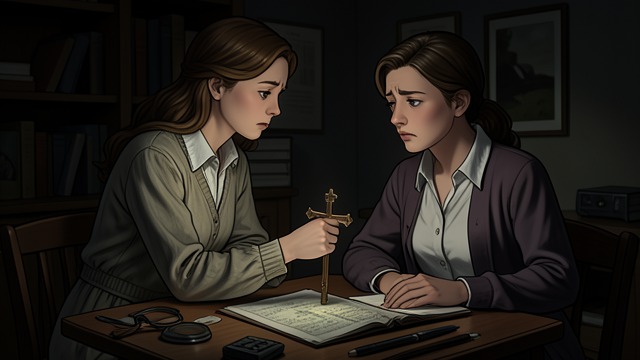
A Promise for His Mother
A mother’s request
Bigger’s mother asks him to pray and believe that they will meet again after death. He knows she needs this belief and, despite his own doubt, promises to pray.
Tenderness and dishonesty
The promise briefly comforts his family but does not resolve Bigger’s disbelief. His response shows that affection survives even where shared faith does not.
The Burning Cross
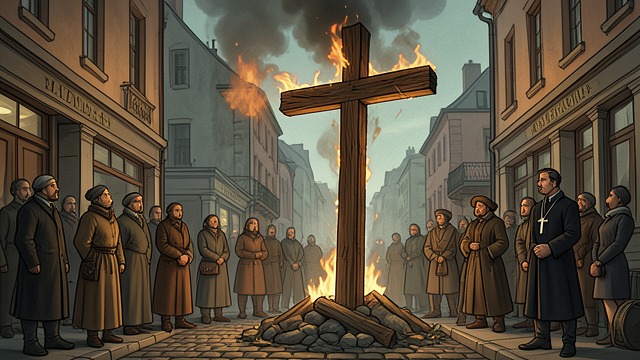
A Symbol Reversed
A public threat
Outside Dalton family residence, a crowd watches a cross burn above the street. Bigger recognizes that the image belongs to racial intimidation, not to the Christian story of compassion.
Faith turned against him
The cross around his neck now feels like a threat rather than protection. He rejects Reverend Hammond’s gift, unable to separate religious comfort from the society that has turned the same symbol into a weapon.
The Lost Consolation
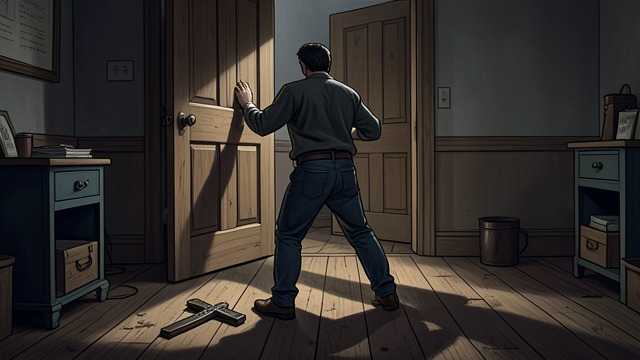
Refusal and Isolation
The final rejection
Bigger slams the cell door against Reverend Hammond and insists that he wants neither the preacher nor Jesus. He throws the cross away once more and resolves not to trust an offered hope.
The cost of refusal
The act protects him from a form of consolation he cannot accept, but it deepens his solitude. His eventual self-affirmation will emerge not from religious certainty but from his own understanding of what he has felt.
The morning before Bigger visits the Dalton home
After Bigger’s capture and before Jan and Max visit
During the family’s visit to the jail
After the inquest, during the return from the Dalton home
After the preacher is driven from Bigger’s cell
