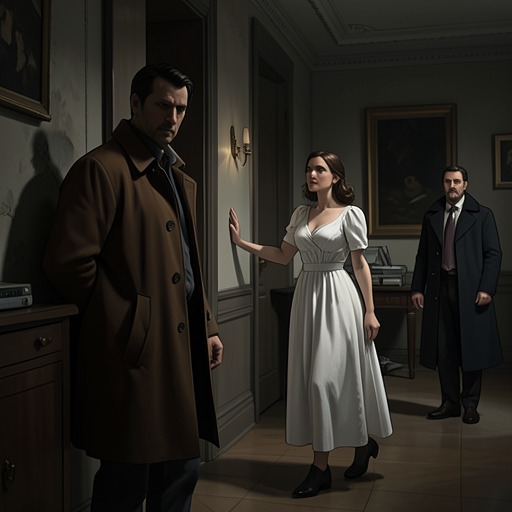
“It was an act of creation!”
Native Son“It was an act of creation!” is the closing declaration of a courtroom argument that acknowledges the deaths of Mary Dalton and Bessie Mears while disputing whether Bigger Thomas’s actions can be understood as murder in the ordinary legal and moral sense. The phrase turns the argument’s focus from the acts themselves to the life and social conditions the speaker says produced them.
Context in the Argument
The speaker first asks the court whether Bigger Thomas “really murder[ed]” and concedes that, viewed from outside, his actions might be called murder. The argument then challenges the prosecution for failing to establish a motive in the usual legal sense, claiming that Bigger himself does not know why he acted. The phrase arrives as the culmination of this distinction between the external description of the acts and the speaker’s account of how Bigger experienced them.
The argument does not deny the deaths: it names Mary Dalton and Bessie Mears and identifies Bigger as responsible. Instead, it places those events within a much longer history, contending that what happened on Sunday morning in the Dalton home and Sunday night in an abandoned building was only a small part of what Bigger had been doing throughout his life.
Meaning and Significance
By calling the actions “an act of creation,” the speaker gives them a paradoxical meaning: actions associated with death are presented as an expression of living. The surrounding claim is that Bigger was living as he knew how, under conditions the speaker says others had forced upon him, and that his actions were instinctive rather than driven by a motive as the law understands it. This is the defense speaker’s interpretation, not a denial that the women died or that Bigger caused their deaths.
The phrase’s force depends on the sharp contrast between the court’s language of motive and murder and the speaker’s language of creation and constrained life. It recasts the case as an argument about the circumstances that shaped Bigger’s existence, while leaving the tension between that social explanation and his responsibility for the deaths unresolved.