Alienation and human solidarity
Native SonAlienation and human solidarity are brought into sharp conflict when Bigger Thomas, facing death, experiences Max’s attention as an unfamiliar recognition of his personhood. The encounter does not undo Bigger’s fear, racial shame, or isolation. Instead, it opens a possibility he has scarcely allowed himself to consider: that other people may share a human life with him, even across the divisions that have shaped his hatred. The possibility arrives too late for certainty, but it changes what Bigger wants from the life he has left.
Racial estrangement and distrust
Bigger’s response to Max’s offer to handle his case is divided from the start. He trusts Max enough to recognize that Max is risking the hostility of other white people by helping him, yet he doubts that this trust can change how he understands his approaching death. Earlier contact with a white person had made him acutely conscious of his color and had brought shame and fear with it; Max’s acceptance of his perspective revives that consciousness rather than making it disappear. Bigger also resents himself for feeling ashamed, so the encounter intensifies an already painful conflict within him.
His hesitation is not simple disbelief in Max’s motives. Bigger fears that accepting another person’s faith or commitment will end in betrayal, as he believes earlier commitments have. He wants to believe Max, but is afraid to act on that desire. He even doubts that God could now give him a way to face death. His sense of being caught in No Man’s Land expresses a broader estrangement: when a white man speaks to him, Bigger cannot readily find a position from which trust feels safe. He watches Max only when Max is not looking at him, a small gesture that shows how difficult direct recognition remains even in a conversation he trusts.
Recognition through conversation
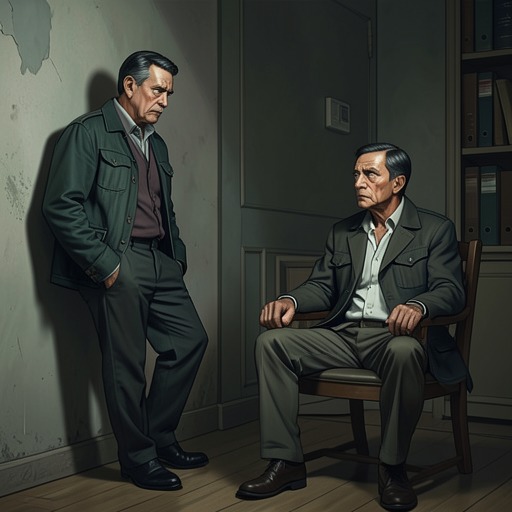
Max tells Bigger that he is his lawyer and wants to speak honestly, with what Bigger says held in confidence. Bigger understands that Max’s questions can help supply facts for the judge. Yet he also experiences the questioning as something more than preparation for a case: Max appears to recognize his life, feelings, and person. That recognition gives Bigger a fleeting sense that he has spoken not merely as a defendant but as someone who has something to say.
The effect unsettles him because it conflicts with the identity he believes he is required to keep in view. He knows he is to die, is Black, and is a murderer; he thinks he has no right to forget any of these facts, even briefly. He has told Max that he does not want religion and has not stayed within the place assigned to him. For a moment, however, Max’s questions allow him to experience himself as more than the sum of condemnation and imposed racial position. Recognition does not acquit him or erase his acts. Its force lies in making a person visible within a relationship that Bigger had expected to be only another encounter with white authority.
Imagining a shared human life
After the conversation, Bigger wonders whether people who hate him might nevertheless possess something in common with what Max has seen in him. He considers whether the seemingly immense force of white hatred might be made up of individual people, including people like Max and Jan, rather than being an impersonal, indivisible mass. This thought produces both hope and fear. If others are human in ways he can recognize, then a connection may be possible; but the prospect is so consequential that he fears it could lead to renewed disappointment and shame.
Bigger’s imaginings give this tentative possibility form without making it secure. He pictures people confined in separate cells, unable to reach one another, and wonders whether their isolation is a condition shared across the world. He also imagines reaching beyond barriers and finding that other people are present and alive. What he seeks is not a promise of warmth or forgiveness, but confirmation that others exist as fellow human beings. He associates such recognition with union, identity, and a wholeness denied to him throughout his life. A further image gathers Black and white people together, with what they share rising above visible differences. These remain imaginative possibilities, not discoveries Bigger can verify before his death.
Hope under the sentence of death
The new sense of connection does not make Bigger forget the harm he has caused. He reflects that he has killed Mary and Bessie, brought sorrow to his mother and siblings, and placed himself under sentence of death. Nor does he claim that recognizing shared humanity settles who is responsible for the divisions between people. He still wonders whether white people are to blame for excluding him from a larger human struggle, but his attention has shifted: for the moment, he is more concerned with understanding the new feeling than with sustaining hatred.
That shift changes his desire to live. Bigger does not want life as a means of escaping payment for his crimes; he wants time to discover whether this sense of relation to other people and to the world is true, and to experience it more fully. The death sentence makes that desire urgent while denying him the time he seeks. The concept therefore remains unresolved: solidarity appears as a real possibility to him, but not as an achieved community or a guarantee of rescue. His final movement toward it exposes the depth of his previous alienation and the cost of reaching recognition only when death is near.