Anti-Communist suspicion surrounding the case
Native SonAnti-Communist suspicion surrounding the case reshapes Mary Dalton’s disappearance into an apparent Communist plot, directing police, reporters, and public attention toward Jan Erlone and political organizing. As the investigators follow that story, Bigger Thomas recognizes that their assumptions offer him cover: the Communist trail gives them a suspect and a theory while drawing scrutiny away from his responsibility for Mary’s death.
The Disappearance Becomes a Political Story
A newspaper headline encountered by Bigger Thomas presents Mary Dalton as a missing heiress believed to be hiding with Communists and reports that a local Communist leader has been arrested. Its accompanying account speculates that Mary left her wealthy parents’ home to join political friends and distribute her father’s real-estate fortune among poor people. These are the newspaper’s conjectures, not established facts about Mary’s intentions. The article supplies readers with a ready-made explanation for her absence before the investigation has established what happened to her.
The report identifies Jan Erlone as the arrested man and describes him as an organizer for Labor Defenders, which it characterizes as a Communist front organization. It says Mary had been associated with him until early Sunday morning at a South Side café in the Black Belt. By placing her political associations, her father’s wealth, and her disappearance in a single narrative, the story converts a family crisis into a matter of political allegiance. Its emphasis on the supposed defiance of her father makes that narrative especially convenient for public speculation, although it does not establish that Mary was participating in a Communist plan.
Jan Erlone and the Investigative Trail
The investigators’ uncertainty is visible in their discussion of the supposed kidnapping. They have a letter signed with the alias Red and marked with a hammer and sickle, but the men acknowledge that those clues do not make the case coherent. Britten urges them to give Mr. Dalton time, presenting the father as someone trying to recover his daughter alive. The men nevertheless wonder whether Mr. Dalton wanted Jan Erlone released because he believed Jan had a role in Mary’s disappearance and might help bring her back.
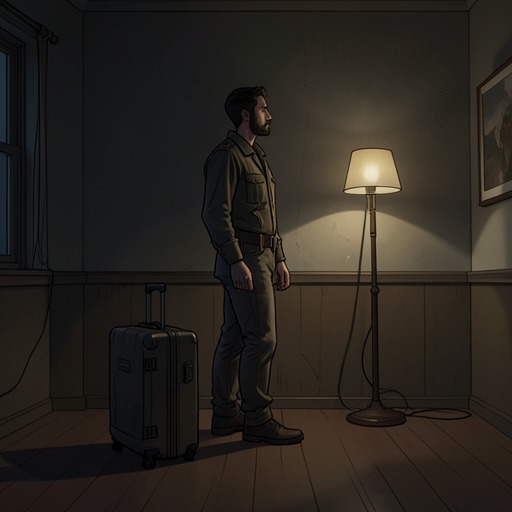
Bigger Thomas listens closely to these exchanges, attending both to the questions and to the investigators’ tone so he can judge whether they suspect him. Their attention remains fixed on Jan Erlone and his associates. Bigger understands that he can reinforce that direction: he knows the police regard him as an uninformed Black servant, not as someone involved in the supposed kidnapping, and he fears that silence might make them curious. The resulting investigation does not merely misidentify a lead; its racial assumptions help make Bigger’s concealment possible.
Pamphlets, Questions, and Public Alarm
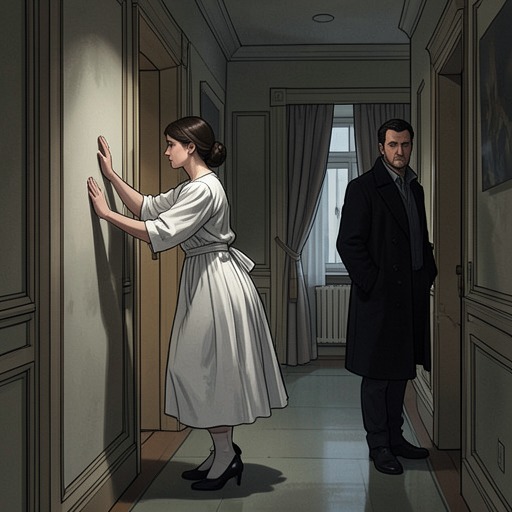
When an investigator asks whether Jan Erlone spoke to him about Communism, Bigger confirms that he did. Britten then remembers the pamphlets Jan gave Bigger and displays them to the other men, who photograph them. The pamphlets become visible evidence of Jan’s political associations, though their presence does not show that he kidnapped Mary or explain her actual fate. In the same questioning, an investigator asks Bigger what he thinks about public ownership and government-built housing. The political inquiry has expanded from the missing heiress to the ideas associated with her acquaintance and his reading material.
The newspapers later describe an enormous search across the Black Belt: eight thousand armed men comb buildings and more than a thousand Black homes while police raid Communist headquarters and arrest hundreds of people identified as Reds. Those arrests fail to uncover clues. The coverage thus joins two forms of alarm—fear of a missing white heiress and fear of Communist activity—without producing an answer to the central question. A map in the report shows the searched area closing in on a small unshaded space, while the article also notes that the apartment building where Bigger lives is owned and managed by a subsidiary of Dalton Real Estate Company. The juxtaposition links the search to the segregated housing landscape and to the real-estate interests of the family whose daughter is missing.
Distortion and Narrative Consequences
The political theory repeatedly threatens to replace inquiry with assumption. The supposed Communist connection gives the authorities a conspicuous direction to pursue, while Bigger watches for signs that anyone might turn toward him. His ability to remain outside their immediate suspicion depends in part on the investigators’ willingness to treat Jan Erlone’s politics and the pamphlets as more revealing than Bigger’s own presence in the household. The investigation’s failure to distinguish suggestive political symbols from proof allows a false account of the disappearance to gather force.
The novel later places this public alarm beside the unequal treatment of Mary Dalton and Bessie Mears. At the inquest, Bessie’s death is brought forward as evidence in the case centered on Mary, and Bigger recognizes that the proceedings give the white victim’s death far greater public weight. This racial disparity is not itself evidence of an anti-Communist motive; it clarifies, rather, that political suspicion operates within a society already structured by unequal attention to Black and white lives. The newspaper’s mass raids and the courtroom’s treatment of the two deaths reveal different ways that public institutions organize fear and assign significance.
Historical and Literary Significance
The novel’s later reception gives this strand of the case an additional historical resonance. In the 1960s, amid the rise of the Black Power movement and a sharp increase in violent crime in American cities, Native Son came to seem strikingly accurate and prophetic to many readers. That assessment concerns the novel’s broader account of racial conflict and urban life, not proof that the Communist allegations in the fictional investigation are true. The plot instead shows political suspicion becoming one more force that distorts public understanding of a crime.
The episode’s lasting significance lies in the gap between what the investigation claims to know and what its evidence can establish. A political symbol, a set of pamphlets, and Jan Erlone’s association with Mary are repeatedly made to carry more explanatory weight than they warrant. While authorities pursue that story, Bigger Thomas recognizes the protection it affords him. The anti-Communist narrative therefore functions both as a public misdirection and as a measure of how readily fear can turn uncertain clues into an authoritative account.