Bigger Thomas
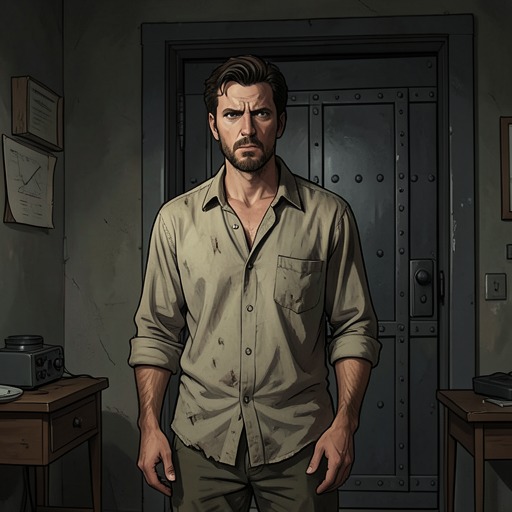
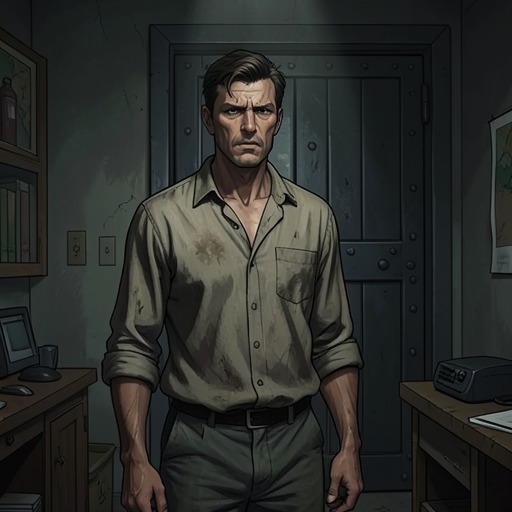
Native SonBigger Thomas is the central figure of Richard Wright’s novel, whose fate brings individual responsibility into collision with the racial order of Chicago. A young Black man constrained by housing, work, education, and public expectation, he is hired by Mr. Dalton as a driver, becomes responsible for Mary Dalton’s death, and is sentenced to die. His story does not erase his actions: instead, it follows how those actions become entangled with a society that has already restricted his choices and then interprets him through racial fear.
Identity and Social Position
Bigger first appears as a boy in a narrow space between two iron beds, rubbing his eyes as a woman speaks from a nearby bed. That opening places him within a crowded family household before the story moves into the larger systems that shape his adult life. The novel presents him not in isolation but among relatives and friends, as one of the people through whom its account of Black life in the city takes form.
The surrounding cast embodies competing social forces, with Bigger at their center. Mr. Dalton represents capitalism; Mrs. Dalton and Mary represent liberalism in different forms; Max and Jan Erlone are associated with communism, while the preacher represents religion. The state’s attorney stands for overt racism and reaction. These figures are not merely private acquaintances in Bigger’s story: their contrasting positions help establish the political and social pressures against which his choices acquire meaning. Chicago itself is rendered as a force in the novel, not simply a backdrop to his movements.
In Max’s later account to the court, Bigger’s life is defined by limits imposed from outside: where he may live, how much schooling he may receive, where he may eat, and what work he may do. Max describes those restrictions as part of a system that has kept Black people close enough to serve the dominant society while denying them a full life of their own. That argument supplies a structural account of Bigger’s circumstances, though Max explicitly says that his purpose is not simply to present Bigger as an injured victim or ask the court for sympathy.
Employment, Mary’s Death, and Concealment
Mr. Dalton hires Bigger after hearing that he can drive. The job brings him into the Dalton household and places him inside a relationship shaped by employment and unequal power. The contrast between the household’s resources and Bigger’s restricted opportunities becomes consequential: the position gives him access to the family’s world, but it does not remove the racial divisions that govern his place within it.
Mary dies while Bigger is present. He finds her limp and recognizes that she is dead, but cannot immediately make sense of what has happened. The scene marks a decisive break: the fact of her death is clear to him, while his understanding of his own thoughts and actions remains obstructed. Later, Max characterizes the killing as accidental, without planning or conscious motive, and argues that Bigger accepted the act afterward. This is Max’s interpretation in court; it distinguishes the circumstances he assigns to Mary’s death from the meaning he believes Bigger subsequently gave it.
Bigger attempts to conceal what happened. During the household investigation, he is left alone after Britten and the other men go upstairs. He checks that the back door is locked, looks into the kitchen, and then takes up a newspaper. Its headline announces Mary’s disappearance, suggests that she may be hiding with communists, and reports that Jan has been taken in for questioning. The printed account shows how quickly the case is recast as a public story involving political suspicion, while Bigger remains privately aware of his concealed responsibility.
That concealment collapses when men searching the furnace uncover small pieces of white bone in the ashes. Bigger sees them and is immediately overcome by fear. As the search continues below him, he climbs to his room, opens a window, and prepares to escape through it. The sequence turns the furnace from a means of hiding evidence into the object that exposes the truth, and the discovery sets the pursuit and public reckoning in motion.
Capture, Public Judgment, and Family
After his capture, Bigger encounters a public narrative that casts him not simply as a defendant but as a racial threat. A Chicago Tribune report calls him a sex-slayer, describes him as cowed and fearful, and recounts that he fainted at the inquest. It also reproduces a white onlooker’s comparison of him to an ape. These are the newspaper’s words and framing, not a neutral account of his character; the report shows how racialized language shapes the public presentation of the case.
At a later moment when his family enters the room, Ma embraces him, while Vera and Buddy stand nearby and his friends Gus, G.H., and Jack watch from the doorway. Jan, Max, Mr. and Mrs. Dalton, the preacher, and Buckley are also present. Bigger feels that the white people are measuring his weakness and experiences his family’s presence as a source of exposure and shame under their gaze. The scene places his relatives and friends within the same room as the people and authorities associated with the case, making the racial imbalance of observation and judgment concrete.
Bessie’s death enters the proceedings when her body is presented during the inquest into Mary’s death. Bigger understands that this evidence will be used to make him appear monstrous and to intensify demands that he be killed. He had forgotten Bessie during the earlier inquest, he recognizes, not because he valued her less, but because Mary’s death had generated the greater fear for him as a Black man. The difference in public attention also matters: Bessie’s death had not been mentioned at the earlier hearing, and now her body is introduced in a way that serves the case against Bigger. He imagines that Bessie would resent being used in this fashion. Her own experience of being commanded after long hours of work in white households informs his anger at a system that, in his view, continues to claim authority over him even after he has obeyed and committed crimes.
Trial and Max’s Defense
Bigger’s trial brings the conflict between individual guilt and social conditions into the courtroom. Max begins his plea by insisting that he is speaking to the destiny of more than one defendant or one people. He rejects the idea that the court should respond only with pity for a victim of injustice, warning that such a response would leave the deeper conflict untouched. His defense instead asks the court to understand how Bigger’s life and fate are connected to those of the society judging him.
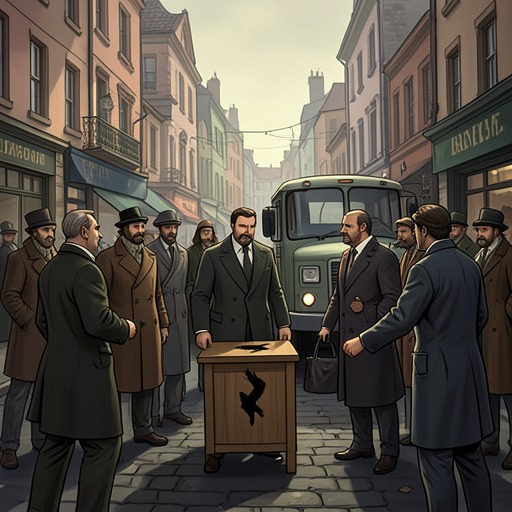
Max points to unequal housing practices by questioning Mr. Dalton about the higher rent charged to Black families for comparable houses and about company policy that keeps them in one area of the South Side. He then makes the courtroom itself part of his argument: Black and white spectators sit apart, Max says, not because anyone has given an explicit instruction at that moment, but because they understand that the groups are not wanted on the same bench. The spatial arrangement offers visible evidence of segregation alongside the broader restrictions on housing, education, food, and work that Max describes.
Max’s most consequential interpretation is that Mary’s death was not a planned act of retaliation. He argues that Bigger mistook an entire race for part of the natural order of the universe, and that after the killing he accepted what he had done because it seemed to grant him a possibility of choice and action. This account does not make the crime harmless or deny that Bigger killed Mary and Bessie. It proposes that the meaning he attached to his actions arose within a life in which he had rarely felt that his actions could carry weight. Bigger himself struggles to communicate the history behind his conduct: he knows that the crimes are known, but fears that no admission can convey the accumulated hatred and pressure that preceded them.
Sentence and Narrative Significance
The court sentences Bigger to die before midnight on Friday, March third, under the laws of the state. The verdict closes the legal proceeding with a definite outcome, while leaving unresolved the divide that Max has identified between knowing the crimes and understanding the life that led to them. In a conversation about his fate, Bigger says that the manner of his death does not matter, though his voice chokes. The words register the bleakness of his position without suggesting that he has found a way out of it.
Bigger’s narrative significance rests on this unresolved conjunction of agency and constraint. Max argues that the killing of Mary became, for Bigger, a first act that seemed to offer freedom and choice; the subsequent deaths, concealment, and flight show the consequences of that interpretation rather than a genuine escape from the forces around him. At the same time, Bigger’s inability to explain himself reveals a limit in the courtroom’s capacity to hear him: legal knowledge of what he did does not automatically disclose what his life meant to him.
The novel’s reception has also followed changing judgments about the social conditions surrounding Bigger. In the 1960s, the rise of Black Power and the increase in violent crime in cities led some readers to regard the book as strikingly accurate and prophetic. In the 1980s, feminist criticism drew renewed attention to the hostility toward women in much of Wright’s fictional world. Those later assessments complicate any reading of Bigger as a figure who stands for an entire community: his centrality makes the pressures on him visible, but it does not make the harms involving Mary and Bessie secondary or cancel the distinct positions of the women in the story.