Bigger Thomas—Jan Erlone relationship
Native SonBigger Thomas and Jan Erlone’s relationship turns on a reversal: Bigger first makes Jan a target of suspicion to protect himself, while Jan later approaches him in jail with an offer of help rather than revenge. Their encounters expose the distance produced by racial division, but also register a difficult change in how each understands the other. Jan’s solidarity does not undo Bigger’s deception or the harm he has caused; instead, it gives Bigger an experience of trust that makes his guilt more personal and his judgment of Jan less governed by racial expectation.
Suspicion and False Accusation
Bigger’s account of Jan’s presence in the Dalton home becomes part of the investigation into Mary Dalton’s disappearance. When a man points out that Jan claims to have witnesses who can confirm he was not there, Bigger stiffens. Britten dismisses Jan’s denial and insists that Bigger saw him; asked directly whether Jan was there, Bigger confirms that he was. The exchange shows Bigger maintaining the accusation even as Jan contests it and others question whether he is telling the truth.
The accusation carries consequences beyond a disagreement over what happened. Jan says he believes that Mr. Dalton is trying to slander the Communist Party by having him arrested and to disrupt his relationship with Mary. Investigators also report his claim that the family knows where Mary is and that the alleged kidnapping is being used to attack political opponents. In this charged setting, Bigger’s statement helps sustain suspicion of Jan. It also places Jan in the position of having to defend himself against a story that Bigger has helped create.
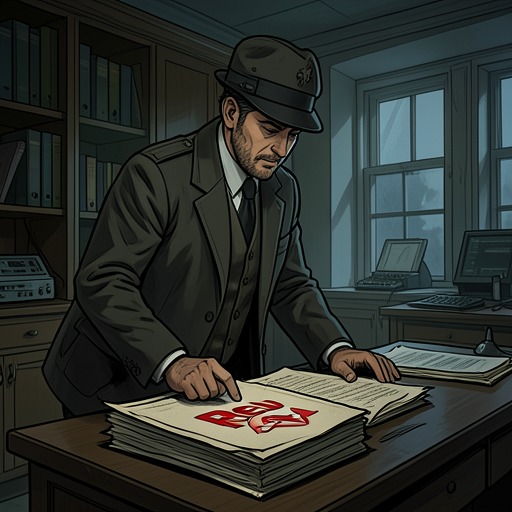
That false account does not remain fixed. When investigators ask Bigger whose idea the kidnapping note was, he refuses to name Jan and says Jan had nothing to do with it. His answer is a consequential correction: even while under pressure to implicate Jan again, Bigger does not extend the accusation to the ransom scheme. Later, he tells Max that he did Jan wrong by signing the name Red to the ransom note. Bigger’s changing statements distinguish the original false implication from the separate deception he eventually acknowledges.
Jan’s Visit and Offer of Help
After Bigger is in jail, Jan comes to see him. Bigger initially wonders whether Jan intends revenge and is wary of trusting even a white man who has previously offered friendship. Jan, however, speaks haltingly and says the events have taken him time to understand. He acknowledges that he had not understood Bigger during their earlier encounter and says he is not angry about Bigger’s attempt to blame him. Rather than demand an explanation or forgiveness, Jan offers to help.
Jan describes his own change as an effort to see more deeply. He loved Mary, and her death first brought grief and anger: he says he had thought of killing Mr. Dalton, and later of killing Bigger. He then rejects that response because he believes it would perpetuate the violence rather than end it. His willingness to help Bigger therefore comes with an acknowledged conflict: he is grieving for the woman Bigger killed, yet chooses not to turn that grief into retaliation.
Jan also places his personal response within a history larger than the two men. Thinking of Black people whose families had been taken from them under slavery and afterward, he says that their suffering changed how he understood his own grief. He does not claim that this makes him able to take responsibility for everything done by white people. Instead, he recognizes that his identity is inseparable from theirs in Bigger’s eyes: his face resembles those of men who hate Bigger, even though Jan says he does not share their feelings. That recognition marks a shift from treating his intentions as sufficient proof of understanding to acknowledging how the racial meaning of his presence affects Bigger.
Recognition, Trust, and Uneasy Guilt
Jan’s offer includes concrete assistance. He asks Bigger to let him stand on his side and says that his friend Max, a lawyer, wants to help. Bigger is bewildered and initially fears that the offer may be a trap. He sees Jan as a white man who believes in him, but that belief does not simply reassure him: it produces a new kind of guilt because Jan is the person whose beloved Mary Bigger killed.
The moment is a rupture in Bigger’s habitual view of white people as a single hostile mass. Jan’s face becomes legible to him as an individual face, and Bigger recognizes the cost of his own false accusation and violence. The change is not instant ease or reconciliation. Bigger remains silent, folds his hands, and struggles to respond to words he has not heard from a white man before. The scene makes the offer of friendship consequential precisely because it does not erase the injury between them: it allows Bigger to perceive Jan’s humanity and, with it, the particular harm he has done to him.
Jan’s visit also distinguishes aid from pity. He says he is not coming to feel sorry for Bigger, but trying to live up to what he has come to understand. His willingness to assist does not excuse Bigger’s actions, and Jan does not ask him to stop hating him. Instead, Jan recognizes that Bigger’s hatred has reasons rooted in the treatment of Black people, while refusing to present his own help as a substitute for changing that reality.
Public Testimony and Structural Conflict
Jan’s changed understanding is tested in public during the inquest into Mary’s death. Bigger watches him take the stand and wonders whether he will turn against him. Asked whether he believes in social equality for Black people, Jan answers yes, despite the coroner’s demand for a simple response and warning that he is not speaking from a platform. The exchange makes Jan’s position explicit before a room in which racial separation remains visible and politically charged.
Jan’s testimony gives public form to the personal solidarity he offered in jail, but the evidence does not show that it resolves Bigger’s legal peril. Max’s later argument in court places their relationship inside a much broader account of racial power: he describes restrictions on where Bigger could live, how much schooling he could receive, where he could eat, and what work he could do. He also points to the separation of Black and white spectators in the courtroom itself. These conditions clarify why Jan’s individual willingness to stand beside Bigger matters, while also showing its limits: one friendship cannot by itself undo the structures that shape Bigger’s life or the judgment awaiting him.
What the Relationship Changes
In his later conversation with Max, Bigger says that Jan is not against him and did not turn against him when questioned. He supposes that Jan is hurt about Mary, acknowledging the grief he had earlier treated as a possible source of revenge. Bigger also admits that Jan and Mary were the only people who had spoken to him about labor unions and again recognizes that he wronged Jan by signing Red to the ransom note. These admissions do not amount to a full account of their reconciliation, but they show that Jan’s conduct has altered Bigger’s understanding of him: Jan is no longer simply a white face aligned with the hostile world around him.
The relationship remains marked by loss, deception, and unequal social power. Jan cannot make himself innocent of the history Bigger sees in white people, and Bigger’s recognition of Jan’s humanity does not cancel Bigger’s responsibility for Mary’s death or his treatment of Jan. What changes is the possibility of recognition across that division. Jan offers aid without demanding that Bigger absolve him; Bigger, in turn, begins to distinguish Jan from those who oppose him and to name the wrong he has done. Their relationship gives personal form to the novel’s contrast between inherited racial antagonism and an effort at human solidarity, without pretending that the latter alone can repair the former.