Bigger Thomas’s death sentence
Native SonBigger Thomas’s death sentence turns the trial’s verdict into a state-ordered execution: at twenty, he is condemned to die by midnight on Friday, March third, in a manner prescribed by state law. The ruling cites the unprecedented disturbance of the public mind, while Bigger’s silence and Max’s effort to pursue clemency leave the sentence’s immediate force in tension with a last, uncertain appeal.
The Hearing and the Ruling
Escorted between policemen, Bigger follows Max back into the courtroom. He has barely sat down before the judge arrives; when asked to rise and face the court, he stands on trembling legs. The judge then gives him an opportunity to speak before sentence is passed. Bigger cannot answer and shakes his head, unable to decide what he could say even if he could speak.
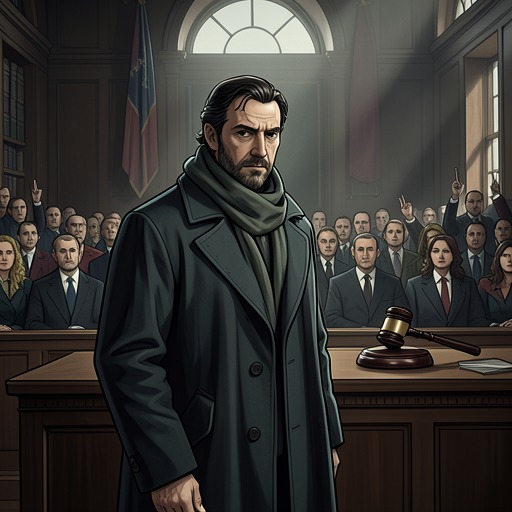
The judge declares the court’s duty clear in view of the unprecedented disturbance of the public mind. In indictment No. 666–983, for murder, the court orders Bigger to die on or before midnight on Friday, March third, by a method prescribed by state law. The judge also records Bigger’s age as twenty and directs the sheriff to retire with the prisoner. The sentence is thus stated in formal, exact terms, but its stated rationale points beyond the courtroom to the public turmoil surrounding the case.
Bigger’s Response and Removal
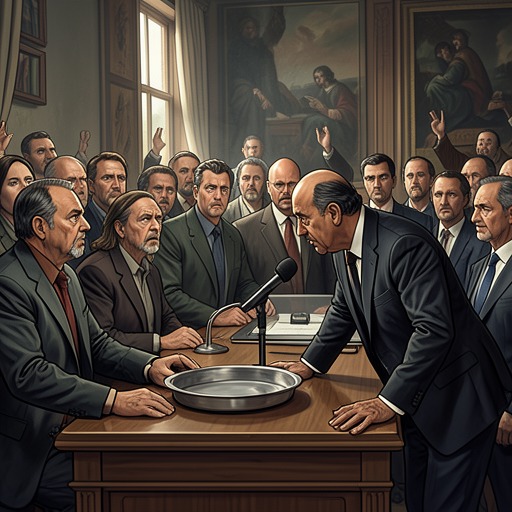
Bigger appears to understand the sentence, yet remains motionless, looking up at the judge. Max pulls him back into his chair as the courtroom erupts. Max rises to speak, but the noise prevents Bigger from making out what he says. Handcuffed, Bigger is led through an underground passage back to his cell.
The change from a public sentence to confinement is immediate: the legal decision is carried out through the sheriff’s custody, while Bigger has no further statement to offer in court. On the cot, he thinks that everything is over. The moment registers the sentence’s personal finality even as the events that follow leave its execution unresolved.
Max’s Appeal and the Unfinished Ending
Max later comes to Bigger’s cell and sits beside him. Bigger turns his face toward the wall, but Max tells him he will see the Governor and insists that the matter is not over. The sentence therefore closes the courtroom proceeding without ending the attempt to save Bigger’s life: the state has set a date and prescribed death, while Max’s promised appeal opens a narrow possibility of intervention.
The scene’s force lies in that collision between institutional certainty and personal refusal to concede the outcome. The judge’s order specifies when and how the state intends to act; Max’s final assurance answers it with a future effort, not a guarantee. Bigger’s sentence is decisive, but the narrative ends this episode with the appeal still ahead.