Bigger Thomas’s final self-affirmation
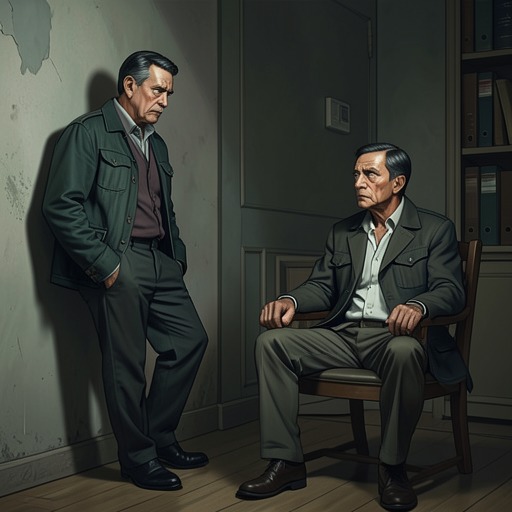
Native SonBigger Thomas’s final self-affirmation takes shape in his last exchange with Max, where an approaching death that cannot be changed becomes the condition for speaking with new certainty about himself. Max offers a social explanation for Bigger’s fear and actions, but Bigger draws a more personal conclusion: the intensity of what moved him, however entangled with violence, has made him feel that his life and desires were real. The scene ends not in agreement or reconciliation, but with Bigger insisting that he is all right and asking Max to carry that assurance to Ma.
The Conditions of the Exchange
Max’s argument begins from Bigger’s impending death and the difficulty of believing in oneself when one’s surroundings repeatedly contradict that belief. He describes how being called bad and living in bad conditions can lead a person to distrust his own judgment: feelings press forward, while ideas learned from others urge retreat. In Max’s account, helping people resist that retreat requires recognizing their feelings as no less valid than anyone else’s. His explanation makes self-belief neither a simple act of will nor a private discovery; it has been damaged by conditions and must be recovered against them.
Max then places those conditions within both racial and economic hierarchies. He acknowledges that Bigger’s being Black makes him easier to single out, while arguing that the powerful also treat working people as inferior and arrange life so that those who work cannot effectively fight back. He presents the rich as protecting what they possess by persuading themselves that workers are less than fully human. This comparison does not erase the particular pressure imposed on Bigger’s race; it connects that pressure to a broader struggle over who gets to live with security and power. Max’s appeal is that people on opposing sides share a desire to live, and that faith in oneself belongs to a larger struggle for life.
Max’s Explanation and Bigger’s Response
Bigger does not simply repeat Max’s political explanation. After Max finishes, Bigger laughs, then says that he believes in himself in part because he has nothing else and is going to die. The answer is both affirmation and limit: self-belief has become possible at the point when his future is closing, not through any promise that he can escape what awaits. His response shifts the conversation away from Max’s account of collective struggle and toward what Bigger can now claim as his own.
He tells Max that the argument has made him feel that what he wanted was not wholly wrong, but he immediately guards that recognition against an easy moral absolution. He says he is not trying to forgive anyone and does not ask to be forgiven. He will not cry; he also concedes that killing may not be fair and that he did not truly want to kill. These qualifications matter. Bigger does not present himself as innocent of what he has done, nor does he turn his new conviction into a request that others pardon him. Instead, he separates the violent acts from the desire he believes lay behind them, trying to name the latter without denying the former.
The Meaning He Claims for His Actions
Bigger’s decisive turn is to treat the intensity behind his actions as evidence of an identity he had not previously been able to feel. He insists that the thing he killed for is inseparable from what he is, and that the strength of the feeling involved showed him he was alive in the world. His claim is not that the killings become just because they revealed something to him. Rather, he reads them as the terrible measure of a desire that had been deeply present even when he could not recognize it. That distinction holds the scene’s central tension: self-recognition arrives through acts whose consequences cannot be undone.
The language of certainty grows more urgent as Max tries to interrupt him. Bigger repeats that what he killed for must have been good and argues that a person who kills does so for something. The repetition conveys not calm resolution but a conviction being formed under pressure. Max moves as if to approach him, yet does not touch him; his distress remains visible, and he cannot guide Bigger back to the interpretation he had offered. Their positions have diverged. Max sees Bigger’s feelings as a basis for faith and collective struggle, while Bigger makes them proof of his own existence. The two readings meet in the importance of feeling, but they do not resolve the moral cost of what Bigger has done.
The Final Reassurance
Bigger’s affirmation does not end with a public claim or a request for a verdict. He tells Max to go home and says that he is all right. He then asks Max to tell Ma the same thing and to assure her that he is not crying. The request gives the scene a private destination: after speaking about people, power, and the meaning of his actions, Bigger turns to the message that should reach his mother. He does not ask Max to defend his account to her or to make her understand every part of it; he asks that she be told he is enduring the moment.
Max’s silence and distress leave Bigger’s conclusion unendorsed by the person who has been trying to help him. Yet Bigger does not retract it. Facing death, he accepts neither forgiveness nor a comforting claim that his actions were fair, but he insists on the reality of the desire he has discovered within them. His final self-affirmation is therefore forceful and unsettled: it gives him a language for feeling alive, while leaving the violence, the coming death, and the distance between his interpretation and Max’s unresolved.