Chicago Tribune
Native SonChicago Tribune enters the history of Native Son as a source of news material that Richard Wright reshaped, and as part of the press environment the novel depicts amplifying a crime investigation into a racial crisis. Wright connects the novel’s plot to recurring accusations against Black boys and says that some of its newspaper items were fictionalized or rewritten from Chicago Tribune stories; the novel itself does not identify the newspaper carrying every report it presents.
Identity and Connection to the Novel
Wright’s account of the novel’s composition names Chicago Tribune among the sources behind its newspaper material. He describes the plot as drawing on a familiar social reality: Black boys being seized and accused of rape. While he was halfway through the first draft, a Chicago case paralleling Bigger’s appeared in the newspapers. Wright also notes that Native Son incorporates fictionalized versions of aspects of the Robert Nixon case and rewrites of news stories from Chicago Tribune. The connection is therefore one of source and transformation, not evidence that the novel’s events are a documentary account or that every fictional report came from this newspaper.
Newspaper Coverage Within the Story
After reporters discover remains in the Dalton home’s furnace, a newspaper report announces the discovery and the disappearance of the Black chauffeur. Its headlines place the investigation alongside a possible sex crime, an asserted alibi for the Communist leader, and Mary Dalton’s mother’s collapse. The report then recounts the authorities’ belief that Mary was killed and that her body was burned to destroy evidence. These are presented as claims and developments in the unfolding investigation, not as a confirmed account of the crime by the newspaper itself.
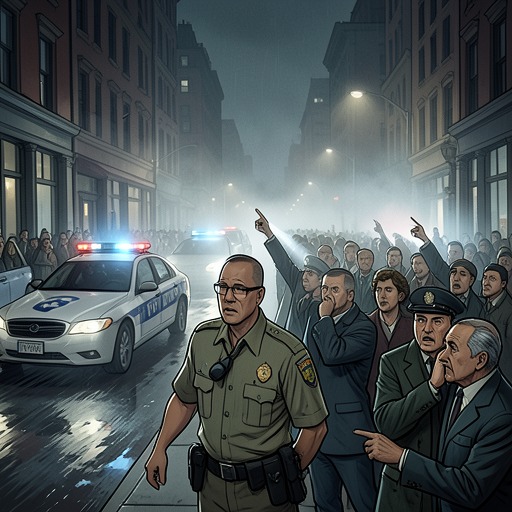
The report describes a cordon of five thousand police, joined by more than three thousand volunteers, around the Black Belt. It says that transport leaving the South Side was stopped and searched, that police and vigilantes searched Black homes under a blanket warrant, and that Black men were beaten or detained for investigation. It also reports calls to close schools, white residents’ offers of vigilante assistance, and the dismissal of Black employees by people claiming fear for their families. In the same account, Jan Erlone remains under suspicion despite the absence of his fingerprints from the Dalton home, and officials suggest that the alleged plan was too elaborate to have been devised by a Black man.
Framing, Suspicion, and Consequences
The newspaper account gathers official claims, public alarm, and reported actions into a single escalating narrative. Its juxtaposition of the suspected sex crime with searches, volunteer patrols, and reprisals against Black residents shows how reporting the case accompanies a wider racialized response. The report’s repeated presentation of suspicion as a public explanation also keeps Jan under scrutiny even while the investigation has not established his involvement. The text depicts not only attention to evidence but the circulation of assumptions that widen the consequences of the case beyond the people directly connected to it.
Significance and Limits of the Attribution
Wright’s remarks situate Chicago Tribune within the real-world news culture that helped furnish Native Son’s material, while his account of recurring accusations explains why he treated the case as socially representative rather than an isolated invention. The newspaper’s significance in this evidence lies both in that documented source relationship and in the novel’s portrayal of how reports can carry racial assumptions into public life. The particular in-story article, however, is not explicitly attributed to Chicago Tribune. The evidence supports identifying the paper as a source Wright rewrote, not naming it as the publisher of that specific report.