Cook County Morgue
Native SonThe Cook County Morgue is the setting for a public encounter between Bigger Thomas, the police, reporters, and Mrs. Dalton after the discovery of Mary Dalton’s remains. Its crowded room turns the investigation into a spectacle: Bigger is brought there in custody, confronted with people and cameras, and made to face a witness linked to the private events he has tried to conceal.
Setting and the Morgue Scene
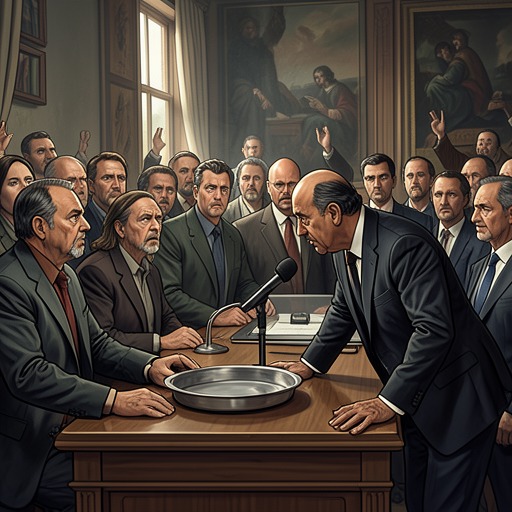
Bigger is led by the wrists into a large room at the Cook County Morgue, where many people have gathered. Bright lights and the excited talk unsettle him; the constant flashes of cameras make the room feel unlike the courtroom he initially expects. The scene recalls the reporters’ earlier entrance into Mr. Dalton’s basement, but here the press presence is more intense, and Bigger can no longer shelter himself in indifference.
His hands are shackled to the wrists of policemen seated on either side of him, with another policeman standing in front and one behind. After a sharp metallic click, his hands are free. The movement draws a murmur from the people in the room, making his body and his custody part of the public attention directed at him.
Witnesses and Memory
Among the faces Bigger sees is Mrs. Dalton, sitting quietly with her hands folded in her lap. Her presence makes the morgue encounter personal as well as public. Looking at her, Bigger remembers the earlier moment in Mary’s room when he tried to keep her from making a sound. The memory connects the present investigation to the concealed death that has brought him before the assembled witnesses, without turning the scene into a courtroom proceeding.
Press Coverage and Public Panic
The morgue scene follows the discovery of bones in the furnace at the Dalton home, later identified as Mary’s remains. Newspaper coverage announces that the kidnapping case has been cracked and emphasizes an alleged sex crime. Bigger understands that this accusation marks him for condemnation in the minds of white readers even before his capture.
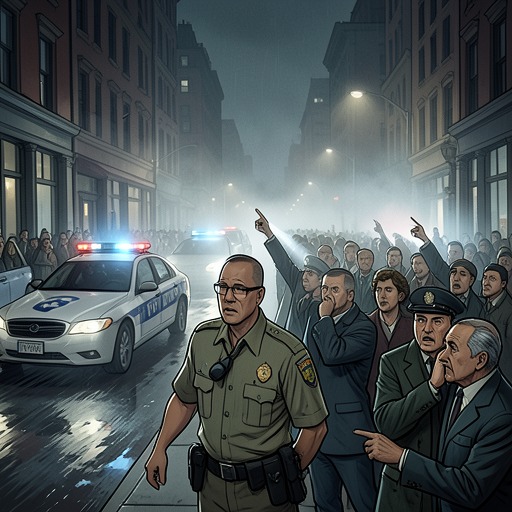
Coverage also accompanies a large-scale search of the Black Belt. Police and vigilantes stop vehicles leaving the South Side, search Black homes under a blanket warrant, and search abandoned buildings; reports describe Black men being beaten and white parents demanding that schools close until the suspect is caught. The press further casts Jan Erlone as a possible accomplice on the claim that the alleged plan was too elaborate to have been devised by a Black man. Bigger wants to correct that account and say Jan had no part in the crime, but does not do so in the reported moment.
Narrative Significance
The Cook County Morgue is not merely a backdrop for the investigation. The crowded room, cameras, police restraints, and presence of Mrs. Dalton bring together the material discovery of Mary’s remains, the public construction of Bigger as a criminal threat, and his own return to the memory he has avoided. The wider reports of raids, racialized accusation, and mob anxiety show how the case reaches beyond the room: the investigation is conducted amid collective suspicion directed at Black Chicagoans.
Later, a report in the Chicago Tribune describes troops guarding Bigger’s trial because officials fear mob violence. That development extends the public crisis surrounding the case beyond the morgue, where the investigation’s human witnesses and its press-driven atmosphere first converge in a single room.