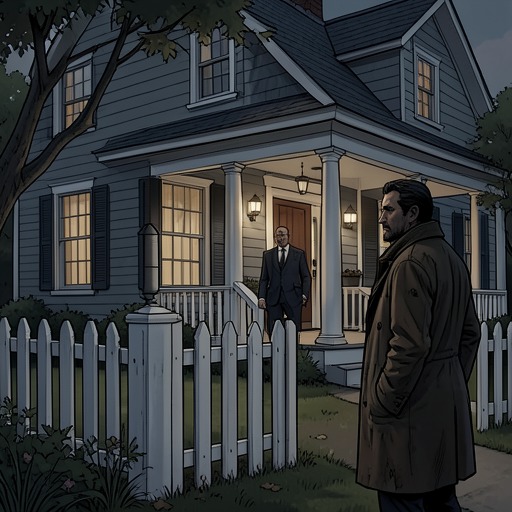
Dalton Real Estate Company
Native SonThe Dalton Real Estate Company is the property business through which Mr. Dalton’s wealth and influence shape housing on Chicago’s South Side. Its ownership connection to the South Side Real Estate Company places the Thomas family’s rent within the Dalton business network. When Max questions Mr. Dalton at the inquest, that relationship turns an apparently private tragedy into evidence about how property, racial segregation, and philanthropy coexist.
Ownership and Control
At the inquest, Max establishes that Mr. Dalton is president of the Dalton Real Estate Company and owns its controlling stock. Mr. Dalton confirms that the company in turn owns the stock controlling the South Side Real Estate Company, which collects rent from the Thomas family. Although he initially distances himself from the rent by noting that tenants pay the other company, the ownership chain makes clear why Max describes the family as paying rent to him.
Mr. Dalton also acknowledges that he formulates the policies of both companies. His control therefore extends beyond formal ownership: the decisions governing the connected businesses are his, even as he initially disclaims direct responsibility for setting rent scales. The exchange exposes the distance between a corporate structure that disperses transactions across company names and the concentrated authority behind it.
Housing Practices and the South Side
Max challenges Mr. Dalton over the higher rents charged to Black families for houses comparable to those rented by white tenants. Mr. Dalton attributes prices to the law of supply and demand and says he does not set the rent scales. But he also admits that he refuses to rent houses to Black people in other parts of the city. When Max presses him on whether this practice keeps Black residents in one area, Mr. Dalton concedes that it has that effect, while saying he did not originate it.
The Thomas family’s own housing gives this arrangement a concrete scale: they pay eight dollars a week for one unventilated, rat-infested room in which four people eat and sleep. Max sets that rent beside Mr. Dalton’s donations to Black education, questioning how charitable giving can answer for conditions produced by the landlord’s business. The issue is not only the price of a room but the restricted choice behind it: Black tenants are charged for poor housing while being refused access to homes in other sections of the city.
The Inquest and the Company’s Public Defense
Max’s questioning makes the connected companies part of the public inquiry into Mary Dalton’s death. The coroner objects when Max asks about the rent charged to the Thomas family and other Black tenants, calling the questioning improper and defending Mr. Dalton’s standing in the city. That interruption dramatizes the resistance Max encounters when he shifts attention from an individual witness’s reputation to the housing arrangements his companies maintain.
Max further asks whether realtors have an agreement about rents for Black tenants. Mr. Dalton denies such an agreement but refers to a business code of ethics. Max then challenges the moral balance between profits drawn from the Thomas family and the charitable donations Mr. Dalton makes to Black education. The company is thus examined not as a detached institution but as part of a relationship in which rental income and public beneficence flow from the same powerful landlord.
Consequences and Narrative Significance
In Max’s account of the case, the relationship between the Thomas and Dalton families is defined by the roles of renter and landlord, customer and merchant, employee and employer. The Thomas family grows poor while the Dalton family grows rich. He argues that Mr. Dalton’s refusal to rent to Black tenants outside the Black Belt has kept Bigger Thomas within a racially bounded world and helped ensure that Bigger and Mary remain strangers to one another. The company’s housing practices therefore enter the explanation of the social distance surrounding the central tragedy, without excusing Bigger’s actions.
The Dalton Real Estate Company stands at the center of the novel’s contrast between charity and structural change. Mr. Dalton’s donations may express a wish to help, but Max argues that they do not alter the housing restrictions, unequal rents, or economic dependence that enrich the Dalton family. By tracing those conditions through the company’s ownership and policies, the inquest makes visible how individual generosity can coexist with, and leave intact, an unequal property system.