Henry Dalton
Native SonHenry Dalton is a wealthy real-estate operator, employer, philanthropist, and father whose well-intentioned assistance to Black families coexists with a housing policy that helps confine them to the South Side. Through Bigger Thomas’s employment and the questioning at the inquest, his private benevolence is set against the structural effects of his property interests: charity offers help, but does not undo the unequal conditions from which his family benefits.
Identity and Position
In the novel’s larger cast, Henry Dalton represents capitalism, while his wife, Mrs. Dalton, and daughter, Mary Dalton, are associated with liberal goodwill. That division does not make Dalton an openly hostile figure. Instead, he is presented as a respectable, charitable businessman whose self-understanding rests on helping people through employment and donations. The tension between his intentions and the effects of his business becomes central to the account of his relationship with Bigger and to Max’s later criticism of the family’s social position.
Dalton’s connection to Bigger is shaped by several linked forms of dependence. The Thomas family rents from the Daltons, and Bigger becomes an employee in their household. At the inquest, Max summarizes their relationship as that of renter and landlord, customer and merchant, and employee and employer. Those roles place Dalton on the side of ownership and authority, while the Thomas family depends on access to housing and wages. Max’s description emphasizes the imbalance beneath what Dalton regards as personal assistance.
Hiring Bigger Thomas
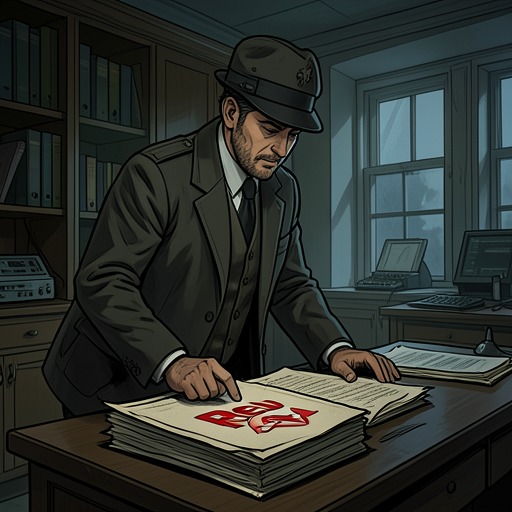
Dalton hires Bigger as a driver after asking about his ability to drive and whether he would steal if he had a job. Bigger denies stealing, and Dalton offers him the position. The exchange makes employment appear both practical and benevolent: Dalton has heard that Bigger can drive, and the job gives Bigger’s family a source of income. Bigger, however, answers nervously and offers little response, leaving the encounter marked by the unequal footing between a potential employer and a frightened applicant.
Dalton also explains that he wants Bigger to understand why he is being hired. He identifies himself as a supporter of the National Association for the Advancement of Colored People and asks whether Bigger knows the organization. Bigger says he does not. Dalton’s appeal presents the job as part of a broader commitment to Black advancement, but the exchange also reveals a gap between Dalton’s language of reform and Bigger’s immediate experience: Dalton explains his principles, while Bigger is seeking work under the pressure of poverty.
At the inquest, Dalton describes a family practice of hiring Black chauffeurs, particularly young men facing poverty, limited education, misfortune, or physical injury. He says the work is meant to help them support their families and attend school. He recalls Bigger as timid and frightened, says the family felt moved by him, and maintains that he initially did not suspect Bigger in Mary’s disappearance. He also says he had told Britten not to question Bigger. In this account, Dalton’s employment policy expresses a sincere belief that individual assistance can improve a young man’s prospects; Max’s later questioning challenges whether such assistance can be separated from the unequal system in which it operates.
Mary’s Disappearance and Dalton’s Response
When the kidnapping letter is opened, Dalton enters the kitchen visibly shaken, holding it in his hand. He struggles to explain its contents to Mrs. Dalton before telling her that Mary has been kidnapped. The scene places his public role as a confident employer beside his vulnerability as a father confronted with his daughter’s disappearance. His distress is personal, and the news temporarily overwhelms the language of philanthropy and business that elsewhere defines him.
Before the letter is disclosed, Dalton is reluctant to contact Jan Erlone. Although he says he could reach him through the Labor Defender office, he would rather wait because he thinks Mary may be playing one of her foolish pranks. He tells Bigger to get the trunk, and Bigger drives through falling snow toward the Loop. Dalton’s assumption that Mary’s absence is a prank delays his willingness to act on the possibility that she is in danger. Meanwhile, Bigger uses the family’s uncertainty to redirect suspicion toward Jan and begins planning the ransom demand. The contrast is consequential: Dalton’s trust in the household and his mistaken explanation of Mary’s absence give Bigger an opportunity to conceal his own responsibility.
Dalton’s distress at the disappearance and his earlier generosity do not erase the unequal relationship that the case brings into view. At the inquest, he recounts his support for Bigger and his confidence that Bigger was not involved, followed by his shock when he learned that Bigger had fled. His testimony thus traces a reversal in his judgment, from charitable employer to a man forced to reconsider the person he had hired and trusted.
Property, Rent, and the Inquest
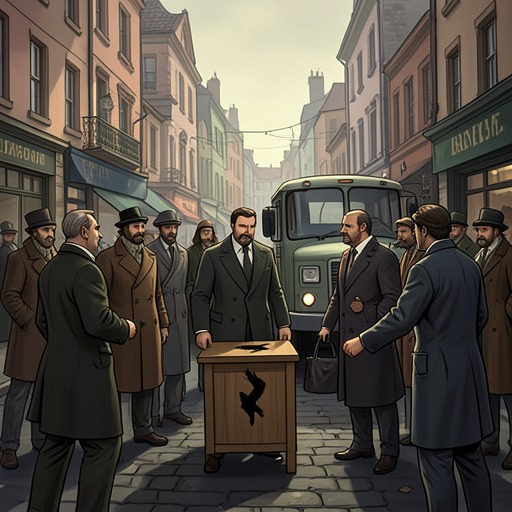
The inquest turns from Dalton’s account of his family’s intentions to the consequences of his business. Asked who formulates the policies of his companies, Dalton says that he does. On rent, however, he distances himself from setting the scales and invokes supply and demand. When Max asks whether Dalton refuses to rent houses to Black people in other parts of the city, Dalton acknowledges that he does. He also accepts that the policy works to keep Black residents in one area of the South Side, while saying that he did not originate it.
Max sharpens the contrast between Dalton’s donations to Black education and the rent charged to the Thomas family: eight dollars a week for one unventilated, rat-infested room shared by four people. The coroner intervenes to protect Dalton from what he calls browbeating, framing the questions as an attack on a respected man rather than an inquiry into the relationship between wealth and housing. Dalton argues that charging Black tenants less would be unethical and describes business as governed by a code of ethics. Max challenges that defense, asking whether profits taken through rent are then returned as charity to ease the consequences of tenants’ conditions. Dalton rejects the characterization as a distortion of fact. The exchange leaves the conflict unresolved at the level of Dalton’s stated intentions but makes the material disparity plain: donations coexist with costly, inadequate housing.
Narrative Role and Social Criticism
In Max’s argument, Dalton is neither simply a malicious landlord nor an adequate remedy for injustice. Max grants that Dalton is a decent man who wanted to help, but argues that employment and philanthropy cannot compensate for a social arrangement that restricts where Black families may live and what opportunities they can pursue. He describes the relationship between the two families as economically unequal: the Thomas family remains poor while the Dalton family grows rich. His criticism is directed not only at Dalton’s character but at the distance between personal generosity and the property relations that structure everyday life.
Max further argues that Dalton’s housing policy helped keep Bigger in a segregated environment and kept the two families strangers to one another. He links the Daltons’ limited contact with Bigger to the broader restrictions placed on Black people in housing, schooling, work, and public life. In the courtroom, that structural argument is made visible even in the seating arrangement, where Black and white people occupy separate areas. Dalton’s conduct is part of this critique because he acknowledges refusing to rent to Black tenants in other sections of the city and recognizes that his companies’ practice concentrates them on the South Side.
The novel’s treatment of Dalton therefore depends on the friction between benevolent intention and institutional effect. His job offer and charitable commitments are real within the account, as are his grief and shock over Mary. Yet the inquest shows why those gestures do not by themselves alter the conditions of the Thomas family’s life. Dalton’s character gives the conflict a human face, while Max’s questioning insists that individual kindness must be examined alongside rent, ownership, and the spatial limits imposed on Black residents.