Illinois National Guard
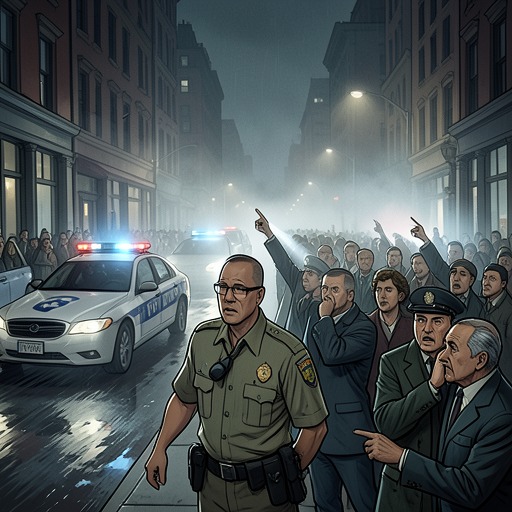
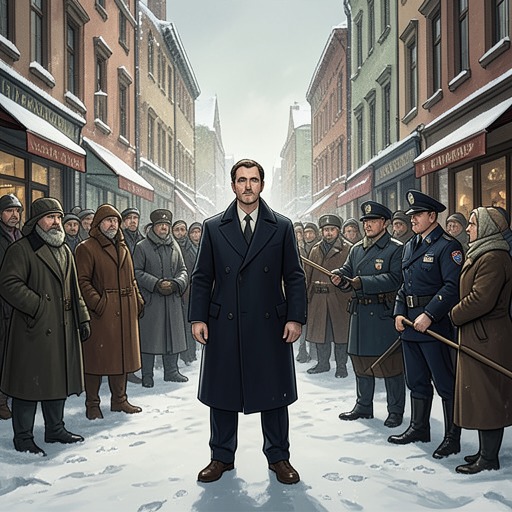
Native SonThe Illinois National Guard is called out during the trial of Bigger Thomas to prevent outbreaks of mob violence and maintain public order. Its presence around the courthouse turns the threat beyond the courtroom into a visible force in the proceedings: troops hold back a crowd while Bigger is brought to and from court under heavy police escort.
Deployment and Purpose
As public hostility toward Bigger rises, Illinois’s governor orders two regiments of the Illinois National Guard to preserve the peace during the trial. Newspaper coverage presents the deployment as a response to the danger of mob violence and describes a city tense with demands for a death sentence and fears of unrest in the Black community. The Guard’s assigned role is to contain the threat around the trial; the account does not describe it taking part in the investigation or the earlier searches of Black neighborhoods.
At the Courthouse
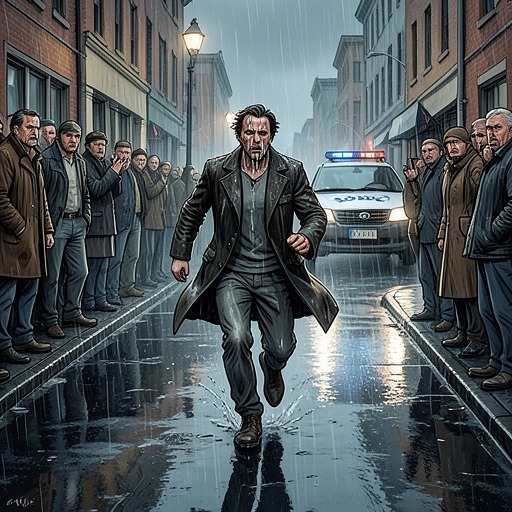
Bigger first sees the troops from a courthouse window while police escort him through the building. Shackled to two officers, he is led through an underground passage and up into a crowded hallway; through a window, he glimpses a large crowd held behind lines of uniformed troops. The sight confirms that the crowd and the military presence reported in the newspapers are not distant abstractions but immediate conditions surrounding his trial.
When police later lead Bigger back through the hall, the crowd remains held at bay by troops. The next morning, as he is taken to court again, the mob and the Guard are still outside, and police must make a passage for him through the people filling the building. The repeated scenes establish the deployment as an ongoing security presence rather than a single response at the trial’s opening.
Narrative and Social Significance
The Guard stands between the courthouse and a hostile crowd, but its deployment does not remove the racialized atmosphere in which the case is being judged. Public reporting has portrayed Bigger through sensational criminal labels, while the wider response has included searches of Black homes and fears of collective violence. The troops’ orderly lines restrain the crowd physically; their presence also makes visible how close the trial comes to being overtaken by extrajudicial punishment.
That tension persists inside the court. In his address to the judge, Max points to the separation of Black and white spectators, who sit on different sides of a railing even without an explicit order. The Guard does not cause that division, but its containment of the crowd outside contrasts with the racial separation within the courtroom: public order is being maintained around proceedings that expose a deeper inequality in the society conducting them.