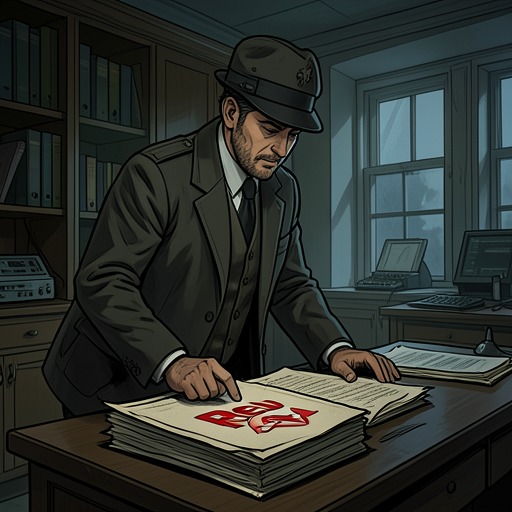
Jan Erlone
Native SonJan Erlone is Mary Dalton’s partner, a Communist, and one of the principal white characters through whom the novel tests the distance between liberal intentions and the realities of racial oppression. His effort to approach Bigger Thomas as an equal begins with genuine political conviction, but it also carries a naïve, paternalistic assumption that goodwill can overcome the fear imposed by racial hierarchy. After Bigger falsely implicates him in Mary’s disappearance, Jan’s imprisonment and later visit to Bigger expose the costs of that assumption. He ultimately offers help rather than retaliation, becoming a link between Bigger and Max and a witness whose testimony does not support the prosecution’s effort to connect him to Mary’s death.
Identity and Political Commitments
Jan is Mary Dalton’s friend and partner, and he identifies himself to Bigger as a Communist. In the novel’s broader cast, he represents a sympathetic but fallible form of left-wing politics: he opposes the treatment of people as inferior and wants collective action to change it. He tells Bigger that he and Mary sympathize with the Communist cause and asks whether people could work together to stop such treatment. The appeal expresses a real commitment to opposing injustice, but it arrives before Jan has understood the fear and social danger that shape Bigger’s response to a white man’s friendliness.
The narrator’s broader characterization sharpens this contradiction. Jan is genial, but his naïveté and paternalism help precipitate the tragedy. His politics do not make him immune to the habits of the society he opposes: he assumes that naming solidarity will make it possible, without first recognizing how exposed Bigger may feel in a situation where a white woman and her white companion have brought him into unfamiliar social territory. The gap between Jan’s intention and Bigger’s apprehension is central to the encounter. Jan wants an exchange between political allies; Bigger experiences the situation through the racial danger that Jan has not adequately considered.
First Encounter with Bigger
Bigger first recognizes Jan as the young white man he had seen in a newsreel. When Jan and Mary come to the car, they stand facing him rather than simply getting into the back seat. Jan introduces himself as Mary’s friend and proposes that they get to know one another. The introduction is meant to establish openness, but the difference between Jan’s confidence and Bigger’s unease gives the scene its tension: Jan treats acquaintance as an ordinary possibility, while Bigger has been taught to anticipate danger in encounters across the racial line.
Jan makes his political position explicit by explaining that he is a member of the Communist Party and that Mary sympathizes with it. He asks Bigger to imagine joining with them to oppose the degrading treatment of others. The proposal reveals both Jan’s sincerity and his misreading of the moment. He recognizes an unjust social order in the abstract, yet initially fails to understand that his own approach may feel less like an invitation than a demand for trust from someone who has strong reasons to distrust white people. His friendliness does not erase the imbalance between them; without intending to, he makes Bigger responsible for responding to a political overture under conditions Jan has not grasped.
False Accusation and Imprisonment
After Mary disappears, suspicion falls on Jan because he was with her. Mr. Dalton identifies him publicly as a Communist, and the case becomes entangled with claims that Dalton is trying to discredit the Communist Party and interfere with Jan’s relationship with Mary. Jan is detained, and his name becomes useful to competing accounts of the disappearance. The irony is severe: the man who had urged Bigger to resist unjust treatment is now caught in an investigation shaped by political suspicion, while Bigger’s concealed responsibility makes Jan a convenient target.
When Mr. Dalton announces that he has asked for Jan’s immediate release and does not want charges brought against him, Jan does not simply leave. He has heard of the supposed kidnapping and refuses to go out, remaining because he wants to know what is happening. Information later reported about his movements gives a more specific account: after leaving Mary at two-thirty, he says he met a friend on a streetcar and went to a party. These details establish that Jan was not simply absent from the story; he is trying to make sense of a disappearance that has already placed him under suspicion. His week in jail leaves him confused about events and hurt by Bigger’s attempt to blame him, but it also forces him to reconsider the assumptions behind their earlier encounter.
Recognition and Offer of Help
When Jan visits Bigger in jail, he says that the experience has taken him time to understand. He acknowledges that he had not understood Bigger on the night they went out and that he had been blind to what Bigger was experiencing. Rather than insisting that Bigger owes him trust or gratitude, Jan says he is not angry about being blamed and allows that Bigger may have had reasons. The visit marks a change in Jan’s understanding: he no longer treats his own good intentions as proof that he understood the situation.
Jan’s reflection does not reduce the injustice to a private misunderstanding between two men. He recognizes that the hostility Bigger feels toward him cannot be separated from a much larger social history, and he refuses to claim that he can personally assume responsibility for everything that history has done. He nevertheless accepts a responsibility he can act on. He asks to stand on Bigger’s side and offers to fight the case with him, then identifies his friend Max as a lawyer who understands the situation and wants to help. The offer makes Jan a practical intermediary: his political commitments lead him to connect Bigger with a defense, not merely to express sympathy.
Testimony and Narrative Significance
Jan appears as a witness during the legal proceedings. He is questioned about whether he gave Bigger material concerning the Communist Party, a question that places his politics within the prosecution’s scrutiny. At the hearing into Mary’s death, Jan gives the account he had given before, and the prosecutor makes no attempt to link him to her murder. He also takes the stand again at trial and repeats his earlier testimony. Across these appearances, his evidence does not sustain the suspicion that he was responsible for Mary’s death.
Jan’s significance lies in the movement from unexamined friendliness to a more chastened form of solidarity. His first appeal asks Bigger to join a political project before Jan understands the conditions under which Bigger must live; his later appeal begins by admitting that he failed to see those conditions. That recognition does not undo the harm caused when Bigger frames him, nor can Jan’s individual assistance undo the larger racial order described in the courtroom. It does, however, distinguish solidarity from paternalism: Jan becomes more useful to Bigger when he stops treating goodwill as sufficient and offers concrete help while acknowledging the limits of his own understanding.