Kidnapping note
Native SonThe Kidnapping note is a forged ransom letter that Bigger Thomas uses to recast Mary Dalton’s disappearance as a kidnapping and to extract money from Mr. Dalton. Composed in haste but worked out detail by detail, it claims Mary is alive, gives instructions for a clandestine payment, and makes Bessie part of the imagined exchange. Its arrival succeeds in misleading the Dalton household, even as the effort to disguise its authorship and destroy the evidence exposes how fragile Bigger’s plan is.
Composition and Intended Deception
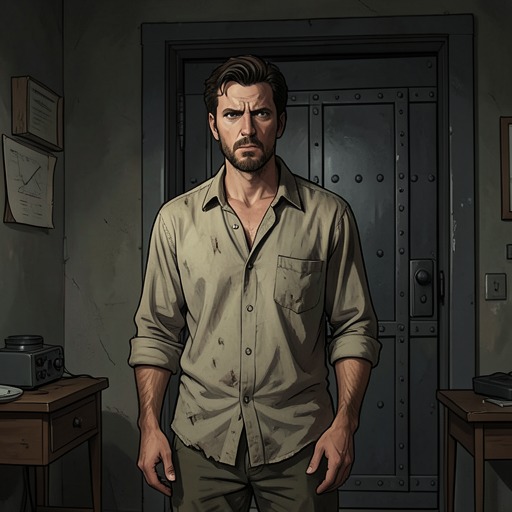
Bigger writes the note while wearing gloves, holding a pencil in a trembling hand, and trying to prevent the writing from identifying him. He switches the pencil from his right hand to his left and decides to print rather than write in his usual manner. The effort is not simply to demand money: he is constructing a message that will give Mr. Dalton a false account of Mary’s disappearance and prescribe how the family should respond.
The first wording he considers is a demand phrased in the singular, but he rejects “I” for “we,” then prints that the kidnappers have Mr. Dalton’s daughter. He next tries to reassure the reader that Mary is “safe.” On rereading the line, he crosses out that word and substitutes “alive.” The revision is a small, consequential distinction: the note does not promise Mary’s safety so much as insist that she has not yet been killed. It also contradicts what Bigger knows, since Mary’s body is concealed in the furnace.
Bigger adds a warning against contacting the police and a claim that Mary wants to come home. He settles on a demand for ten thousand dollars, specifying five- and ten-dollar bills packed in a shoebox. These particulars give the threat the appearance of a workable arrangement rather than an improvised plea. The instructions direct Mr. Dalton to drive up and down Michigan Avenue between Thirty-fifth and Fortieth Streets the following night, making Bessie’s location difficult to identify. At a signal—three flashes of the car’s headlights after a light appears in a window—the money is to be thrown into the snow before the driver leaves.
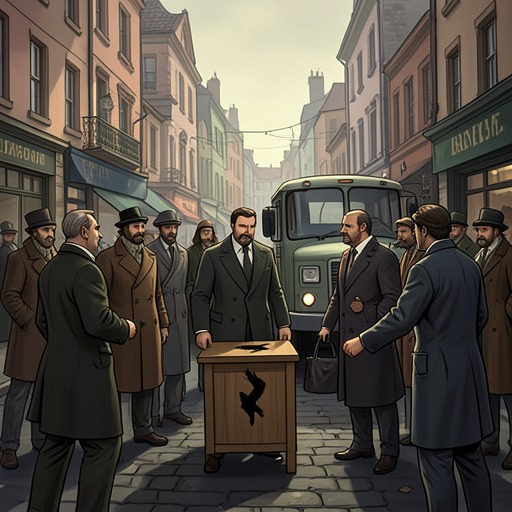
The letter’s authorship is disguised by the name “Red.” Bigger adds a roughly drawn hammer and curved blade, recalling a sign he has seen on Communist pamphlets; after noticing that he has omitted the blade’s handle, he sketches it in. He then adds a postscript specifying midnight as the time for bringing the money. The sequence reveals how he assembles the threat from remembered formulas and practical details, improvising as he goes rather than following a fully settled plan.
Bessie’s Part and the Letter’s Delivery
Bessie sees Bigger writing and asks in a horrified whisper whether he is really going to do it. He answers, “Sure.” Her question registers the distance between the plan on paper and the danger it entails, but the exchange does not show her freely accepting the role assigned to her. The note makes her the hidden participant in the supposed exchange: her position is to remain concealed while the Daltons follow the instructions. The later scene at the car stop makes that arrangement concrete. Bigger takes her purse, puts the flashlight inside it, helps her onto the car, and places seven cents in her trembling hand. He watches her face through the ice-whitened window as the car pulls away.
After walking through the snow to the Dalton home, Bigger keeps his right hand in his coat pocket around the note. He checks the street, approaches the house, pauses at the door, and slips the letter underneath it. The delivery is set against the silent house and falling snow. Bigger feels the danger of crossing a taboo so intensely that he imagines the air or sky might command him to stop; at the same time, he likes the sensation of moving into that danger. Once the note is delivered, he runs around the house, conscious that the act has changed what the family may believe about Mary.
Discovery and Immediate Consequences
The letter first becomes visible as an object in Mr. Dalton’s hand: he enters the kitchen with an ashen face, holding it open, and asks who gave it to the household. The question marks the moment when Bigger’s private fabrication becomes a public crisis within the home. Mr. Dalton does not yet know who wrote the demand, but the letter has already supplied the explanation toward which the family turns.
When he tries to tell the others what it says, Mr. Dalton stammers about Mary before declaring that she has been kidnapped. Mrs. Dalton screams in protest, and Peggy runs to him. The note has therefore achieved its immediate deception: instead of confronting the possibility that Mary is dead, the household responds to the claim that she has been taken and might be recovered. Its insistence that she is alive gives that mistaken hope a textual basis, while its instructions transform uncertainty into a supposed rescue plan.
Function in Bigger’s Plan
The note is both a tool of extortion and an instrument for controlling the story of Mary’s absence. Its false collective voice, “Red” signature, drawn emblem, and procedural instructions encourage the Daltons to imagine an unknown group of kidnappers, not the person already inside their household’s orbit. In this way, the letter does more than ask for money: it attempts to redirect suspicion and buy time by making a fabricated crime appear to explain the real one.
That strategy remains precarious. Bigger has to alter his handwriting, invent the name and symbol, coordinate the supposed exchange with Bessie’s movements, and deliver the letter without being seen. After returning to his room, he remembers the gloves, pencil, and paper and burns them in the furnace. The effort to erase the materials used to make the note points back to the concealed evidence already in that same furnace. The letter temporarily persuades the family, but its manufacture and delivery deepen the chain of concealment on which Bigger’s plan depends.