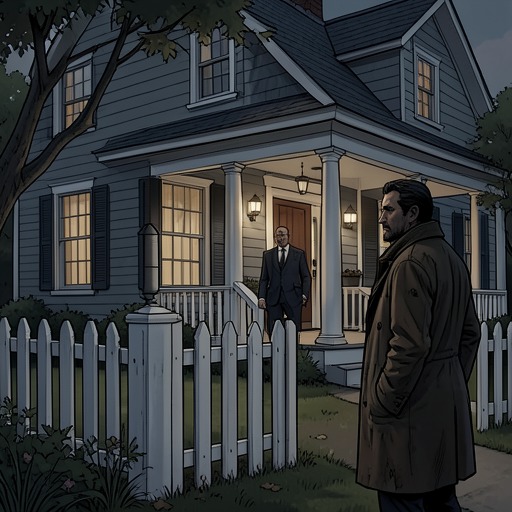
Mrs. Thomas’s plea to the Daltons
Native SonMa’s plea to Mr. Dalton and Mrs. Dalton is a confrontation between a mother’s urgent demand for her son’s life and the limits of the help his employers say they can offer. In front of Bigger, she asks Mrs. Dalton to use her influence to prevent his death; the appeal also lays bare the family’s dependence on the Daltons for both shelter and security. The scene gives that dependence a human voice, but it does not turn it into power over the decision Ma fears.
The encounter
As Buckley prepares to send Ma away, she straightens and looks at Mrs. Dalton, who is blind. Ma identifies her and then runs to kneel at her feet. Her physical movement makes the request impossible to mistake for a private exchange: she appeals directly to the woman she believes might be able to help, in the presence of the people connected to Bigger’s fate.
Ma asks Mrs. Dalton not to let them kill her son and invokes the understanding she expects between mothers. She describes the family as living in Mrs. Dalton’s house and says they have been asked to move and have nothing. The plea thus joins two immediate fears: Bigger may be killed, and the family may lose its home. Her appeal is not only for mercy in the case; it also arises from a condition in which the family’s basic security is tied to the household whose members she is addressing.
Bigger witnesses the plea
Bigger sees Ma’s appeal and is paralyzed with shame; he feels violated. The scene therefore does not present her desperation as a simple source of comfort for him. Her attempt to save him exposes their relationship and their vulnerability in front of others, while his response registers the personal cost of being made the object of a public plea. The difference between Ma’s focus on preserving her son and Bigger’s shame gives the encounter its painful tension: the same appeal that expresses her devotion also reaches him as an exposure he cannot control.
Max tells Ma to come with him, but Mrs. Dalton asks her to wait. Ma continues, asking that Mrs. Dalton prevent Bigger’s death and offering to work for her for the rest of her life or do whatever she asks. That offer makes the imbalance in the encounter explicit. Ma tries to answer the danger to her son by pledging her own labor and obedience, as though a personal bargain might persuade the woman before her to act. Mrs. Dalton stoops and touches Ma’s head, a gesture of contact that accompanies sympathy but does not provide the intervention Ma seeks.
The limits of help
Mrs. Dalton says there is nothing she can do now and that the matter is out of her hands. She also recalls wanting to give Bigger a chance at life and tells Ma she is not to blame. Her response combines an account of earlier goodwill with a claim of present helplessness: whatever opportunity she once hoped to offer, she says she cannot now change the situation. The contrast leaves Ma’s central request unanswered, while revealing that benevolent intention and effective influence are not the same thing in this encounter.
Ma rejects that boundary as sufficient. She insists that if Mrs. Dalton speaks, others will listen, and asks her to urge them to show mercy. Mrs. Dalton replies that it is too late for her to do anything and directs Ma’s attention to her other children. The exchange turns on opposing understandings of what influence remains: Ma sees an appeal that could still matter; Mrs. Dalton insists that intervention is no longer possible. The scene offers no indication that Ma obtains the power to alter Bigger’s danger through this conversation.
Mr. Dalton likewise says that there is nothing they can do and that the matter is out of their hands. He draws a limit around the assistance they can provide, adding that people must protect themselves. Yet he offers one concrete concession: Ma’s family will not have to move, and he will tell those involved not to make them leave. Ma thanks him, then turns toward Bigger before Max leads her from the room. Her relief about housing is distinct from the unresolved plea for her son; the promise secures one part of the family’s circumstances without answering the other.
Aftermath and significance
The scene ends not with a reversal but with separation. Max leads Ma away; Jan takes Vera forward, then pauses in the doorway to address Jack, G.H., and Gus, who say they are going to the South Side. These movements disperse the people gathered around the appeal, while Bigger remains the person whose fate prompted it. Ma’s plea has made her need visible to the Daltons, but the encounter leaves the central danger intact and offers only a limited assurance about the family’s home.
The episode’s force lies in the contrast between intimate appeal and institutional helplessness as the speakers describe it. Ma entrusts her request to the people who employ her family and control their housing; Mr. Dalton responds with a promise within that sphere, while both Daltons deny being able to affect the threat to Bigger’s life. The difference between the promise to prevent a move and the inability to secure mercy gives the scene its defining outcome: material help is offered, but it does not become the intervention Ma came to seek.