Racial segregation and Black Belt confinement
Native SonRacial segregation and Black Belt confinement in the novel are enforced not by a single rule but by a web of housing practices, economic inequalities, and social boundaries. The Black Belt restricts where Black residents can find homes, while public institutions and racialized reporting extend that confinement into surveillance and suspicion. In Max’s courtroom argument, this order is not background to Bigger Thomas’s story: it has shaped the distance between Bigger and Mary Dalton and the conditions under which the case is understood.
Housing Boundaries and Unequal Costs
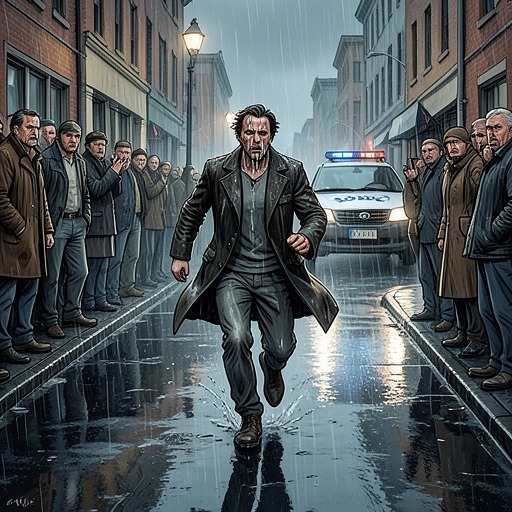
When Bigger leaves through a window and searches the streets for somewhere to stay, the scarcity of vacant flats makes the boundary tangible. He knows from his family’s experience that finding a home can require months of requests and searching. Rental agencies have said there are too few houses for Black residents, while buildings occupied by Black families are condemned as unsafe. In one remembered instance, police forced his family from a flat in a building that collapsed two days after their move.
The limits are also economic. Bigger has heard that Black tenants may pay twice the rent white tenants pay for comparable flats, even as Black residents are shut out of good jobs. He understands that he cannot simply look beyond the Black Belt: white real-estate operators will not rent to a Black man outside the areas assigned for Black residence. The result is confinement produced through both exclusion and scarcity, leaving the city’s geography open to some residents and tightly restricted for others.
Property, Charity, and Segregation
At the hearing, questions directed to Henry Dalton make the material workings of segregation explicit. He is challenged over why the Thomas family and other Black families are charged more than white tenants for comparable housing, and why his company refuses to rent homes to Black people in other parts of the city. The questions connect these practices to a policy that keeps Black residents concentrated on the South Side.
The contrast between philanthropy and housing policy sharpens the challenge. Dalton is asked how his donations to Black education coexist with charging the Thomas family eight dollars a week for one unventilated, rat-infested room where four people eat and sleep. The court is also asked to consider whether rent profits are returned as charity in a way that eases suffering without changing the conditions that produce it. The novel thus presents benevolence and segregation side by side: charitable giving does not, by itself, undo restricted housing or the unequal terms on which residents depend on landlords.
Confinement Beyond the Home
The novel shows that spatial restriction reaches beyond the rental market. After the discovery of Mary Dalton’s remains, newspaper coverage associates the case with a suspected sex crime before Bigger has been captured. He reads that framing as a sentence imposed in advance: in his understanding, white readers will condemn him in their minds before he is caught. The episode links racialized public suspicion to a geography in which Black residents are already treated as a population to contain.
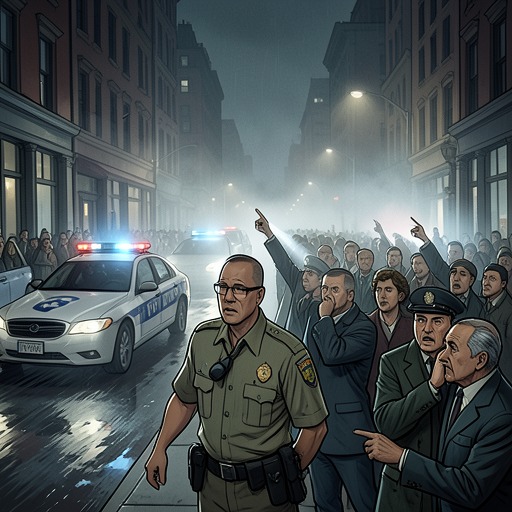
The ensuing search turns that logic into public action. Police and vigilantes stop vehicles leaving the South Side, search Black homes under a blanket warrant, and comb abandoned buildings. White parents call for schools to close until the suspect is caught, and reports circulate that Black men have been beaten in other neighborhoods. These measures transform the Black Belt from a restricted place of residence into a zone of intensified surveillance, while extending the pressure beyond its borders through searches of people and travel routes.
Max’s Courtroom Argument
In court, Max frames segregation as a system of imposed limits on residence, education, work, and daily life. He argues that Black people have been kept near white society without being granted a full life of their own: others have determined where they may live, what schooling they can receive, where they can eat, and what work they can do. He places real-estate operators among those who have helped maintain the city’s Black residential districts, linking Bigger’s circumstances to decisions made by people and institutions beyond his household.
Max does not present Bigger simply as an innocent victim or ask the court for sympathy on that basis. Instead, he argues that the social order has helped create the conditions it disclaims responsibility for, even as he addresses Bigger’s case and the request for mercy. He points to the segregated seating in the courtroom itself: Black and white spectators sit apart without an explicit instruction, because the boundary is understood. That visible division brings the argument into the present tense. Segregation is not only a housing policy or a past cause; it is a social arrangement reproduced in the very room where Bigger is judged.