Racist Media Narratives
Native SonRacist Media Narratives in Native Son do more than misreport a crime: they shape public understanding of Mary Dalton’s disappearance, transform suspicion into a racialized accusation, and help make collective punishment appear reasonable. Through headlines, photographs, police statements, and quoted public reactions, the press recasts a changing and uncertain investigation as a story about Black criminality. The resulting account contrasts sharply with the facts Bigger Thomas knows and with Max’s later effort to make the court confront the social conditions its public narrative leaves out.
From disappearance to Communist plot
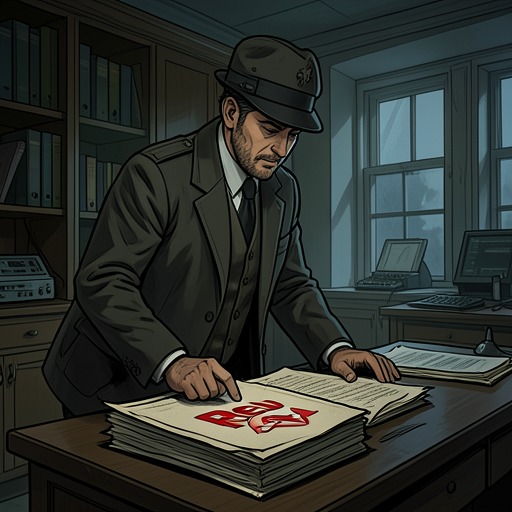
When Bigger finds a newspaper during the search of the Dalton home, its front page announces that the Hyde Park heiress is missing and presents her as possibly hiding with Communists. Jan Erlone’s arrest and his connection to the Labor Defenders give the report a political frame: Mary’s absence is treated as a possible act of rebellion against her father and an association with radical friends. The story also repeats that Mary had been with Jan at a South Side café in the Black Belt before she disappeared. These details direct suspicion toward Jan and the Communist movement before the investigation has established what happened to Mary.
The paper’s photograph makes the gap between report and reality especially sharp for Bigger. Seeing Mary’s picture recalls her dead body, while the printed account describes a possible disappearance and presumed concealment. He expects more alarming news, but the story has not yet disclosed what he fears the authorities will discover. The newspaper gives readers a public account that is incomplete, yet already confident enough to connect Mary’s absence to political disloyalty and Jan’s conduct. Its framing narrows attention to a sensational mystery while withholding the truth Bigger is trying to conceal.
The racialized crime story
After reporters discover Mary’s remains in the Dalton furnace, the coverage changes abruptly. A new headline announces the discovery of bones and Bigger’s disappearance; the report says authorities hint at a sex crime. It presents the case as a supposed rape and murder before that allegation has been established, and converts the missing chauffeur into the central threat. The shift from possible Communist intrigue to a racialized sexual accusation does not correct the earlier speculation so much as replace it with a more dangerous story.
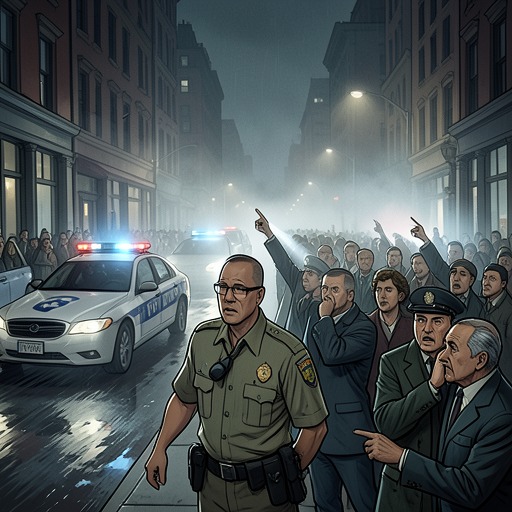
The article gives the accusation civic scale. It reports that five thousand police, joined by more than three thousand volunteers, surround the Black Belt, and that transit leaving the South Side is stopped and searched. Police and vigilantes search Black homes under a blanket warrant; reports of assaults, school-closure demands, and Black employees being dismissed extend the consequences beyond the suspect. A white banker’s wife is reported as dismissing her cook because she fears for her children. The paper thus records a climate of panic while also circulating the claims that help sustain it. Its account of the search turns an accusation against one man into suspicion directed at a whole community.
The accused made into a public image
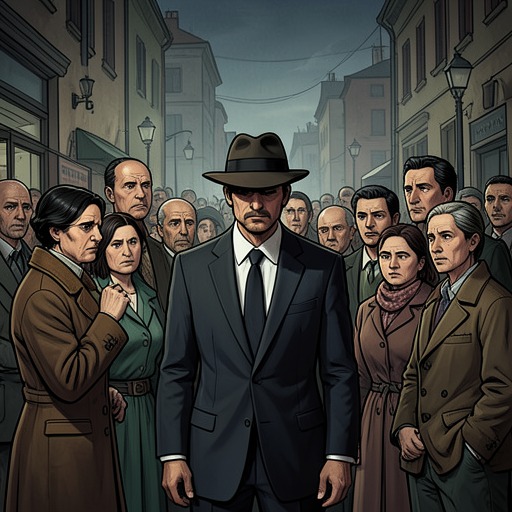
At the inquest, the Tribune’s account presents Bigger as a racial caricature rather than a person whose conduct and responsibility require careful examination. It calls him a sexual killer, invents a lurid sequence of crimes, and describes him through dehumanizing physical comparisons. The report attributes shouts demanding his death to the crowd and quotes a police captain endorsing execution. It also interprets Bigger’s refusal of food as a possible attempt to avoid the electric chair or win sympathy, assigning motives without establishing them. A wire report from Jackson, Mississippi, adds racist claims about his childhood and character, then invokes the death penalty as the appropriate response. Together these elements make the newspaper portrait appear to confirm a predetermined type: a dangerous figure beyond ordinary human sympathy.
That portrait also distorts the significance of the investigation. Bigger knows that he killed Mary, but the report’s sensational allegations and invented details are not a faithful account of what he did. Its treatment of Jan similarly illustrates how the public story can outlast the evidence: even after the paper reports that Jan’s fingerprints were not found in the Dalton home and that he has an alibi, it says police still consider him a possible accomplice. The article preserves suspicion after facts have weakened the original implication. In this way, the reporting does not merely describe an investigation; it helps keep the accusation alive.
Public framing and structural denial
Max’s courtroom argument supplies a counter-frame. He does not ask the court to excuse Bigger’s crimes or to treat him simply as an innocent victim. Instead, he asks the jurors to see how racial restrictions have shaped the life they are judging. His argument identifies controls on where Black people may live, what schooling they can obtain, and what work they can do. It also points to real-estate practices that confine Black residents to designated areas. In his questioning, Mr. Dalton acknowledges that his company refuses to rent to Black tenants in other sections of the city and that its policy keeps them concentrated on the South Side, while disclaiming that he originated the practice.
The courtroom itself makes the division visible: Black spectators sit together behind a railing, separated from white spectators without needing an explicit order. Max connects that arrangement to the wider social boundary that public reporting presents as background rather than cause. The distinction matters: newspaper stories make Bigger’s alleged racial and sexual threat the explanation for public danger, while Max argues that the conditions shaping Black life were collectively produced and cannot be treated as natural or irrelevant.
The handling of Bessie Mears’s body further reveals whose suffering the proceedings make central. When her body is introduced during the inquest, Bigger understands that it may be used to intensify the case for his death, while her killing had not previously been mentioned. He recognizes that he will be punished above all for Mary’s death, and that Bessie risks appearing merely as evidence rather than as a victim whose death commands independent concern. This courtroom moment complements the novel’s critique of public representation: racialized narratives can magnify a white woman’s death into a citywide crisis while subordinating a Black woman’s death to the prosecution’s use of it. The press and the proceedings differ in form, but both show how racial hierarchy shapes which lives are treated as threats, which as evidence, and which as worthy of public attention.