Regal Theater
Native SonThe Regal Theater is the Chicago cinema where a morning outing with Jack Harding brings Bigger face to face with an image of Mary Dalton, the daughter of the man who is about to employ him. In its darkened auditorium, entertainment and social reality meet: a newsreel displays the wealth surrounding Mary, while Bigger recognizes her as part of the household he will visit that night. The theater is therefore more than a stop on the way through the city; it is the setting for a sudden connection between a public spectacle and Bigger’s immediate future.
Location and Visit
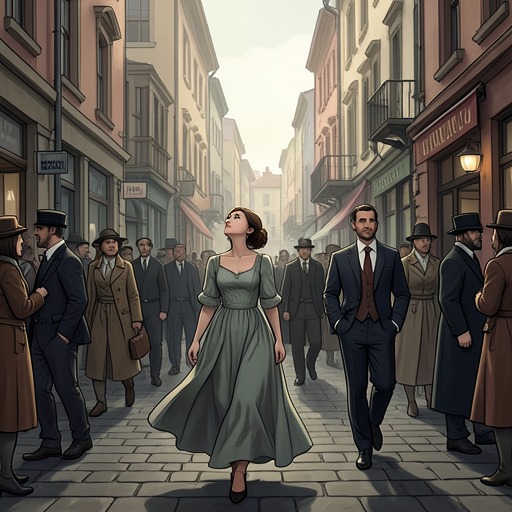
Bigger and Jack reach the Regal after walking along the street in the morning sunshine and taking their time at corners while cars pass. They arrive at Forty-seventh Street and South Parkway at eleven-thirty, after walking six blocks in silence. The theater is just opening. Its location enters the narrative through this measured approach and the concrete details of the outing, rather than through an extended description of the building or its neighborhood.
The choice of film is casual. Bigger says he would like to see a movie, and Jack tells him that Trader Horn is playing again because old pictures are being brought back. When Bigger asks the price and learns that a ticket costs twenty cents, they decide to go in. The exchange gives the visit an ordinary, unhurried rhythm: they select a familiar entertainment, buy tickets, and take seats before the picture begins. Nothing in the plan suggests that the cinema will become important to Bigger’s night.
The Auditorium and the Newsreel
Inside, the theater is dark, and the two men sit listening to a pipe organ playing softly while they wait for the film. Bigger moves restlessly, glances around to see whether an attendant is nearby, and sinks low in his seat. Jack watches him from the corner of his eye, and they laugh together. This brief exchange makes the auditorium feel like a space where Bigger’s unease and Jack’s awareness of it can pass between them in a private joke, even as the public program is about to begin.
The first images are not the feature film but a newsreel. As the scenes unfold, Bigger leans forward and becomes absorbed by pictures of smiling white girls on a Florida beach, with gleaming sand, sparkling water, and palm trees around them. The commentator presents the women as daughters of the rich, linking their leisure to immense wealth and prominent families. The screen thus supplies a carefully staged vision of abundance: the beach, the young women, and the commentator’s figures make privilege visible as spectacle before Bigger has any personal reason to connect it to his own life.
Mary Dalton on Screen
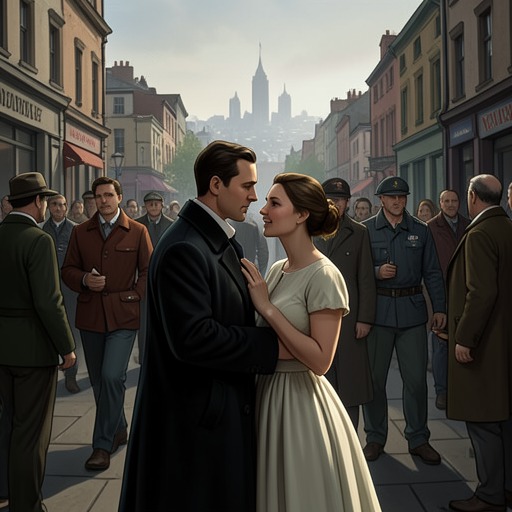
The newsreel then shows Mary Dalton in close-up, smiling with a man whose arms encircle her waist. The commentator identifies her as the daughter of Henry Dalton of 4605 Drexel Boulevard and reports that she has rejected wealthy suitors in favor of a well-known radical during a winter vacation in Florida. The image shows Mary kissing the man as he lifts and spins her. A film that had begun as a sequence of distant scenes of rich vacationers has abruptly supplied a name, a family, and an address.
Bigger recognizes Mary and tells Jack that she is the daughter of the man he is going to work for. He identifies the address as the place he will visit that night to ask about the job. Jack’s surprise confirms that the connection is not a detail already shared between the two men: Bigger has made the recognition, and the newsreel has given him a glimpse of the household before he enters it. The public image on the screen becomes personally consequential because it joins Mary’s identity to Bigger’s coming employment.
Narrative Significance
The Regal scene places Mary first before Bigger as a mediated image: the newsreel names her, frames her romance as a society story, and displays her within a world of money and leisure. Bigger does not meet her there. He watches her representation on a screen, then translates what he sees into practical knowledge about his prospective employer and the address of his evening visit. The theater consequently links two settings and times—the Florida vacation shown in the film and Bigger’s impending trip to the Dalton home—without bringing them physically together.
The exchange about the beach also makes the spectacle’s racial boundary audible. Jack says that he would like to be there; Bigger answers that he could go, but would be hanged from a tree. Their laughter is quiet, yet the joke gives the images of white leisure a threatening counterpoint: access to the same place is not presented as equal or safe for them. The Regal’s screen offers the beach as an image to look at, while Bigger’s reply marks the danger attached to crossing the boundary the image leaves out. In this brief episode, the theater gathers the novel’s contrast between displayed privilege and restricted possibility, then makes that contrast converge on the face of the woman Bigger is about to encounter.