The cycle of fear, guilt, hatred, and violence
Native SonThe cycle of fear, guilt, hatred, and violence is the pattern Max names while defending Bigger Thomas: oppression shapes a life of constrained choices, violence gives accumulated resentment a sudden form, and the resulting fear and guilt help provoke demands for more violence. Its significance lies in Max’s refusal to make either Bigger’s responsibility or the surrounding social order disappear. He argues that Bigger committed grave crimes, but that a punishment focused on destroying him will intensify the conditions from which further violence can emerge.
The Pattern Max Describes
In Max’s account, the cycle begins before the immediate crimes. He describes a first wrong embedded in a long history of racial domination, followed by guilt that self-interest and fear prevent people from acknowledging or repairing. That unaddressed guilt contributes to hatred; hatred, in turn, produces further crimes and deepens the conditions of fear. Max presents these forces as connected rather than as separate emotions belonging to separate individuals: the violence of the present carries the weight of earlier wrongs, while the reaction to it reproduces the same conflict.
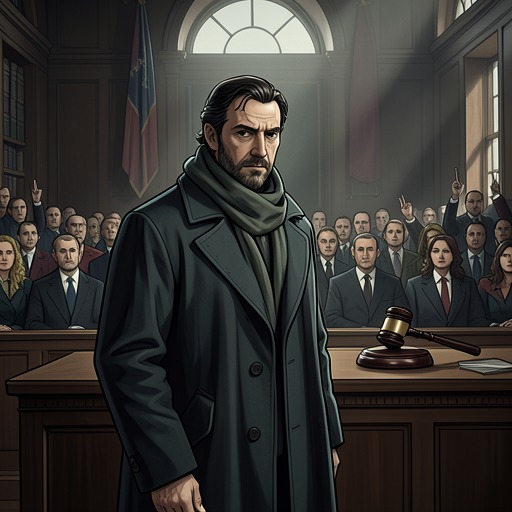
Max applies this explanation to both Bigger and the white mob gathered outside the courtroom. He argues that the crowd’s demand for a swift death is itself driven by fear and guilt, and that its members are strangers to Bigger who nevertheless hate him. In his formulation, they fear because they believe their deepest interests and assumptions are under attack, while Bigger’s own hatred also feeds the guilt and fear of others. The pattern is therefore reciprocal in its effects, but not detached from history or power: Max locates its conditions in a society whose racial order has injured some people and whose beneficiaries resist confronting that injury.
Structural Conditions and Everyday Life
Max connects the cycle to restrictions that shape ordinary life, not only to moments of spectacular violence. In his sentencing argument, he describes Black people as being told where to live, how much schooling they may receive, where they may eat, and what kinds of work they may do. He stresses the trap created when schooling awakens common human desires and capacities, but life outside school denies Black people the same freedom to act on them. The resulting pressure is social and cumulative; it cannot be explained only by the choices made in a single crisis.
The housing evidence gives this argument a concrete institutional dimension. During the inquest, Max asks Mr. Dalton why the company charges Black families, including the Thomas family, higher rents than white families for comparable houses. He also asks whether company policy keeps Black residents in one area of the South Side. Mr. Dalton acknowledges that the policy works that way, while disclaiming responsibility for its origin. Max’s questions expose a contrast between the Daltons’ public charity and the housing arrangements that confine Black tenants to costly, unsafe homes. In his larger argument, such arrangements help establish the restricted conditions within which fear and resentment accumulate.
Max also points to racial separation within the courtroom itself. Black spectators sit apart from white spectators, not because someone has explicitly directed them to those seats, but because they understand that they are not wanted on the same bench. For Max, this visible division shows that exclusion is carried by social expectation as well as formal instruction. It gives physical form to the separation that his argument identifies as part of the cycle’s underlying environment.
From Accusation to Collective Panic
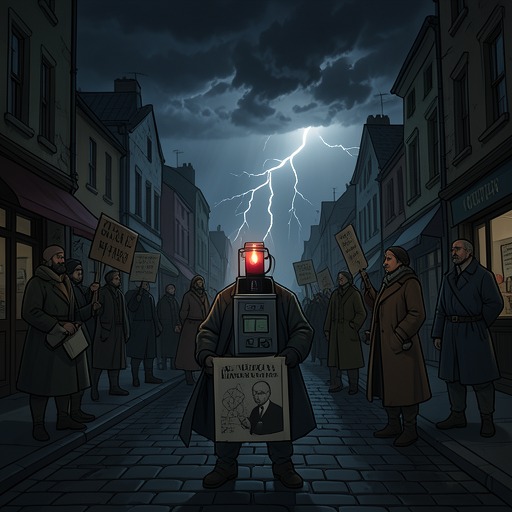
The cycle becomes especially visible after reporters discover Mary Dalton’s remains in the Dalton family furnace and publish a report presenting the case as a presumed sexual crime. The newspaper announces that five thousand police surround the Black Belt, while more than three thousand volunteers join the search described in its account. Police and vigilantes search Black homes; public transport leaving the South Side is stopped and searched; Black residents are rounded up for investigation; and reports describe assaults, job dismissals, and smashed windows. The coverage turns an investigation into a citywide racial emergency, making the threat directed at Bigger spill outward onto people who have not been shown to be involved in the crimes.
The reporting also shows how collective fear shapes the interpretation of evidence. Although the newspaper notes that Jan Erlone’s fingerprints were not found in the Dalton home, it repeats suspicion that he may be connected to the case and presents the alleged plan as too elaborate to have been devised by a Black man. Bigger recognizes the danger of the public framing, yet the suggestion that Jan is an accomplice prompts him to want to correct the accusation and admit his own responsibility. The scene places private concealment beside a public story already organized by racial assumptions: the press does not merely report fear but helps give it a direction.
Responsibility, Punishment, and the Cycle’s Consequences
Max does not present social explanation as exoneration. He explicitly says that he is not asking the court to regard Bigger as blameless or simply as a victim of injustice. Instead, he asks the court to recognize the conditions from which a distorted mode of life has emerged and to consider the consequences of treating execution as a solution. He argues that killing Bigger will tighten barriers and increase fear among other Black people, making the prospect of further violence more likely rather than ending the pattern.
The inquest into Bessie’s death reveals another unequal consequence of the same social order. When her body is introduced during the investigation of Mary’s death, Bigger realizes that Bessie has been brought forward as evidence that can strengthen the case for destroying him. He understands that the white public’s response is centered on Mary’s death, while Bessie’s killing does not receive comparable concern. The disparity sharpens the cycle’s moral contradiction: violence against a Black woman can be used to condemn a Black man, even as the system gives little weight to her life in its own right. Bigger’s realization does not undo his responsibility for her death; it shows how the proceedings can make that death serve a different public purpose.
The cycle is finally Max’s warning about what punishment can reproduce. If the court answers Bigger’s crimes only by destroying him, Max argues, it leaves the deeper conditions intact and teaches others that fear, exclusion, and lethal force remain the governing responses. The concept links individual action to institutional life without collapsing one into the other: Bigger is responsible for what he has done, while the court and the broader society remain implicated in the environment that shapes the conflict and in the choice of what follows.