The white blur
Native SonThe white blur is a recurring, unstable image in Bigger Thomas’s experience of Mary Dalton’s death and its aftermath. It appears at moments when he is afraid of being discovered, slipping between an indistinct presence and an identifiable animal. Rather than establishing a supernatural event, the image gives visible form to Bigger’s fear and to the racial danger he associates with discovery.
Appearance During the Concealment of Mary Dalton
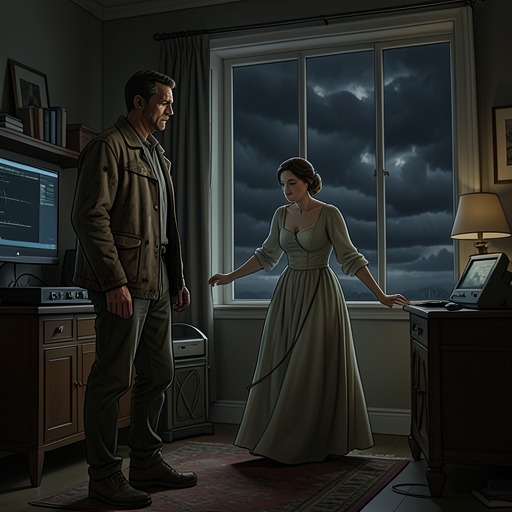
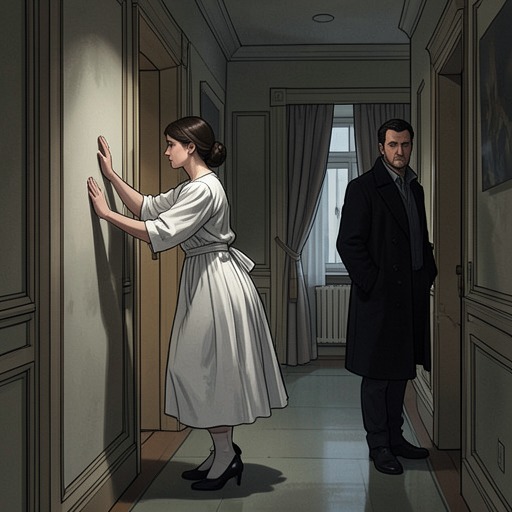
As Bigger lifts Mary Dalton’s body, he sees a white blur at the doorway. It disappears, and he thinks it may have been Mary; at once, his fear intensifies. The surrounding facts he confronts are starkly racialized: Mary was white, he is Black, he killed her, and he fears that capture will mean his death. The blur therefore arrives amid both the physical work of concealing her body and his awareness of the consequences if he is caught.
The image also shapes his actions after he places Mary in the trunk. He looks toward the door expecting to see the blur again, but finds nothing. Its presence is uncertain, yet its effect is concrete: his attention keeps returning to the possibility of being watched while he tries to hide the body.
The Cat and the Image of Accusation
The blur reappears by the furnace, now identified as a white cat perched on the trunk. Bigger perceives the cat’s green eyes as accusing him while Mary’s face remains visible at the furnace door. The image shifts from an uncertain figure to a real animal, but recognition does not dispel its force. Bigger considers killing the cat and putting it into the furnace as well; instead, it escapes through the open kitchen door. He closes the door and continues facing the unfinished task of concealing Mary’s body.
This episode makes the blur both an effect of perception and a concrete presence in the room. The cat does not speak, but Bigger’s fear gives its gaze the force of judgment. His attempt to contain the consequences of Mary’s death is repeatedly interrupted by things he cannot control: the apparent figure at the doorway, the cat’s escape, and the difficulty of disposing of the body.
Recurrence and Racial Fear
Later, when Buddy approaches, Bigger briefly feels as he had when Mary lay on the bed and the white blur moved toward him. This recollection connects the image to a recurring response of alarm, rather than limiting it to the furnace episode. The blur marks a moment when Bigger experiences another person’s approach through the memory of danger surrounding Mary’s death.
The image’s racial significance is sharpened by the inquest. There, Bigger recognizes that Bessie’s death is being used as evidence against him, while the public response centers on Mary’s death and the threat supposedly posed to white people. He understands that he will be punished for the death of the white woman, while Bessie’s death is treated as a means of making the case against him. The inquest does not reproduce the blur as an apparition; instead, it makes explicit the unequal social power that the image has condensed into Bigger’s fear of being caught.
Narrative Significance
The blur links private perception to public danger. Its indistinctness reflects Bigger’s uncertainty about what he sees, while its repeated association with Mary and with the prospect of discovery gives that uncertainty a specific racial charge. The white cat’s transformation from blur into animal briefly clarifies the scene without resolving Bigger’s fear: the gaze still seems accusatory, and the body remains only partly concealed.
The motif’s force comes from this movement between what is seen and what is feared. It accompanies Bigger’s efforts to hide his responsibility, returns in the memory of another frightening encounter, and finds a social counterpart in the inquest’s unequal treatment of Mary’s and Bessie’s deaths. The blur does not explain those events; it makes visible how fear, guilt, and racial power converge in Bigger’s perception.