Threat of racial mob violence
Native SonThe threat of racial mob violence is the expanding danger that follows the investigation and trial of Bigger Thomas: a climate in which Black people are treated as a collective menace, armed vigilantes and police search Black neighborhoods, and an angry crowd waits outside the courtroom. It is not merely a possible assault on Bigger. The threat shapes public behavior, judicial proceedings, and the arguments made over what can produce peace. Its force comes from the convergence of sensational reporting, racialized policing, and a social order that Max describes as already unequal.
Formation through reporting and public fear
The crisis intensifies when Bigger reads a newspaper headline announcing that authorities suspect a sex crime. He understands the accusation as a sentence imposed before his capture: white readers, he fears, will decide that his life is forfeit. That reaction shows how public language can turn suspicion into a judgment on a person before the facts are established. The papers report the discovery of bones in the furnace at the Dalton home, but their framing of the case also amplifies the danger attached to the accusation.
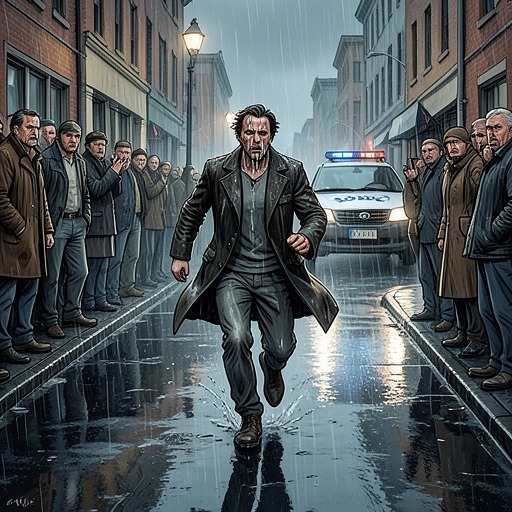
Coverage quickly presents the investigation as a threat posed by Black men generally. Reports describe police and vigilantes searching Black homes under a blanket warrant, stopping vehicles and public transport leaving the South Side, and searching abandoned buildings. The reported presence of armed groups, the searches, and reports of Black men being beaten in other neighborhoods make the danger more than rhetorical. White parents ask that schools close until the suspect is captured, while men in Hyde Park and Englewood organize vigilante groups and offer their services to the police. Fear of Bigger is thus circulated as a reason for collective action against Black communities.
The press also casts doubt on Jan Erlone’s account and suggests that he may have been Bigger’s accomplice, reasoning that the alleged plan was too elaborate to have been devised by a Black man alone. Bigger wants to correct that account and declare Jan innocent, but remains in hiding. The false suspicion therefore compounds the danger: the narrative surrounding the case misrepresents both Bigger’s responsibility and Jan’s involvement while presenting racial assumptions as investigative judgment.
Search, confinement, and the shrinking space
As the manhunt continues, newspaper maps make the geography of pursuit visible. One map shows the Black Belt narrowing until only a small unshaded area remains. Bigger locates himself within that space, with police closing in from the north and south. The map converts a broad citywide search into the image of a person with fewer places left to go. Reports of raids on a thousand Black homes and a riot being quelled further connect the pursuit of one suspect to pressure on an entire population.
That pressure culminates in the threat surrounding the trial. A report says that the governor has ordered two regiments of the Illinois National Guard to maintain public order, citing fear of mob violence. The newspaper presents the troops as protection for Bigger against the crowd, while also reporting rising hostility, demands for a death sentence, and anxiety about an uprising in a Black neighborhood. Military deployment makes the danger legible even inside the courthouse: the trial proceeds under the protection of armed forces because ordinary public order is not trusted to hold.
The courtroom as a contested account of danger
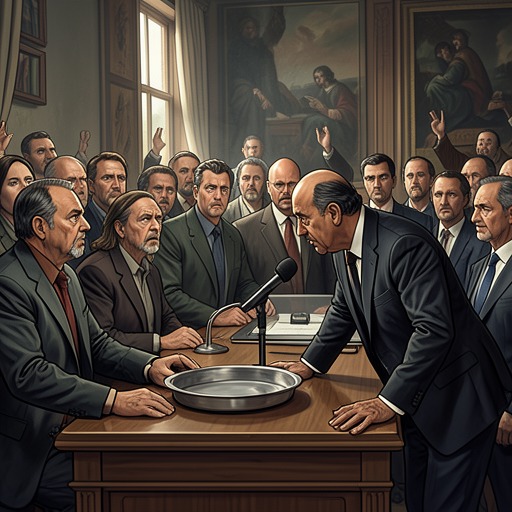
The prosecution presents the case as an offense so monstrous that its details and signed confession should speak for themselves. Its appeal to punishment is also cast as a defense of the public: Buckley argues that people need assurance that violent disorder will not prevail. In this account, the death penalty promises to deter crime and reassure a frightened city. The mob’s presence is not treated as the central wrong; the argument instead makes the crowd’s anger part of the pressure on the court to demonstrate force.
Max answers by refusing to reduce the case to either an appeal for sympathy or a simple claim that Bigger is an innocent victim. He warns that responding only through anger would keep the cycle of violence moving. His request that the court spare Bigger’s life and impose life imprisonment is made under the threat of mob rule, which he says he does not wish to intensify. He also challenges the assumption that troops and the court, by their mere presence, can guarantee peace. For Max, public peace depends on trust that people are secure, not simply on displays of force.
His argument places the danger in a wider structure. He describes how Black people have been directed where to live, how much schooling to receive, where they may eat, and what work they may do. In court itself, he points to Black and white spectators sitting apart even without an explicit order, because the Black spectators know they are not wanted on the same bench. His questions to Mr. Dalton about higher rents charged to Black families and his company’s role in keeping them in one area connect the courtroom crisis to housing discrimination and segregation. The threat outside the courthouse is therefore set against inequalities visible in ordinary business practices and in the arrangement of the trial itself.
Consequences and significance
The threat does not remain outside the legal proceedings as background noise. It shapes the need for troops, bears on the competing demands for punishment and mercy, and reveals the limits of formal authority when public order is already strained by racial hostility. The newspaper’s account makes Bigger a symbol of collective danger; Max’s argument contests that reduction by directing attention to the conditions that shape Black life and to the public’s part in maintaining them.
When the room quiets after Max speaks, Bigger reads the changed expressions around him as a sign that the decision has been made and understands that he will die. The ending does not establish that the crowd itself carries out an attack. Instead, it leaves the mob threat joined to the court’s verdict and to the troops stationed for the trial: the law reaches its decision amid a public demand for death, while the structural account Max has offered fails to spare Bigger. The novel makes the threat consequential not only as a prospect of physical violence, but as pressure that narrows the possibilities for justice and allows racial fear to pass as public safety.