
Public Story and Private Truth
NemesisThis flow examines how gossip, respectability, and official narratives obscure the actual crimes.
increasing Bearing strength in each event
 decreasing
Bearing strength in each eventdecreasingVillage Gossip

Stories in the Village
Residents of Jocelyn St Mary remember Verity and Nora through rumor, moral judgment, and half-remembered details. Their accounts contain useful facts but rarely distinguish knowledge from assumption.
Reputation as Verdict
Nora is dismissed as promiscuous, while Verity is remembered as respectable and beautiful. The difference affects how seriously each disappearance is treated.
Hidden Information
Marple understands that gossip is not truth, yet it can reveal where the community has unconsciously preserved a clue.
The Official Case

A Coherent Falsehood
The prosecution’s account is built from real fragments: Michael knew Verity, drove a similar car, lied, and had a criminal record. Those fragments form a persuasive but incorrect story.
Evidence Without Context
The body’s identity is accepted rather than independently established. Once that assumption enters the case, all later evidence points in the same direction.
Institutional Confidence
The legal system mistakes coherence for truth. The novel’s injustice grows from facts arranged around a false center.
Respectable Silence
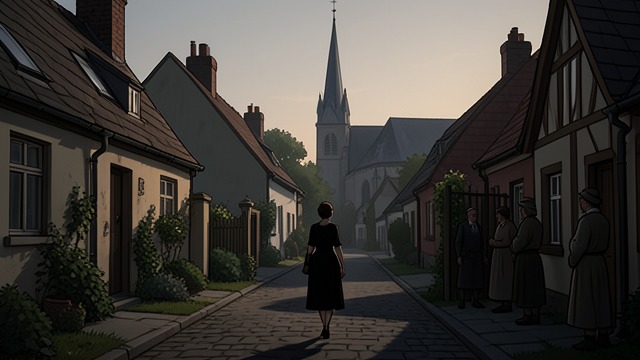
A Closed Community
The residents of Jocelyn St Mary accept that Michael killed Verity and that Nora probably ran away. The conclusions simplify a painful history and protect the community from deeper questioning.
The Guardian’s Authority
Clotilde’s grief gives her testimony moral force. No one imagines that the bereaved guardian could have designed the deception.
The Cost of Certainty
Silence allows the real murderer to remain respectable while two victims and one wrongly convicted man disappear from ordinary memory.
Marple’s Counter-Narrative

Reassembling Fragments
Jane Marple compares details that official accounts keep separate: the missing wedding, the unusual name Verity, the garden mound, the false jumper, and Nora’s disappearance.
Pattern Recognition
Her method is cumulative rather than spectacular. Each small discrepancy becomes meaningful when placed beside another discrepancy.
Truth Against Authority
Marple does not reject institutions, but she refuses to let official conclusions end observation. Her alternative narrative restores causality to the scattered facts.
Truth Made Official

The Story Corrected
Investigators recover Verity Hunt’s remains and confirm that the body in the ditch was not Verity. Clotilde’s responsibility for the substitution and later murders becomes legally actionable.
Public Recognition
The private truth becomes an official account, undoing the old verdict and exposing the community’s assumptions.
Narrative Justice
The ending shows that truth is not merely psychological relief. It changes legal status, restores names, and redirects blame.
During Marple’s first local conversations
At Michael Rafiel’s trial
During the decade after the trial
During the final investigation
After the final confrontation
