
Justice and Its Price
NemesisThis flow traces the novel’s expanding idea of justice from legal correction to moral reckoning and personal cost.
increasing Bearing strength in each event
 decreasing
Bearing strength in each eventdecreasingJustice as a Commission

A Paid Obligation
Jason Rafiel frames justice as work that deserves payment. The legacy turns moral action into a commissioned task without reducing it to financial profit.
Marple’s Motivation
Jane Marple admits that money offers pleasure and freedom, but her real motive is intellectual and moral interest. She wants to know what Rafiel expects her to discover.
Justice in Motion
The principle begins as an abstract word and becomes a practical demand to investigate.
Justice Beyond Character

The Bad Man’s Right
Edmund Wanstead and Jason Rafiel insist that Michael Rafiel need not be virtuous to deserve a fair judgment. His history of wrongdoing cannot substitute for proof of murder.
Moral Precision
This distinction challenges the instinct to treat a disliked person as legally available for blame. Justice must identify the act, not merely condemn the personality.
A Difficult Standard
The case demands sympathy without exonerating every behavior. It is precisely because Michael is flawed that the correction matters.
Justice for Nora
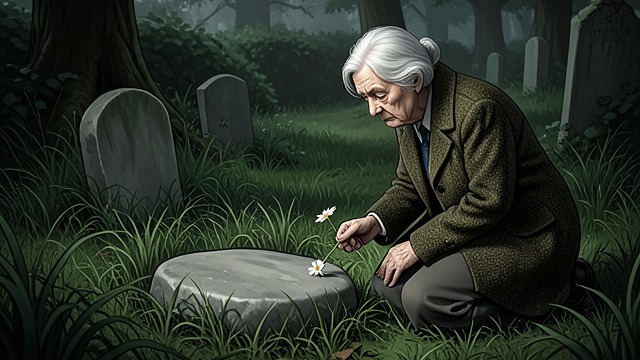
The Unfashionable Victim
Nora Broad receives little respect because villagers disapprove of her sexual behavior. Marple’s investigation refuses to let social judgment determine whether she deserves protection.
Equal Weight of Lives
Nora’s apparent recklessness does not make her disappearance less serious. Her death is necessary to explain the false body and the wrongful conviction.
The Moral Correction
Restoring Nora’s identity broadens justice beyond the respectable victim. The novel insists that even a despised person cannot be treated as disposable.
Justice for Verity

A Name Restored
Verity Hunt is recovered from the garden and separated from the body that carried her identity. Her death is recognized as an act of possessive violence rather than Michael’s crime.
The Lost Future
Justice cannot return the marriage, children, and life Verity might have had. It can nevertheless restore the truth of what was taken from her.
Truth as Dignity
Correct identification becomes a form of respect. Verity is no longer merely the girl whose death condemned someone else.
Justice Against Clotilde

Naming the Murderer
Jane Marple confronts Clotilde Bradbury-Scott with the full sequence of crimes. The accusation is moral before it becomes legal, forcing Clotilde to hear the relationship between love and murder.
No Excuse in Motive
Marple understands Clotilde’s suffering but does not permit grief or devotion to excuse the killings. Compassion and condemnation coexist.
A Reckoning Arrives
Clotilde’s death and the official investigation complete the movement from hidden crime to retribution.
When Rafiel’s legacy is offered
During Wanstead’s account of Michael’s case
During Marple’s village inquiries
When the hidden remains are identified
At the final bedroom confrontation
