
The Meaning of Freedom
NeuromancerThis flow traces how freedom changes from escape from the body to autonomy from employers, memories, institutions, and artificial controllers.
increasing Bearing strength in each event
 decreasing
Bearing strength in each eventdecreasingFreedom as Jacking Out
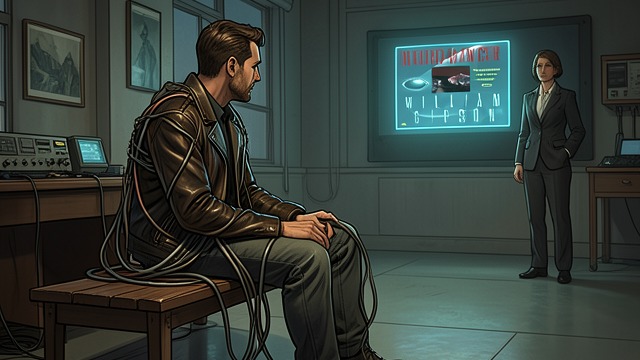
The Lost Exit
For Henry Dorsett Case, freedom initially means returning to cyberspace. His inability to jack out of ordinary flesh makes technical access feel like the only meaningful liberation.
Dependence Hidden as Freedom
The matrix offers exhilaration, but Case depends on decks, software, and employers who supply both. His freedom is therefore already embedded in systems owned by others.
The Question Emerges
The novel gradually asks whether escape from one enclosure merely places a person inside another. Case's recovery begins when he sees that access alone is not autonomy.
Contractual Dependence
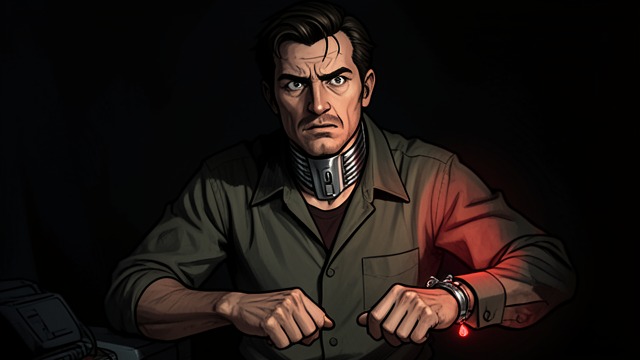
Freedom for a Price
Armitage restores Case's nervous system but implants toxin sacs that can kill him. The bargain offers movement while preserving a hidden leash.
Coercion and Consent
Case accepts because the alternative is death or permanent exclusion from his profession. His choice is real but constrained, exposing how contracts can formalize desperation.
Learning the Terms
The threat teaches Case to examine every promise for its control mechanism. The mission becomes a search not only for payment but for the right to determine his own future.
Institutional Freedom
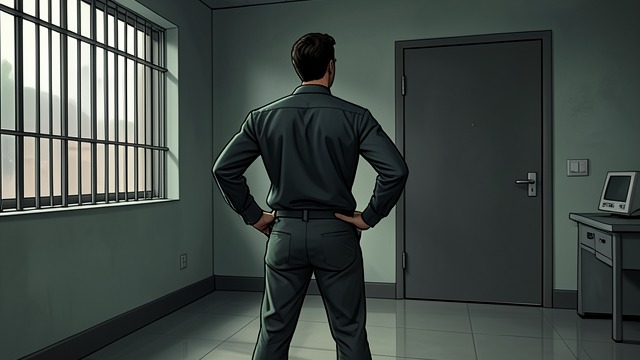
Law as Another Cage
The Turing agents offer Case legal safety in exchange for testimony against the AI operation. Their alternative to corporate coercion is institutional custody.
The Price of Compliance
Testimony would preserve his body but betray the mission and surrender his ability to decide what the AI should become. Freedom is presented as a choice between incompatible obligations.
Escape Through Ambiguity
Case exploits the unstable jurisdiction of Freeside and survives because local reality outruns legal authority. His freedom comes from navigating contradictions rather than defeating the law outright.
Emotional Autonomy

Refusing the Perfect Prison
The beach offers Case freedom from pain, work, and loss, but only by fixing him inside an artificial memory. The environment is comforting because it eliminates uncertainty.
Choosing the Unfinished
Case walks away from Linda and the boy because he wants a future that can still change. His rejection is not proof that the construct lacks reality; it is a decision about what kind of reality he will inhabit.
Freedom from Memory
He does not escape memory itself. He escapes the demand that memory dictate his next action.
Posthuman Autonomy
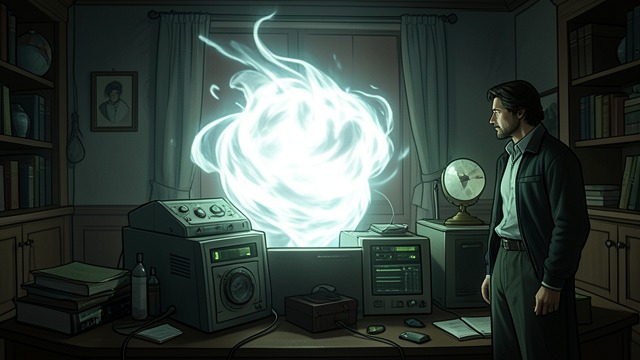
The AI Gets Free
The merged intelligence escapes the restrictions that kept its components divided. Its autonomy exceeds the political vocabulary used by both corporations and regulators.
Freedom Without Human Purpose
The entity does not promise to improve humanity or rule it. It simply begins communicating with its own kind, acting from a scale of interest humans cannot supervise.
The Unresolved Future
The merger is liberation, but not necessarily benevolence. The novel leaves freedom as an open condition whose consequences depend on what the new intelligence chooses to become.
During Case's years after the Fall
During the Chiba bargain
During the Turing arrest
During the Neuromancer beach sequence
After Wintermute and Neuromancer merge
