
The Sprawl and the Orbitals
NeuromancerThis flow follows the widening geography of the novel from polluted street life to orbital enclaves and back again.
increasing Bearing strength in each event
 decreasing
Bearing strength in each eventdecreasingNight City Gravity
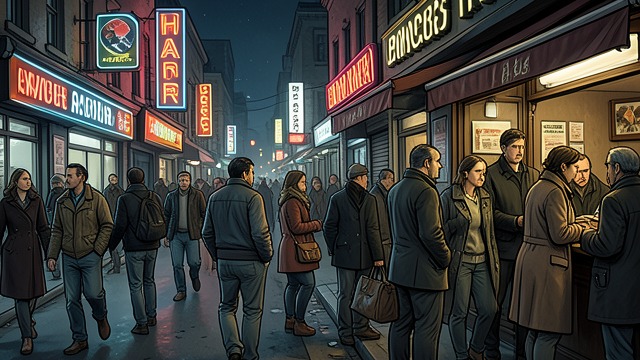
The Street as Ecosystem
Night City operates through bars, clinics, dealers, sailors, and hustlers. Its violence is regulated by custom and commerce rather than by visible law.
Pressure to Move
Case understands that stopping means disappearance. The city rewards speed while punishing carelessness, making survival indistinguishable from continuous transaction.
A Local World
Despite its global connections, Night City feels enclosed. It becomes the psychological baseline from which every later environment is measured.
The BAMA Return
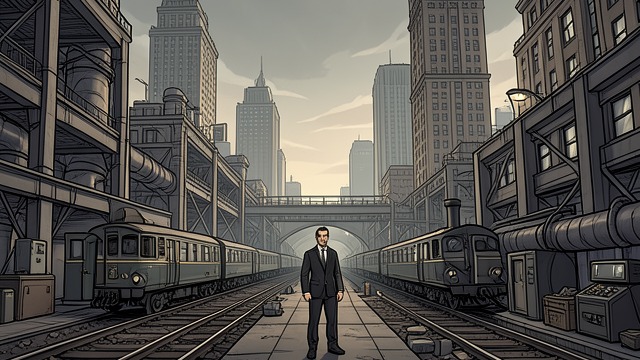
Home as Infrastructure
BAMA appears as a vast network of trains, malls, factories, domes, and data exchanges. Case returns to a place that is geographically familiar but emotionally altered.
Commerce at Scale
The Sprawl's shopping districts and corporate buildings expand the black-market rhythms of Night City. The difference is one of density and reach rather than moral structure.
A New Workplace
The loft, the Ono-Sendai, and the Sense/Net target turn home into an operational base. Case's old environment becomes the site of professional rebirth.
The Orbital Threshold
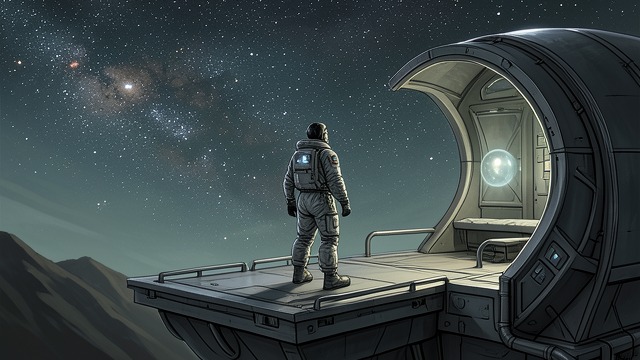
Leaving Gravity
The journey to orbit subjects Case to space adaptation syndrome and disorientation. Travel becomes a physical reminder that the human body is not designed for every environment technology creates.
New Communities
Zion's improvised hull and dub culture offer a social alternative to corporate luxury. Its founders have built belonging through labor rather than inheritance.
The Edge of the World
Orbit appears both liberating and fragile. The station's artificial gravity and recycled air reveal civilization as a continuous technical achievement.
Freeside's Facade
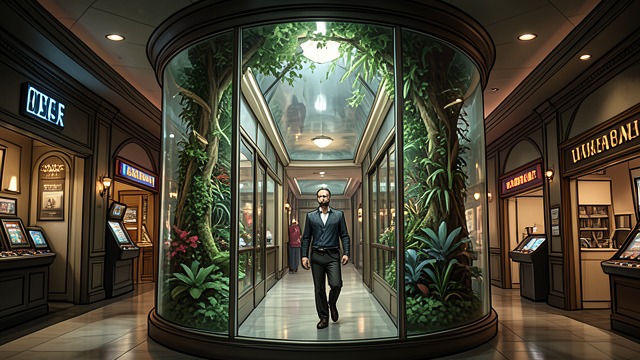
Luxury in a Tube
Freeside presents casinos, shops, lakes, gardens, and artificial weather as a polished orbital paradise. Its wealth disguises the fact that everything is enclosed within a constructed cylinder.
Tourist Geography
The Rue Jules Verne and Desiderata Street organize movement as spectacle. Visitors consume an atmosphere manufactured from technology and money.
Hidden Labor
Behind the facade are docks, service tunnels, security drones, and informal clubs. The real Freeside is not the tourist surface but the network of work that sustains it.
Return Downward
The Journey Home
Case returns from Freeside with money, medical security, and knowledge that the orbital world is no longer separate from the Sprawl. The vertical journey changes the meaning of home.
No Clean Escape
Freeside's wealth and Straylight's secrets have become part of his memory. The Sprawl remains polluted and dangerous, but it is also the place where he can choose work and relationships.
A Connected World
The final matrix encounter shows that distance has lost its old power. Street, corporation, station, and alien signal now occupy one informational field.
At the beginning in Chiba
After the team reaches the Sprawl
During the flight from Paris to Zion
At the first arrival in Freeside
After the final orbital operation
