
The Natural Regulation of Wolf Numbers
Never Cry WolfThis thread traces the book’s account of how territory, breeding, prey availability, and disease limit wolf populations without constant human intervention.
increasing Bearing strength in each event
 decreasing
Bearing strength in each eventdecreasingTerritories, Not Crowds
Territories, Not Crowds
An Inflated Estimate
Officials estimate tens of thousands of Wolves in Keewatin, implying an implausibly dense population. Mowat and Ootek travel through broad areas without finding wolf signs.
A Grounded Revision
Families occupy territories of varying size, with long stretches of apparently suitable land empty of Wolves. Mowat revises the estimate sharply downward, challenging the numbers used to justify control.
Limited Homesteads
Limited Homesteads
Space Sets a Limit
Ootek explains that young Wolves often remain with their parents because there is not enough suitable hunting territory for every adult to establish a family. A territory must support both adults and young.
Population Without Expansion
Some mature Wolves remain unmarried or help raise pups as relatives. The shortage of available land constrains population growth without requiring routine human killing.
A Short Breeding Season
A Short Breeding Season
Seasonal Reproduction
Mowat describes a brief annual mating period and later breeding ages for female and male Wolves. The timing limits opportunities for rapid reproduction.
Social Roles Without Breeding
Adults that do not breed may remain valuable members of the family. Their work caring for pups gives the social group a function beyond producing offspring.
Food and Litter Size
Food and Litter Size
Reproduction Responds to Conditions
Mowat describes litter size as varying with food availability and wolf density. In difficult conditions, fewer pups may be born or breeding may not occur.
A Flexible Limit
This relationship ties reproduction to the carrying capacity of the country. Population change is presented as part of the ecological system rather than evidence that Wolves inevitably multiply without restraint.
Disease and Survival
Disease and Survival
Scarcity and Illness
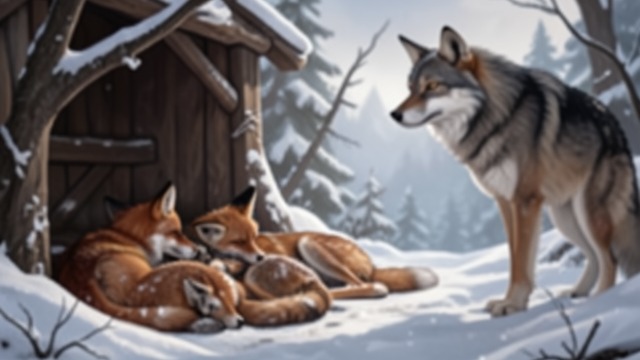
During a year of very low Lemmings and disrupted Caribou movement, hunger affects people and wildlife. Rabies spreads among weakened Foxes and Wolves.
A Harsh Natural Check
Mowat describes disease as one factor that can reduce a population after its ecological balance is disrupted. The episode complicates the belief that only human control can keep wolf numbers within limits.
During the late-summer survey of Keewatin
During conversations about wolf family groups
During Mowat’s reflections on wolf reproduction
During the account of breeding in years of abundance and scarcity
During the discussion of the 1946 outbreak
