Angeline
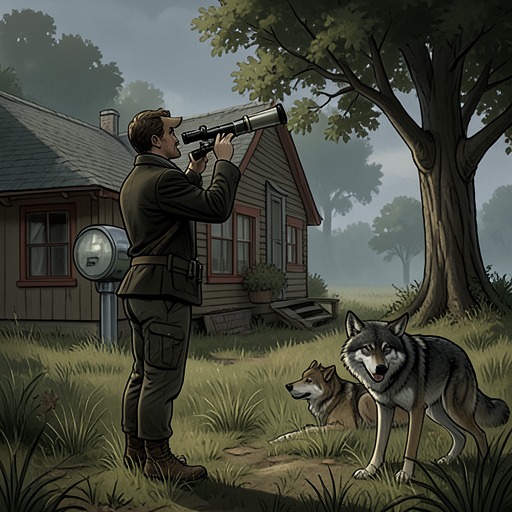
Never Cry WolfAngeline is the mother wolf whose family life, resourcefulness, and independent presence transform Farley Mowat’s observations at Wolf House Bay from an abstract study into an encounter with individual animals. The narrator first comes to know her through the routines of the den: as George’s affectionate mate, a patient but not inexhaustible mother, and a hunter able to make a living from prey he had not expected wolves to eat. Her character also exposes the limits of his confidence. He can watch her closely, yet still misunderstand her movements and the world she inhabits.
Identity and Appearance
Mowat names the adult female Angeline, distinguishing her as a particular individual rather than leaving her as an anonymous entry in his observations. She is slim and almost pure white, with a thick ruff around her face and wide-set, slightly slanted eyes. He finds her beautiful, ebullient, passionate, and sometimes devilish in manner. That impression initially seems at odds with her role as a mother, but her conduct with the pups soon makes clear that liveliness and maternal devotion coexist in her.
Angeline is George’s mate and the mother of four pups. The two adults appear deeply attached: they greet one another warmly after even brief separations, and Mowat sees no sign of quarrelling. Mike later tells him that they had been together for at least five years. The account places their bond within a larger pattern of wolf family life, in which the parents share the work of raising young and Uncle Albert can be left to look after the pups while Angeline goes out.
Motherhood and Family Life
On a bright morning, Angeline takes the pups to a sandy knoll soon after sunrise. The young animals climb over and tussle with her, chewing at her tail and ears. She tolerates their rough play for about an hour, then tries to protect herself by sitting on her tail and tucking her head down. When the pups turn their attention to her paws, she finally escapes up a sand ridge, pursued by all four. The episode gives Mowat a close view of care as daily work rather than a solemn emblem: Angeline stays among the pups, endures their exuberance, and sets a limit by moving away when she has had enough.
Her care also involves coordinating with the other adults. Before one outing, she nudges Uncle Albert awake and leaves him with the pups. Mowat had previously seen her enlist Albert, and sometimes George, to babysit while she went to the bay. When Angeline returns to the pups in a later scene, they recognize her whine, rush to greet her, and gather around her. She sniffs them in turn, then regurgitates food for them. Such observations show the narrator learning to interpret the family through repeated actions: an adult leaving does not mean abandonment, and the returning mother brings both recognition and nourishment.
Hunting and Adaptability
Angeline helps overturn Mowat’s early assumption that the wolves must be living on large game. While the male wolves rest, she sets out across the muskeg and reaches the shore. She wades into the cold water to drink, then watches ducks settle nearby. Her leap at one of them misses, but the attempt reveals that she will test opportunities beyond the prey Mowat had associated with wolves.
On the return across the grass, her manner changes. She moves slowly into the wind, apparently attending to sounds and scents, then pounces repeatedly with her forelegs held forward. Mowat sees her swallow several small catches before he identifies a mouse in her jaws. After watching her eat many mice, he begins to accept that the Wolf House Bay wolves, and perhaps other Barren Land wolves raising families beyond the summer caribou range, rely heavily on rodents. This discovery reframes her apparently casual hunting: small prey is not merely a diversion but a substantial part of the family’s food supply.
The evidence widens beyond Angeline’s own observed hunts. Ootek tells Mowat that wolves also eat ground squirrels and fish, including Northern pike, and describes methods by which wolves catch them. An analysis of wolf scats later finds rodent remains in about 48 percent of the samples, alongside caribou material and bird feathers. These accounts place Angeline’s mouse-catching within a flexible feeding pattern, rather than treating one striking observation as the whole diet.
Encounters Beyond the Den
Angeline’s family life includes contact with wolves beyond the den. When two unfamiliar wolves approach, she first responds to their tentative howl by relaxing and wagging her tail, then barks to them. She meets them about a quarter of a mile from the den. The visitors stop several yards away; after the three exchange slow tail movements, Angeline advances to sniff noses with them. They appear welcome. One plays with her, while the other descends into the ravine where the pups are; nothing in Angeline’s subsequent behavior suggests that the visit alarms her. The wolves leave after about twenty minutes, and she accompanies them part of the way before returning home.
Mowat is surprised by the visit, but Ootek treats it as ordinary social behavior, comparing it to people visiting one another. The contrast registers a change in the observer rather than an extraordinary change in Angeline: his surprise reflects how narrowly he had imagined wolf society. Her greeting and the visitors’ access to the pups make the wolves’ relationships appear broader than a simple opposition between a family and intruders.
Change, Vulnerability, and Narrative Significance
By mid-September, the pups have left the summer den and can join Angeline and the males on shorter expeditions, though not on prolonged hunts. The family ranges widely through its territory, and Mowat tries to share its wandering life within the limits of his human needs. Angeline’s role therefore changes with the pups’ growth: the den-centered work of early care gives way to their first exploration of the wider country alongside the adults.
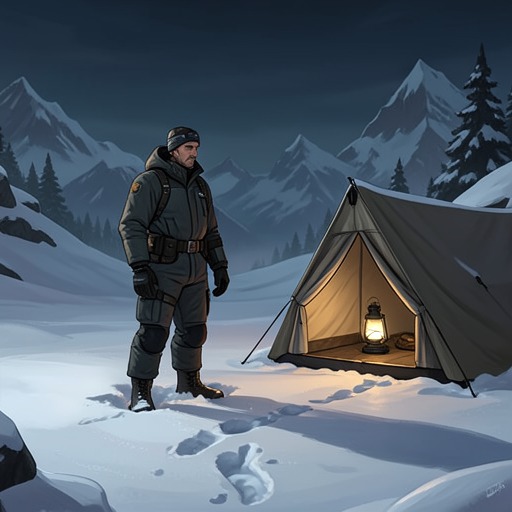
A later encounter reveals the vulnerability that observation from a distance can conceal. After an aircraft has frightened the wolves, Mowat enters a den and sees Angeline and one pup pressed motionless against its back wall. He retreats without being attacked. Only afterward does he understand that they had taken refuge from the aircraft, and he feels ashamed that fear had made him forget what the summer had taught him about them. A howl from George as he searches for missing members of the family recalls the life Mowat had glimpsed but could not enter. Angeline’s final appearance is thus not a triumphant reunion or a resolved account of her fate: she remains hidden with the pup, while the narrator recognizes that his knowledge has not erased the distance between human observer and wild animal. Her significance lies partly in that limit. She is a family member with her own habits and relationships, not simply a specimen or a screen for human feeling.