Assignment to the Lupine Project
Never Cry WolfThe Assignment to the Lupine Project began as an official response to complaints that wolves were destroying deer, but the inquiry’s consequences outgrew that brief. Farley Mowat was sent from Ottawa to investigate a politically charged claim; in the field, his observations redirected attention toward wolf behavior and the human pressures placed on both wolves and caribou.
Political Pressure Behind the Commission
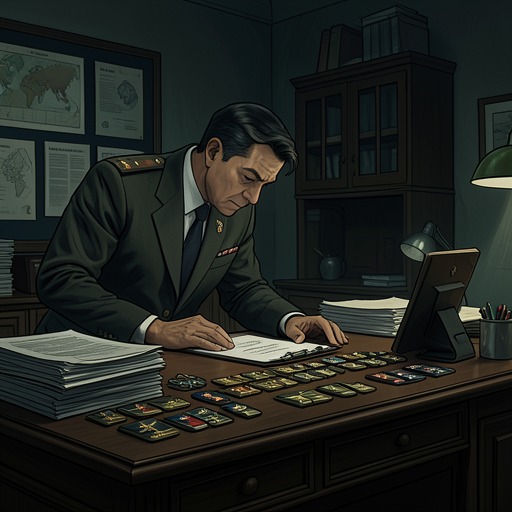
The briefing presented the wolf as a national problem. Over the preceding year, the Department of Mines and Resources had received thirty-seven memoranda from Members of the House of Commons expressing constituents’ concern. The chief described support from Fish and Game clubs and business interests, including ammunition manufacturers, while hunters returned from their trips reporting fewer deer. These complaints were treated as evidence that wolves were responsible.
The department’s previous explanation—that hunters had increased until they outnumbered deer by about five to one—had produced a political backlash. Members of the House shouted down the predecessor who presented it, and three days later he left for civilian life. The Minister then announced a full-scale investigation and pledged action against the supposed wolf-driven destruction of deer. In that sequence, the inquiry appears less as an open question than as a response to pressure to affirm a particular diagnosis.
The Formal Assignment
At a conference about the commission, a tentative list of requirements sat on the table in five official copies. Its title, Desiderata for the Lupine Project, lent bureaucratic weight to the preparations. The twelfth item specified twelve rolls of government-standard toilet paper. Mowat’s attention to this mundane requirement punctures the meeting’s solemnity: even the absurd detail belonged to the official machinery through which the supposedly urgent wolf problem was to be studied.
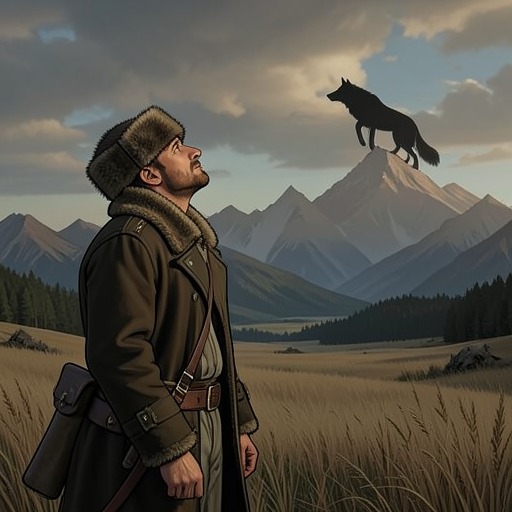
The chief delivered the assignment as a grave national duty and placed the wolf directly under Mowat’s responsibility. The commission offered no resolution of the disputed evidence; it sent an investigator into the field. Mowat rose, saluted, and left the room. That same night he departed Ottawa aboard a Canadian Air Force transport plane, bound first for Churchill town and then for the subarctic Barren Lands, where he hoped to find wolves.
From Administrative Brief to Field Observation
The assignment’s practical difficulty became apparent at the den. To observe the wolves without approaching them, Mowat set up a high-powered periscopic telescope behind a rock knoll about four hundred yards away. On his first prolonged attempt he saw none. The open country, the distance, and the animals’ absence made his prepared study plans dependent on cooperation he could not command. The investigation required sustained observation, but the wolves did not appear on an official schedule.
Mowat also began to record specific interactions rather than rely on the general allegation that wolves killed indiscriminately. In one observed pattern, wolves trotted through groups of caribou and sometimes made short approaches toward individual deer. When the animals ran strongly and appeared in good condition, the wolves stopped and let them go. His field account distinguished these repeated observations from broader conclusions about wolf hunting, turning the commission into an inquiry into behavior as well as numbers.
Evidence That Complicated the Original Claim
A conversation with Mike exposed a discrepancy in the account of caribou losses. Mike said that he killed two or three hundred caribou in a year, sometimes more, because he had fourteen dogs to feed and needed caribou to keep them fit for work. He also described using caribou carcasses to attract foxes to his traps. His explanation was at odds with the responses gathered by Ottawa: the trappers and traders polled through fur companies had denied killing more than one or two caribou a year while attributing enormous losses to wolves.
Mowat knew that eighteen hundred trappers operated across parts of Saskatchewan, Manitoba, and southern Keewatin within the caribou herd’s winter range. Even after halving both the number of trappers and Mike’s reported annual kill, his rough calculation reached 112,000 caribou killed by trappers in a year. He recognized that he could not use that figure in his official reports without risking reassignment. The episode reveals a tension within the commission: the evidence he encountered could challenge the public explanation, while the institutional context made some conclusions difficult to report.
The later context of the assignment sharpened its stakes. Mowat’s account describes North American wolf populations under severe pressure: in 1973, several races were virtually extinct, and the continental United States outside Alaska probably held no more than 1,200 wolves. Meanwhile, Minnesota authorities proposed killing 200 wolves each year, and Quebec announced a contest aiming at 5,000 dead wolves. The inquiry that had been launched to address alleged wolf damage thus led into a conflict between official claims about wolves and evidence of human killing. Its significance lies in that reversal: the investigator sent north to examine a supposed menace found that the premise of the investigation itself needed examination.