Churchill town
Never Cry WolfChurchill town is the first practical threshold between Farley Mowat’s government assignment and the wilderness he has been told to enter. He arrives on the western shore of Hudson Bay with an imprecise destination, cumbersome equipment, and no clear plan for reaching the interior. The town’s weather and limited bush-plane traffic hold him there, while residents try to guess what his unexplained mission really is. His eventual departure depends not on official arrangements but on a chance encounter with a stranded, eccentric pilot.
Northern Gateway and Uncertain Destination
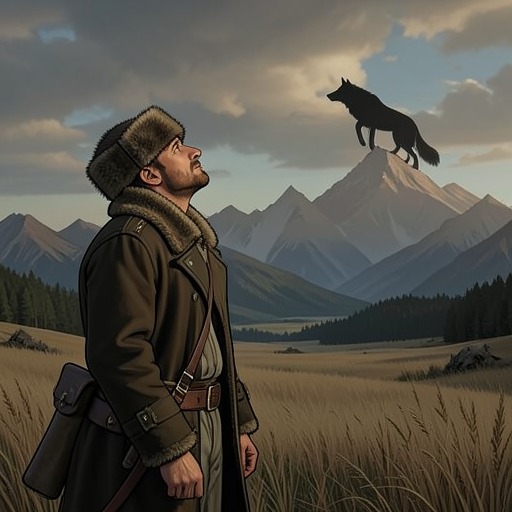
Mowat flees Ottawa aboard a Canadian Air Force transport plane, bound first for Churchill town and ultimately for some unspecified point in the desolate subarctic Barren Lands. The flight itself gives a measure of the expedition’s precarious beginning: an engine fails over James Bay, and the aircraft completes the journey at only five hundred feet through dense fog. Churchill town is therefore more than a stop on a route. It is the last reachable settlement before Mowat must find a way into a vast interior where, by his own account, he does not know where he wants to be set down.
The equipment that accompanies him reinforces the mismatch between bureaucratic preparation and practical certainty. Tents, stoves, sleeping bags, skis, snowshoes, dog harness, a radio transceiver, and numerous unexplained packages are loaded with a bundle of seven axes. Mowat later remarks on the absurdity of taking so many axes to a treeless land where even one would have been unnecessary. In Churchill town, the gear marks him as an unusual arrival, but it does not make his destination any more definite.
Suspicion, Rumor, and Local Knowledge
When Mowat seeks a commercial bush plane, he explains that he intends to spend a year or two living among wolves, while admitting that he has no particular landing place in mind. The candor does not help him. Some people respond with disbelief or hostility; others treat him as a prospector bound for a secret mine or a member of a gang stealing gold ore. The town’s guesses turn his lack of information into apparent evidence of a hidden purpose.
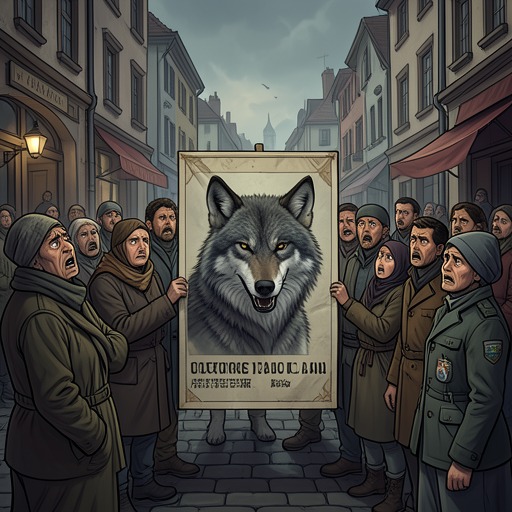
The uncertainty acquires a second life in rumor. After Mowat has been absent for months, the account circulating in Churchill town casts him as an observer drifting around the North Pole on an ice floe alongside Russians on another floe. His two cans of grain alcohol have been recast as vodka, supposedly intended to loosen the Russians’ tongues. The story eventually makes him something of a local hero, but that reputation comes later. During his actual first search for a plane, he is still an unexplained stranger trying to persuade people that an implausible assignment is real.
A Forced Stay in a Town with Few Planes
Mowat’s search exposes how little aviation support is available. After some delay he finds the pilot of an ancient Fairchild ski-plane, a man who earns a precarious living flying trappers to remote cabins in the Barren Lands. The pilot rejects the idea of flying to a place whose location Mowat cannot name and dismisses the wolf-research explanation as a yarn. There is no easy alternative: Churchill town has no other available plane pilots at the time. One has been lost in an attempt to land on Hudson Bay pack ice to shoot a polar bear; another is away in Winnipeg seeking a loan after an aircraft wing came unstuck during takeoff. The remaining pilot is the one who has refused Mowat.
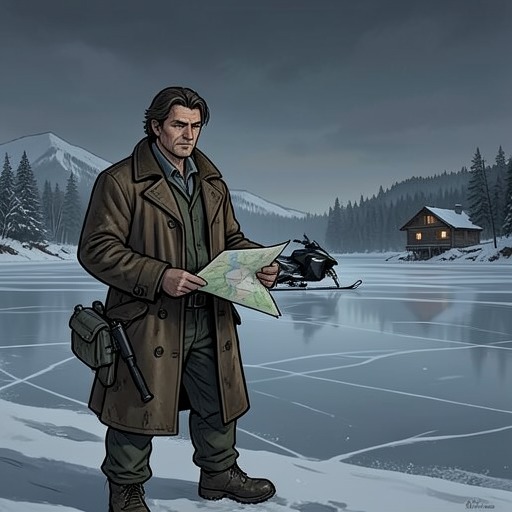
The enforced wait ends only in the last week of May, after three days of howling blizzard. On the third day, with visibility reduced to zero by snow squalls, an aircraft drops to the ice of a nearby pond outside the hotel. The wind threatens to carry it off again, so people rush from the beer parlor and hold its wings down. This arrival is as unlikely as Mowat’s proposed expedition: the plane is a decrepit twin-engine machine built in 1938 as a military trainer, and its lanky, hollow-eyed former RAF pilot has come from Yellowknife intending to reach The Pas, hundreds of miles in the opposite direction.
The Accidental Route Inland
Later that day Mowat explains his difficulty to the pilot. The answer is an offer to fuel the aircraft and fly northwest, following the course the pilot trusts because he does not trust the compass on other headings. He proposes flying low until they find wolves and then setting Mowat down. For Mowat, this chance meeting supplies what the town’s ordinary aviation arrangements could not: a pilot willing to turn an undefined destination into a direction of travel.
Departure still takes several days. A cloud ceiling at ground level first prevents the flight; then the ski-plane’s landing gear fails when a hydraulic cylinder collapses. The mechanic manages to restore it by filling the cylinder with seal-oil, though it continues to leak and the plane can remain upright for only about twenty minutes before keeling onto its side. On the fourth morning the party prepares to leave. Because the aircraft can carry only a small load, Mowat has to discard some of his provisions, including a useless canoe-cum-bathtub. He trades a gallon of alcohol for a seventeen-foot canvas-covered canoe, which the pilot says can be lashed beneath the aircraft. Churchill town’s role thus ends not with a planned departure on a reliable route, but with a makeshift bargain and a fragile aircraft pointed toward the unknown interior.
Narrative Significance
The town’s importance lies in the gap between an official order and the practical means of carrying it out. Mowat has been told that the wolf is his problem, but the assignment supplies no usable destination; in Churchill town, that vagueness produces suspicion, delay, and comic speculation rather than immediate progress. The rumors about gold, a secret mine, and Arctic espionage show how a remote community fills an informational vacuum with stories, while the failed aircraft and improvised repairs make the physical limits of the expedition equally plain. The town is both a bottleneck and a launch point: Mowat cannot begin his fieldwork there, yet the precarious flight that finally carries him north is made possible by the very accident that brings the wandering pilot to its pond.