Government Radiogram Ten-Word Limit
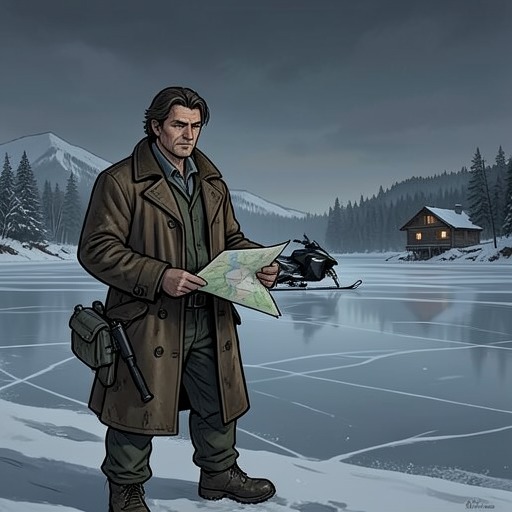
Never Cry WolfThe Government Radiogram Ten-Word Limit was a strict communications rule imposed on Farley Mowat during his assignment to make close contact with Gray wolf in the North. It was meant to keep departmental radio traffic brief and confined to important matters, but it also made it difficult for him to explain the practical obstacles facing him—and helped transform a field report into an interdepartmental mystery.
The Directive and Its Context
The limit arrived in Ottawa’s reply to Mowat’s request for new instructions after he found that he could not follow his original orders. The response, which took six days to reach him, insisted that his instructions were clear and that he should have encountered no difficulties if he followed them carefully. It repeated that commercial radio messages to the department must concern matters of utmost importance and must not exceed ten words. It also expected an interim progress report within two weeks and anticipated that Mowat would by then have established close contact with Gray wolf.
The instruction came from a department already under pressure to investigate claims that wolves were killing the deer. Its chief had described complaints from members of Parliament, hunting and fishing clubs, and ammunition manufacturers, while the department’s public position promised a full-scale investigation. Against that background, the demand for a short progress report was clear; the rule governing its transmission, however, left little room to explain why the assignment was proving difficult.
Enforcement in the Field
The message did more than set a word count. Ottawa emphasized that the restriction applied to departmental radio messages, repeated the ten-word maximum, and warned that the cost of the radiogram would be charged against Mowat’s salary. Its language treated economy and brevity as requirements even when the field situation itself was complicated. The warning about the expense made the policy’s consequence personal: communication with headquarters could directly reduce the employee’s pay.
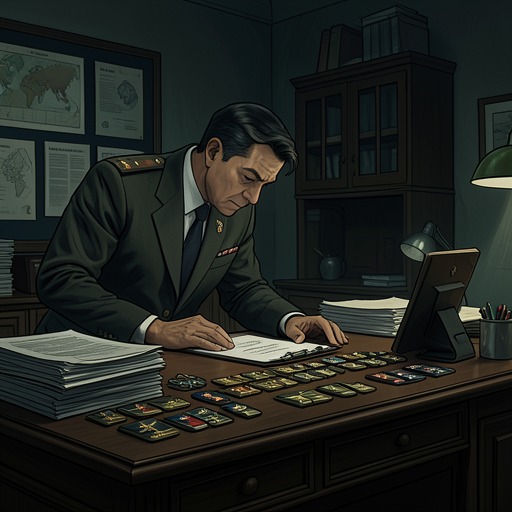
The exchange also reflected the larger bureaucratic culture Mowat had encountered on arriving in Ottawa. During orientation, he had found a hierarchy that demanded deference and produced a stream of memos and procedures. The radiogram directive carried that administrative discipline into the field: rather than adjust the instruction to the circumstances he reported, the department reiterated the rule and treated the difficulty as a failure to follow clear orders.
The Ten-Word Message and Its Aftermath
With no useful response to his predicament, Mowat later tried to reach Ottawa by radio from the North. His low-powered set unexpectedly made contact with an amateur operator in Peru. Because their English and Spanish were both imperfect, it took time for them to communicate; the operator initially thought Mowat was near Tierra del Fuego. Mowat kept the message to ten words, following the department’s warning, and asked the operator to send its substance commercially to Ottawa.
The effort at brevity did not make the message clearer. It was delivered not to Mowat’s department but to the Department of External Affairs, where officials could not make sense of it. It appeared to have come from Tierra del Fuego and to be written in code, prompting hurried inquiries that included the Ministry of Defense and a search for a Canadian agent in the Cape Horn region. The confusion was eventually traced to the message’s signature, VARLEY MONFAT: a secretary at External Affairs mentioned the case to a senior official in Mowat’s department, who recognized the corrupted name.
Bureaucratic Irony
The rule’s effect is especially striking beside Mowat’s first progress report. That report was written out by hand and proved completely illegible to its readers in Ottawa; instead of prompting questions, its unreadability was taken as evidence that it must be highly erudite. Mowat later learned that the report remained on file and was consulted by government specialists as authoritative material on Gray wolf. In this account, formal communication can fail in opposite ways: a message shortened to the prescribed ten words breeds suspicion, while an unreadable report acquires authority because its readers mistake obscurity for expertise.
The episode gives the ten-word limit a significance beyond a communications instruction. It exposes the distance between administrative expectations and field conditions, and shows how a rule designed to constrain messages can compound the very problem a message is meant to solve. The limit did not prevent communication; it narrowed it until the attempt to report difficulty became another difficulty in its own right.