Homo bureaucratis
Never Cry WolfHomo bureaucratis is Farley Mowat’s satirical conception of the bureaucrat as a distinct, maladaptive type of human being. It begins as the intended subject of Never Cry Wolf, with the wolf meant to serve as a foil; the book’s eventual turn toward the animal makes bureaucratic authority both the opening target of the satire and the system that sends Mowat north to investigate it.
Identity and Conception
Mowat describes Homo bureaucratis as a person enclosed by convention, devoted to minor particulars and obscurity, yet convinced of having exclusive access to truth and the right to judge human affairs. The deliberately pseudo-taxonomic name makes bureaucracy seem less like a job than an acquired human type: its members’ habits of mind shape what they recognize as knowledge and who may claim authority. The satire is aimed not simply at administrative inconvenience but at the confidence with which procedure-bound officials present their own narrow view as definitive.
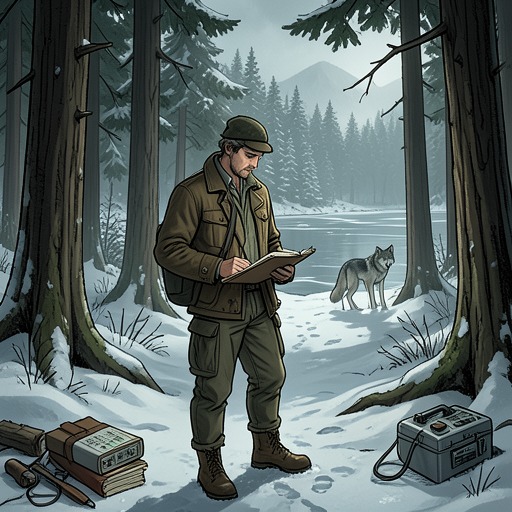
That conception initially gave the book its organizing purpose. Mowat set out to satirize the bureaucrat, intending that the wolf would function mainly as a counterpoint through which the human institution could be exposed. But his interest in bureaucratic foolishness diminished as he became more absorbed in the animal. The wolf consequently outgrew its proposed supporting role, and Never Cry Wolf became a plea for understanding and preserving an animal being driven toward extinction by human hostility. The change in emphasis does not erase Homo bureaucratis; it repositions the figure within a larger criticism of human claims to mastery.
Professional and Administrative Habits
The bureaucratic outlook appears alongside Mowat’s account of professional science. As he entered adult life, he felt pressure to specialize in order to succeed as a biologist, although his own preference was to study living animals in their habitats. He contrasts that interest with academic practices increasingly oriented toward statistical and analytical work, in which living experience could be reduced to material for calculation. This contrast broadens the satire: narrowness is not confined to government offices but can also enter the production of professional knowledge.
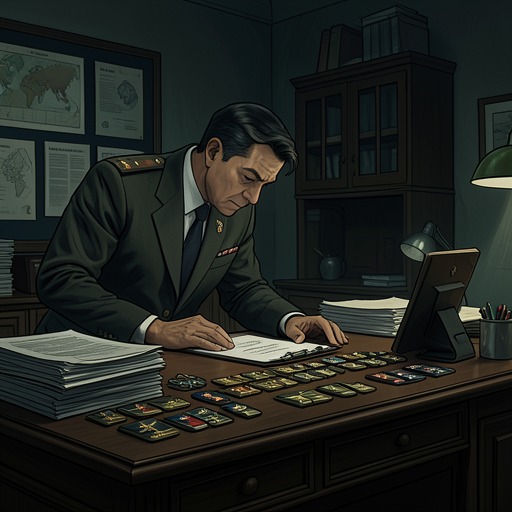
In Ottawa, the Wildlife Service’s orientation presents administration as an ordered hierarchy of offices, records and rank. Mowat’s account emphasizes the formality of the process and its effect: rather than inspiring devotion to the work, the bureaucratic environment deepens his disenchantment. An encounter over how to address the Deputy Minister makes rank a practical discipline. After Mowat uses an ordinary form of address, his escort privately instructs him to use an official title, having first checked that no one else can overhear. Authority is thus maintained not only through commands from above but through anxious self-monitoring among subordinates.
The system’s military titles give that hierarchy a conspicuous ceremonial language. Staff members sign memoranda with ranks, even when they have had to invent a suitable one. A junior employee’s irreverent self-description as an acting lance-corporal is followed by his reassignment to Ellesmere Island, where he is to study the nine-spined stickleback. The episode makes administrative discipline legible through a concrete consequence: levity has a cost, and professional placement can serve as punishment.
The Lupine Project and Official Truth
The wolf assignment brings this satirical conception into contact with public policy. Before Mowat goes into the field, he encounters a formal list of the project’s requirements, prepared in five copies and bearing the imposing title Desiderata for the Lupine Project. Its ceremony contrasts with the uncertainty of the problem it is supposed to address. The assignment is presented not as an open inquiry but as an urgent task already defined by official and public concern.
The briefing explains how that concern has acquired political force. The Department has received thirty-seven memoranda from members of Parliament in a year, while Fish and Game clubs and ammunition manufacturers support complaints that wolves are killing the deer. The account ties the public claim to interests with a stake in hunting and ammunition, rather than treating it as detached evidence. A predecessor had offered a contrary explanation: hunters outnumbered deer by about five to one. After the Minister repeated that explanation in Parliament and faced a hostile response, the predecessor retired, and the government publicly promised an investigation into wolf-caused losses.
Mowat is then told that the wolf is his problem and ordered into the field. The sequence reveals the gap between investigation and conclusion: the department’s declared purpose is to investigate, yet political pressure has already organized the issue as a crisis requiring action against the wolf. Homo bureaucratis names the mindset behind that gap, in which official statements, titles and administrative forms can acquire the force of truth before the underlying claim has been tested. The project’s formal preparation therefore supplies comedy while also establishing the stakes of Mowat’s inquiry.
Narrative Role and Significance
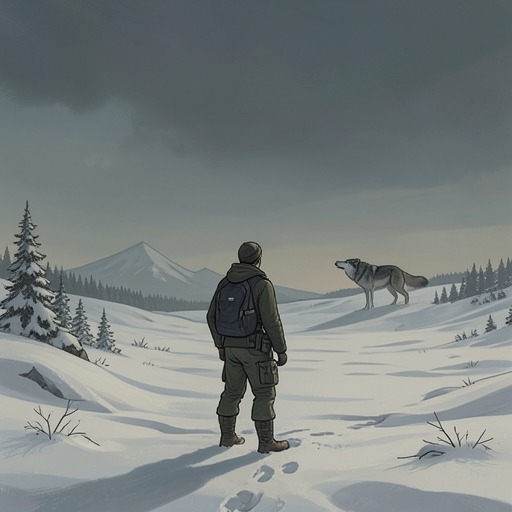
Homo bureaucratis changes function as the book changes direction. At first it is the intended central subject; later, it becomes the institutional foil against which the wolf’s independent importance emerges. Mowat’s stated shift from satire to a plea for preservation makes the animal more than an instrument for ridiculing officials: it takes over the narrative’s attention and moral purpose. The bureaucrat remains significant because the initial assignment shows how human institutions can frame a species as a problem before field observation has settled what it does.
The resulting critique is not simply that administration is ponderous. It is that procedure and hierarchy can narrow inquiry, reward compliance, and make politically convenient explanations appear authoritative. Mowat’s assignment begins inside that machinery—with memoranda, titles and a formally prepared project—but its declared object is an animal that the original plan had treated as secondary. The contrast gives Homo bureaucratis its lasting role in the book: it represents human confidence in managed knowledge, while the narrative’s turn toward the wolf challenges the assumption that official judgment is the only legitimate account of the natural world.