Mike
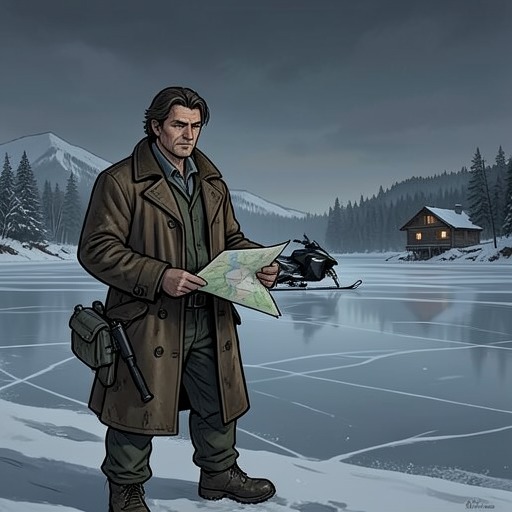
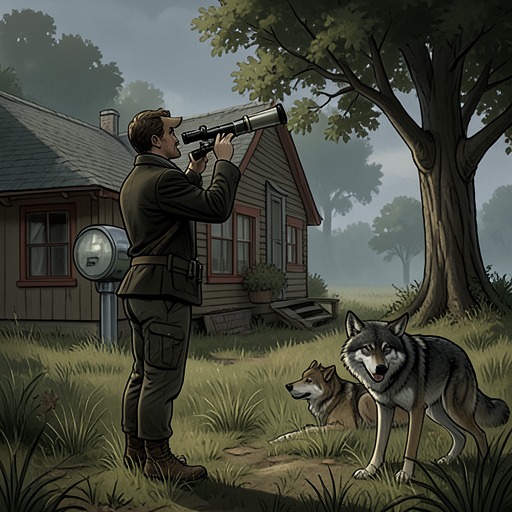
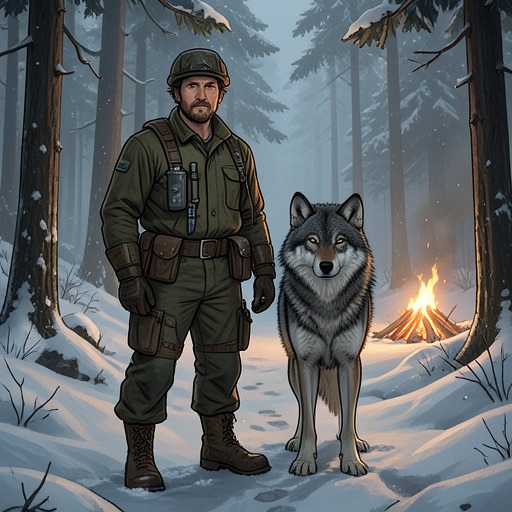
Never Cry WolfMike is the sole human inhabitant of a region of roughly ten thousand square miles, apart from a small community living seventy miles to the north. A trapper with a cabin a few miles from the lake where Farley Mowat arrives, he becomes the researcher’s indispensable guide to the terrain and to its human and animal life. Mike’s wary first response to the unexplained aircraft gives way to a practical partnership, but his most consequential role is as a witness whose candid account of trapping overturns the blame assigned to wolves.
Identity and First Encounters
Mike owns a team of dogs and lives in a modest cabin built from poles and roofed with decaying caribou hides. He is the only local human presence available to Mowat as a regular companion and source of assistance. The isolation that makes Mike an ideal contact for a study of wolves also means that Mowat’s arrival is an extraordinary interruption in his world.
In his eighteen years, Mike had never known a plane to land in his part of the Barren Lands and had seen only a few pass high overhead. The aircraft that placed Mowat and a large pile of equipment on the middle of the lake was neither seen nor heard by him. At first he kept his distance and carried a rifle, entertaining a supernatural explanation for the stranger’s appearance. After Mowat introduced him to wolf-juice, Mike put the rifle away. The shift is small but establishes the practical, wary pattern of their relationship: an unfamiliar situation is met cautiously, then reassessed through experience.
Mike leads Mowat to his cabin on the first night. The two make an arrangement for three months’ lodging and Mike’s services as guide and general assistant. Although Mowat has official permission to hire local help only within a very small monthly allowance, he gives Mike an official ten-dollar IOU. He considers the payment generous by prevailing rates and justifies it partly by the risk that, without Mike’s help, the department could lose about four thousand dollars’ worth of equipment when the lake ice melts. Mike also provides his dog team to move the supplies. Mowat later suspects that Mike may not have fully understood the implications of the bargain, leaving an element of uncertainty in a working relationship founded on unequal access to bureaucratic terms.
Guide, Interpreter, and Observer
Mike’s assistance extends beyond transport and lodging. He helps Mowat communicate with Ootek, his cousin, when the two men first meet. During Mowat’s mouse-diet experiment, Mike returns with Ootek, who becomes a close companion and valuable collaborator in the wolf research. Mike’s role as interpreter makes him a bridge between the researcher and Ootek’s knowledge, though he does not himself share Mowat’s scientific investment. Mowat acknowledges that he never succeeded in making Mike understand the nature and importance of the research.
That difference does not prevent Mike from contributing to it. When Mowat describes unfamiliar wolves, Mike identifies them with a group he has seen repeatedly in Hidden Valley, three or four miles south. He describes two females, a male, and pups, and suggests that one female may be the mother of Angeline and the other her sister. He also says the group joins Mowat’s wolves in autumn before moving south. His observations supply a local history and seasonal context that Mowat’s own watching could not establish as readily.
Mike also provides a practical test of Ootek’s account of communication among wolves. Ootek says a wolf to the north has passed on news that caribou are moving south and indicates where they are. Mike accepts the information sufficiently to set out on a hunting trip, despite Mowat’s doubts. Three days later, Mike returns with venison and caribou tongues and reports finding the herd at Kooiak, about forty miles northeast of the cabin, where Ootek had said it would be. Mowat remains skeptical about the explanation, but the successful journey makes Mike’s willingness to act on local knowledge consequential rather than merely credulous.
In a separate encounter, Mike’s practical cooperation supports the expedition’s chance discovery of a pilot who has landed while prospecting. The pilot has not been sent to find Mowat, but agrees to carry news of the missing equipment back to his base. With Mike’s assistance, he uses the landing to refill his fuel tanks from drums carried in the aircraft. Mike’s work thus helps connect an isolated field camp to the distant department that has been searching for its missing researcher and supplies.
Caribou, Trapping, and the Hidden Scale of Hunting
Mike’s clearest revelation concerns the caribou. When Mowat questions the skeletons scattered around the cabin and across the tundra, expecting them to support the claim that wolves kill healthy animals, Mike explains that he has killed the caribou himself. He has fourteen dogs to feed, needs meat for himself, and kills animals whose carcasses can also draw foxes to traps. Skinny caribou are of little use to that system; large, fat animals are what he needs. Asked about the scale of his hunting, Mike estimates that he kills two or three hundred caribou a year, perhaps more.
He describes this as ordinary trapping practice, not a personal exception. Trappers need caribou to feed both themselves and their dogs; when they cannot find enough, they use fish, which he says leaves the dogs weak and unable to haul loads well. His matter-of-fact account makes visible the material pressures of a livelihood that depends on the herd, while also exposing the cost of that dependence. The caribou are not simply wildlife being depleted by wolves: they are food for people and working dogs, and bait that supports fox trapping.
Mowat sets Mike’s estimate against an Ottawa poll of trappers and traders in the winter range of the Keewatin caribou herd. The records say that respondents uniformly denied killing more than one or two animals a year and blamed wolves for killing deer in vast numbers. Mowat knows that there are eighteen hundred trappers in the relevant parts of Saskatchewan, Manitoba, and southern Keewatin. Even after halving both the number of trappers and Mike’s estimated annual kill, he calculates a total of 112,000 caribou killed by trappers each year. He cannot use that estimate in his reports without risking professional consequences, but Mike’s testimony reveals how far official answers diverge from hunting practice.
Relationships and Narrative Significance
Mike’s relationship with Mowat is built through work rather than easy intimacy. At first he is suspicious and taciturn; later he offers transport, shelter, interpretation, local sightings, and the results of a successful hunt. His reserve persists, and Mowat notes that he never fully understands the scientific project. Yet Mike’s knowledge remains essential precisely because it comes from sustained life in the region: he recognizes wolf groups, understands what caribou mean to dog teams and trapping, and is prepared to travel on a report whose reliability Mowat has not accepted.
His relationship with Ootek is familial, and his interpreting allows Ootek’s reports to enter the research narrative. Mike does not simply transmit those reports without judgment: his own decision to follow the caribou message gives it a practical consequence, while his account of the location they reach supplies a check on what Mowat regards as an improbable story. The partnership thus places scientific skepticism alongside local observation and experience, without making them interchangeable.
Mike’s account also complicates the public case against wolves. In Brochet, where people blame wolves for the collapse of caribou hunting, Mowat’s argument meets anger and disbelief. Against that accusation stands Mike’s estimate of his own kill and his insistence that other trappers follow comparable practices. His testimony does not by itself quantify every cause of the herd’s decline, but it demonstrates why blaming wolves alone is inadequate. As a character, Mike is both an ally in the field and an unvarnished witness to the human pressures that official explanations obscure; his practical candor changes the terms of Mowat’s investigation.