Mowat slides down the wolf-den dune
Never Cry WolfFarley Mowat slides down the wolf-den dune during his first close examination of the den at Wolf House Bay. The incident converts a planned scientific inspection into an undignified escape down loose sand; more importantly, the Keewatin Barren Lands Wolves respond to his intrusion with warning and watchfulness, not an attack. Mowat’s loss of control becomes a turning point in his effort to set aside the accepted story of wolves as savage killers and study what they actually do.
The Approach to the Den
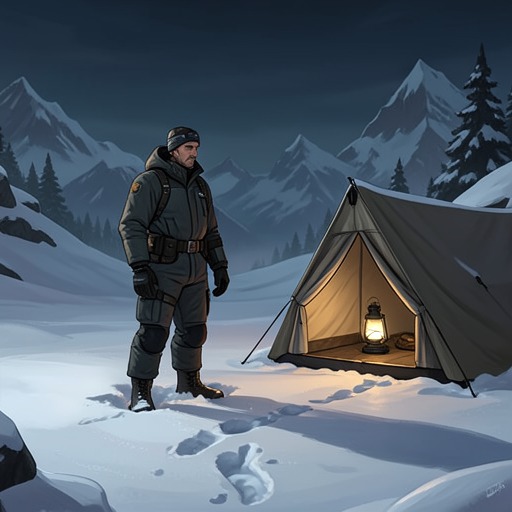
Mowat set out by canoe the morning after deciding to examine the esker and its presumed den. The rivers had cleared, while a stiff northerly breeze was driving the remaining lake ice offshore. On the leisurely journey to Wolf House Bay, he saw the spring Caribou migration moving north from Manitoba’s forested areas toward the tundra near Dubawnt Lake. No wolves appeared as he approached, and he supposed they were away hunting.
He landed carrying cameras, guns, binoculars, and other equipment, then climbed the shifting sand toward the spot where a female wolf had disappeared. Signs along the esker made clear that the place mattered to the pack: scats were scattered across it, and tracks formed paths in several places. The den itself lay in a small wadi and was so concealed that Mowat nearly walked past it. Small squeaks drew his attention to four young animals wrestling less than fifteen feet below him.
Their appearance unsettled his expectations before the encounter became dangerous. Their rounded bodies, short legs, small ears, and foxlike faces did not match his mental picture of a wolf. One pup noticed his scent, stopped its play, and looked up at him with smoky blue eyes. It began to waddle toward him, but paused to scratch at a flea. For a moment, the scene offered an intimate view of young animals at play rather than the menace Mowat had expected to find.
The Warning and the Slide
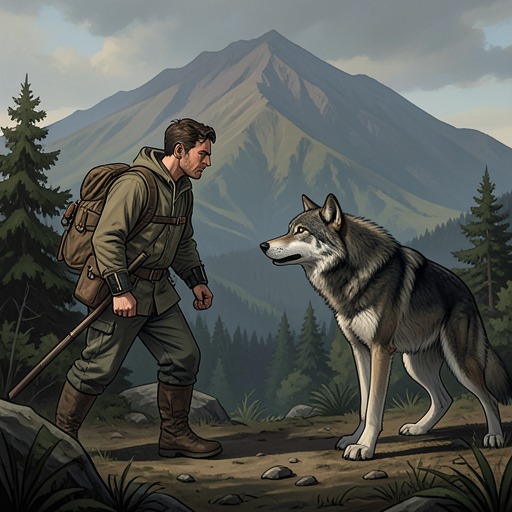
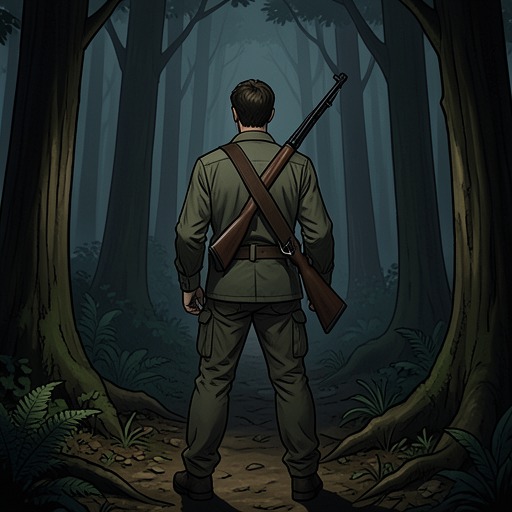
An adult wolf howled from no more than fifty yards away. Its call carried alarm and warning, and the pups immediately disappeared into the dark entrance of the den. Mowat turned toward the adult, lost his footing, and began sliding down the loose slope. His attempt to recover balance drove the rifle muzzle into the sand, where it stuck until the carrying strap pulled it free as he continued downhill.
He fumbled for his revolver, but cameras and equipment straps obstructed his efforts. The slope carried him past the den, over the ridge, and down the full length of the esker before he managed to stay upright. His loaded gear, which had accompanied him as he climbed to conduct a careful examination, instead made it harder to regain control. The sequence turns the observer’s equipment into part of the mishap: neither rifle nor revolver could help, and the scene’s immediate danger came from the loose ground beneath him.
When Mowat looked back, three adult members of the pack stood side by side above him, watching. Their presence made his tumble appear less like a narrow escape from attacking animals than a spectacle being observed by its audience. The contrast is central to the episode: a howl does sound the alarm at a human’s approach to the young, but the adults do not pursue him down the slope. They remain where they are and watch as he struggles to recover his dignity.
The Failed Threat
Embarrassment gave way to anger. Mowat raised the rifle, but sand clogged it, and pulling the trigger produced no result. The adults showed no apparent alarm until he began dancing in frustration, waving the useless weapon and shouting at them. They exchanged quizzical looks and withdrew from sight. His display of force therefore changes nothing about their behavior; the pack leaves without attacking, while Mowat is left with a disabled rifle and a fresh humiliation.
He also abandoned the inspection. He judged himself too unsettled to continue his scientific work and hurried back to Mike’s, where he sought comfort in a jar of wolf-juice. The episode’s comedy depends on that reversal: Mowat had gone to the den to establish authority through close observation, yet ended the day unable to control his footing, his equipment, or his temper. The animals’ restraint, rather than any physical confrontation, is what makes the encounter consequential.
From Humiliation to a Change of Method
That night, as his nerves and wounded vanity eased, Mowat reviewed the previous several days. On three occasions in less than a week, he had been at the mercy of animals he had been taught to regard as savage killers; each time, he had encountered restraint rather than an attempt to tear him apart. His visit to the den sharpened that contradiction because he had entered the immediate vicinity of young animals and, in doing so, could have seemed a direct threat to them.
Yet the evidence did not make him surrender his assumptions at once. He recognized that abandoning the accepted account of wolf character felt like a breach of scientific orthodoxy. The old view also lent his assignment an aura of danger and adventure, while accepting the animals’ actual behavior meant acknowledging that they had made him look foolish. The slide thus exposes more than a physical miscalculation: it makes Mowat’s pride and his reliance on inherited ideas part of the problem he must examine.
By the next morning, he had decided to approach the lupine world with an open mind and learn the Keewatin Barren Lands Wolves as they were, rather than as they were supposed to be. The decision gives the mishap its lasting significance. The den visit begins as an attempt to inspect and master a supposedly dangerous place; it ends with Mowat revising the terms of his observation. His loss of dignity does not prove the animals harmless in every circumstance, but their warning, withdrawal, and refusal to attack make the old myth harder to maintain.