Narrator–Ootek relationship
Never Cry WolfThe narrator–Ootek relationship is the book’s central partnership in learning about Wolves: Ootek brings knowledge grounded in his life and community, while the narrator tests observations through scientific study. Their collaboration changes the narrator’s understanding of animal behavior and Caribou ecology, but it is not a simple transfer of knowledge. Misunderstandings, different habits of inquiry, and one unexplained departure reveal the limits of what the narrator can know through Ootek.
The Partnership Begins
The narrator initially worries that Ootek’s decision to join him at the wolf-observation tent might make him an encumbrance. Ootek arrives with his sleeping robe, evidently prepared to stay. Those fears soon give way to a working companionship: Ootek knows a few English words taught by Mike, and his perceptiveness helps the two establish rudimentary communication. Although he does not necessarily understand the narrator’s scientific project, he appears to accept that it matters. The narrator later learns that Ootek is a minor shaman and that, on the basis of stories from Mike and what he observes, Ootek has taken him for a shaman of an unfamiliar kind. The narrator presents this as a possible explanation for Ootek’s interest, while acknowledging that he cannot be sure of Ootek’s motives.
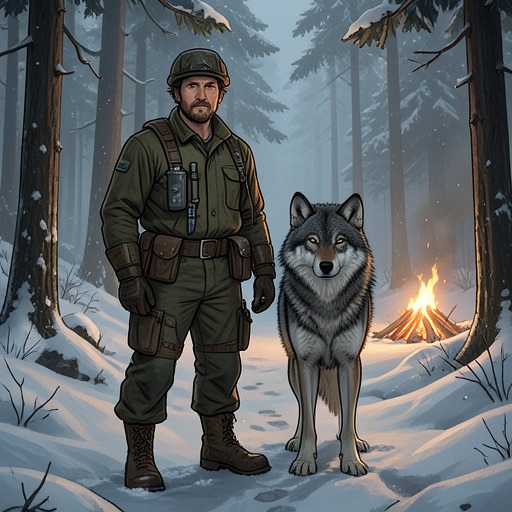
Ootek’s own interest in Wolves is personal as well as practical. His helping spirit is a wolf-being, and he regards Wolves as actual relations rather than as the feared creatures of accepted human opinion. He tells the narrator that, when Ootek was about five, his father—a respected shaman—left him at a wolf den for twenty-four hours. Ootek later recalled playing among the pups; the adult Wolves sniffed him but did not harm him. This childhood experience gives context to the ease with which Ootek speaks about Wolves, but the narrator does not treat the account as proof by itself. He says he found Ootek consistently right whenever evidence could be obtained to check his claims.
Knowledge Tested in the Field
The partnership develops through repeated exchanges between Ootek’s reports and the narrator’s attempts to verify them. Ootek tells him about the fishery in which Wolves catch fish; later, the narrator confirms Ootek’s account by watching Uncle Albert fish. He never sees Wolves catch pike, but, following Ootek’s description, tries the technique himself with a short spear. For the narrator, such instances make Ootek’s observations more than intriguing stories: they provide ideas that can be tested, sometimes with direct confirmation and sometimes with a practical imitation.
Ootek also describes Caribou and Wolves as so closely linked that they are almost one entity. He conveys this relationship through a traditional creation story in which Caribou are given as sustenance for people. The narrator identifies the tale as part of inland community folklore, but the point that changes his thinking is ecological as well as spiritual: Caribou, Wolves, and human survival belong to an interconnected system. Ootek’s account gives the narrator a perspective that his research must reckon with, rather than a claim he can simply accept without examination.
Their conversations have practical stakes. When Ootek reports that Wolves have passed news southward that Caribou are moving, and indicates how the information has traveled from one territory to another, the narrator is skeptical. Mike, by contrast, immediately prepares for a hunt. His response shows that Ootek’s reports carry consequences for people who depend on Caribou, even when the narrator has not yet decided what to believe. On another occasion, Ootek introduces the narrator to a family camped near a river crossing where Caribou pass. The family hopes to take enough animals to last through winter; Ootek asks to join the men’s hunt and asks the narrator to remain behind for a few days. The narrator agrees. Their association thus reaches beyond the observation tent and into the work and relationships of Ootek’s community.
A Different Account of Wolves and Caribou
Ootek patiently corrects the narrator’s assumptions about how Wolves hunt. He explains that healthy adult Caribou can outrun Wolves and that even young fawns are faster than all but the swiftest pursuers. Rather than routinely exhausting themselves chasing healthy animals, Wolves test herds for sick, wounded, or otherwise less capable individuals. When Caribou are plentiful, a rush can expose a vulnerable animal; when they are scarce, Wolves may cooperate in ambushes or relay a chase from one pursuer to another. The narrator comes to see Ootek’s explanation as evidence that Wolves help preserve the strength of Caribou herds, not simply destroy them.
That lesson sits uneasily beside official accounts of the declining herd. The narrator knows that 1,800 trappers worked across parts of Saskatchewan, Manitoba, and southern Keewatin within the herd’s winter range. In an official poll, trappers and traders had denied killing more than one or two Caribou a year while blaming Wolves for enormous losses. Using deliberately reduced estimates for both the number of trappers and Mike’s annual kill, the narrator calculates a total of 112,000 animals killed by trappers each year. He recognizes that the figure is too difficult to use in his reports, but Ootek’s account of predation helps him question the received explanation and the interests behind it. The narrator’s scientific training remains important to their partnership, yet Ootek’s knowledge directs him toward a different interpretation of the evidence.
The Limits of Inquiry
The partnership does not erase differences in what each man considers worth investigating. Ootek has eaten Caribou throughout his life; his mother pre-chewed the meat when he was a baby, and it has remained his staple food. Because it is so ordinary to him, he has never examined it analytically. The narrator, meanwhile, dissects Caribou and shows Ootek parasites and cysts, including a bladder cyst from the liver and worms taken from the lungs. As the explanations accumulate, Ootek becomes visibly distressed. He asks the narrator to stop and says that, if the information is true, he would have to eat fish like an otter or starve. The narrator recognizes belatedly that his technical explanation has threatened the everyday basis of Ootek’s life. This episode shows a cost of their unequal encounter: facts that are specimens for the researcher can unsettle the person whose food is under examination.
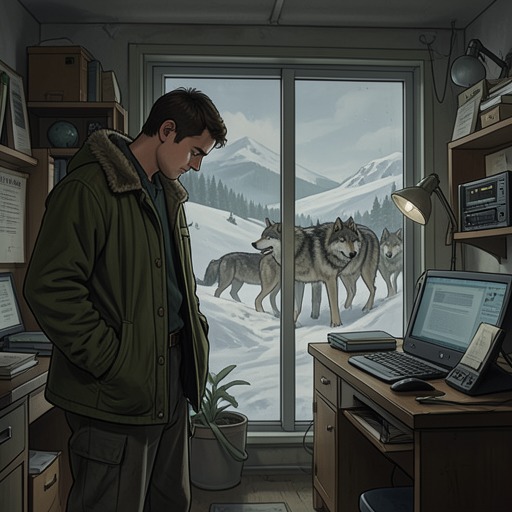
Ootek’s knowledge also challenges the narrator’s assumptions about ordinary social conduct. After the narrator observes unfamiliar Wolves visiting Angeline, he reports the meeting to Ootek, who is not surprised. Ootek compares the visit to people visiting other people; the narrator concedes that the comparison corrects his sense of what should seem strange. The moment condenses their broader exchange: Ootek does not merely supply information about animals but offers a frame that makes their behavior intelligible to the narrator.
An Unresolved Parting
Later, the narrator returns from searching for people whose camp has been abandoned and whom he never sees again. Ootek comes back the next day. When the narrator demands an explanation, Ootek asks detailed questions about pails, scats, and other particulars, but ultimately says that he cannot explain why the people left. The narrator describes this as the first time Ootek has failed him, and records that Ootek never supplied an answer. The scene does not establish that their partnership has ended, but it marks a boundary within it: Ootek’s patient instruction has not made every event available to the narrator, and their relationship cannot resolve every uncertainty. What remains is a collaboration in which trust and verification coexist with gaps—an exchange that has already altered how the narrator understands Wolves, Caribou, and the knowledge required to study them.