Ottawa
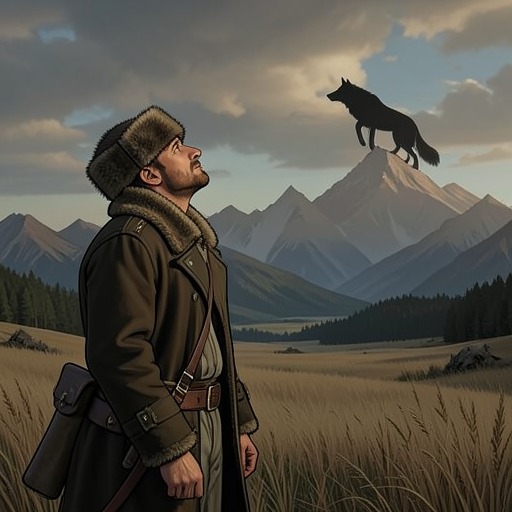
Never Cry WolfOttawa serves as the administrative center of the wolf investigation and as the point where field biology meets government policy. Farley Mowat arrives there under orders from the Dominion Wildlife Service, is initiated into its hierarchy, and receives an assignment shaped by political complaints about wolves. The capital is not the northern landscape he is sent to study; it is the institutional setting that frames the study, limits its communications, and reveals how official claims about wildlife can be made under pressure.
Arrival and Institutional Setting
Mowat's route to Ottawa begins with uncertainty about his place in the biological profession. While his fellow students establish themselves in specialized research posts, his preference for studying living animals in their habitat leaves him with no clear position in the emerging research marketplace. Government employment follows. One winter day, the Dominion Wildlife Service summons him to Ottawa at a salary of 120 dollars a month and directs him to report at once.
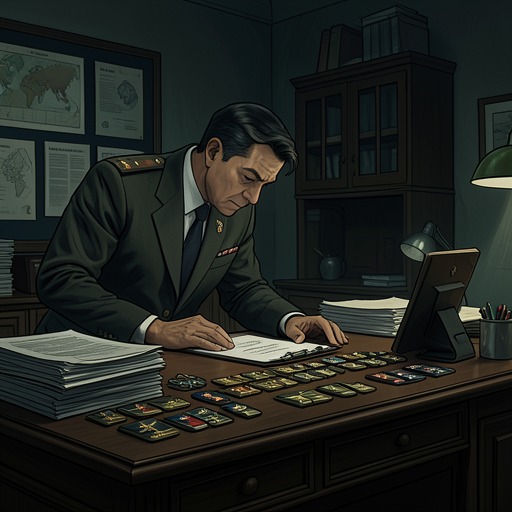
He arrives two days later and presents himself at the Wildlife Service's headquarters, a building he describes as a dingy labyrinth. The Chief Mammalogist, once his school friend, has become a figure of professional authority. In the days that follow, an orientation process introduces Mowat to a bureaucratic system whose procedures do little to strengthen his enthusiasm for the job. He comes away with the impression that its administrative hierarchy demands even more deference than the scientific one.
That hierarchy is made concrete through rules of address. After Mowat addresses the Deputy Minister as Mister, his escort hastily removes him and explains that the Deputy must be addressed as Chief, or by his Boer War title of Colonel. The episode establishes the difference between ordinary scientific standing and the formal ranks used in the department. Even the management of field supplies becomes an occasion for protocol: a Finance Department representative suggests reducing the allotment of government-standard toilet paper, and Mowat's attempt to suppress his laughter fails. The two senior officers present rise and leave without speaking.
The Wolf Assignment
The final briefing takes place in the office of Mowat's direct superior before he leaves for the field. His chief presents the investigation as a matter of national importance, citing thirty-seven memoranda sent to the department by members of Parliament during the preceding year. The complaints claim that wolves are killing the deer. Among those pressing the case are fish-and-game clubs and businesses connected to ammunition; the chief describes their interventions as civic concern, while the circumstances point to the interests gathered behind the demand for government action.
The briefing also recounts the fate of an earlier attempt to challenge that account. Mowat's predecessor had argued that deer were becoming scarce because hunters had increased until they outnumbered deer by about five to one. The Minister repeated the explanation in the House of Commons, where members denounced it; three days later, the predecessor retired from government service. The Minister then announced that the Department of Mines and Resources would investigate the alleged damage to deer by wolves. In Ottawa, the stated case for Mowat's assignment is therefore already entangled with a political reversal: contrary analysis has been publicly rejected, while an investigation is promised in terms that accept the accusation as the problem to be solved.
Files, Orders, and the Field Connection
Ottawa remains present in the northern assignment through the records Mowat has read and the orders he receives. Departmental files show that the fur-trading companies had been used to poll trappers and traders about the decline of the Keewatin caribou herd. The respondents denied killing more than one or two caribou each, while blaming wolves for enormous losses. In the field, Mike tells Mowat that he kills caribou to feed his fourteen dogs and himself, and that trapping requires killing many animals. Mowat combines that account with the figure of 1,800 trappers in the herd's winter range. Even after halving both the number of trappers and Mike's estimated annual kill, his calculation produces 112,000 caribou killed by trappers in the area each year. The contrast between the official poll and this encounter makes Ottawa's records part of the evidence under examination, not a neutral conclusion.
The same distance between departmental certainty and field conditions appears in the radio exchange. After difficulties in Churchill, Mowat asks Ottawa for new instructions. Six days later, the response insists that the original instructions are clear, limits commercial messages to ten words, demands an interim progress report, and expects close contact with wolves. It also charges the cost of the radiogram against his salary. The reply offers no practical resolution to the difficulties he has raised; instead, it restates administrative requirements and makes the communication itself another test of compliance.
Ottawa and Wildlife Policy
The book places these encounters within a wider policy record. Its account of wildlife governance describes governments responding to claims that wolves threaten game even when biologists offer contrary advice. In late 1972, Quebec's Minister of Fish and Game ordered a contest with a target of 5,000 dead wolves. Minnesota authorities proposed killing 200 wolves annually, while Ontario later revoked its provincial wolf bounty after persistent campaigning by the Ontario Wolf League. These actions do not all take place in Ottawa, but they clarify the national stakes surrounding the department's investigation: official policy can convert an accusation into organized killing, while resistance can sometimes reverse a government measure.
Ottawa's significance lies in this connection between evidence and authority. The capital houses the department that commissions the study, maintains files that can obscure as well as record human pressures on wildlife, and directs the researcher to produce findings under restrictive procedures. The irony is that an inquiry presented as a response to the wolf problem also gives Mowat a position from which to test the assumptions behind that problem. In the book's structure, Ottawa is both a departure point and a lens: it shows how distant institutions define a field question before the observer reaches the animals themselves.