Wolf–caribou relationship
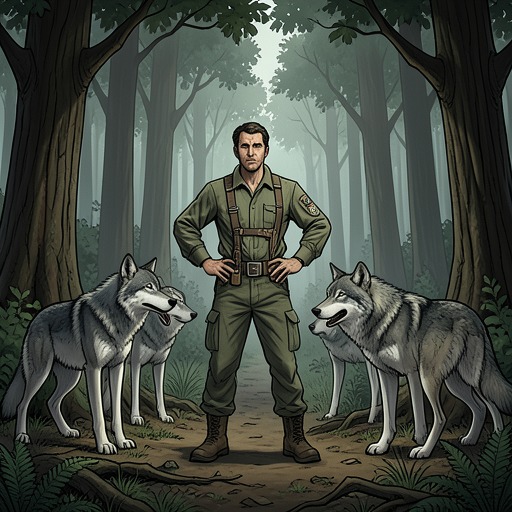
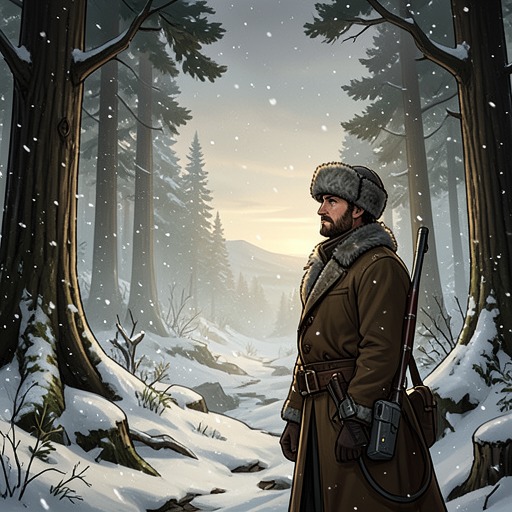
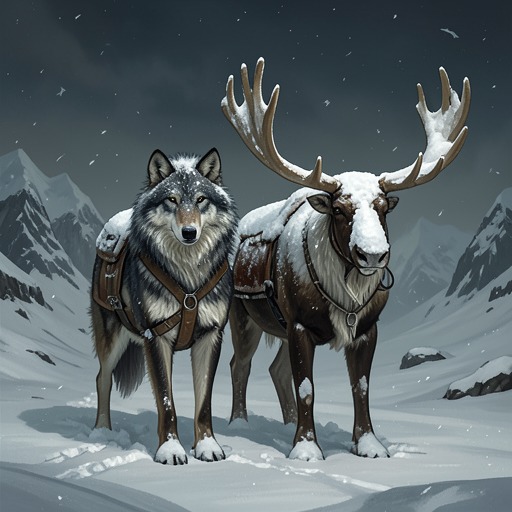
Never Cry WolfThe Wolf–caribou relationship is both a feeding connection and a contested explanation for the decline of the Caribou herds. In the northern Barrens, the narrator’s observations reveal a more flexible ecology than the official accusation that Wolves were chiefly responsible for falling Caribou numbers. The relationship changes with season, includes forms of selection rather than indiscriminate slaughter, and is entangled with human hunting whose scale was obscured in government reports.
The official explanation and the seasonal separation
The Caribou were the only large herbivores found in significant numbers across the Arctic Barren Lands. Their numbers had fallen catastrophically over the three or four decades before the narrator’s expedition. Information collected by government agencies from hunters, trappers, and traders appeared to implicate Wolves. The narrator understood that his employers expected research on Wolves and Caribou to furnish decisive evidence against Wolves and support a general campaign to eradicate them. Yet diligent searching had not produced the evidence that expectation demanded.
Seasonal movement made the problem immediate at Wolf House Bay. Toward the end of June, the last migrating herds passed the bay and headed two or three hundred miles north, into the high Barrens where they would spend the summer. The Wolves the narrator was watching had hungry pups to feed, but the Caribou were gone. Their absence prompted a basic ecological question: what sustained the family when its most conspicuous large prey had left the area? The answer could not be a year-round dependence on Caribou alone.
A relationship within a wider food web
The narrator’s answer emerged from watching Angeline hunt. As small rodents became abundant in the mossy country, he saw her make repeated pouncing movements in the grasses and eventually identified mice as her prey. She ate about twenty-three mice during the observed bout. What first seemed like opportunistic snacking became evidence that the Wolves at Wolf House Bay, and perhaps other Barren Land Wolves raising families beyond the summer Caribou range, lived largely or almost entirely on mice.
The narrator did not see how the catch reached the pups until Ootek explained that adult Wolves carried it back in their stomachs and regurgitated it at the den. His account also widened the picture beyond mice. Ootek said Wolves ate many ground squirrels and sometimes appeared to prefer them to Caribou. He described Wolves driving spawning Northern pike into narrower, shallower channels, where a fish attempting to escape could be caught; he had once watched a Wolf take seven large pike in less than an hour. Wolves also caught suckers during spawning runs and small Arctic sculpins along the shore. The narrator later watched Uncle Albert catch sculpins, while his own scat analysis found rodent remains in about 48 percent of samples, alongside Caribou bones and hair and a few bird feathers. This varied diet places the Caribou connection within a seasonal food web: it is important, but it is not the Wolves’ only means of living.
A traditional account of reciprocal dependence
Ootek’s account of the Caribou–Wolf connection gave it a meaning beyond prey and predator. In a traditional story he related, a woman drew the animals from the earth, with Caribou as the greatest gift because they would sustain people. The people hunted the large, fat Caribou, leaving the weak and sick. In time, the weak and sick became more numerous; the sky god then sent the spirit of the Wolf to instruct Wolves to eat the small, sick, and weak Caribou, leaving the land to the strong. The story presents the two animals as bound together: Caribou feed Wolves, and Wolves help keep Caribou strong.
The narrator recognized in this story an account of natural selection, but initially doubted its ecological claim. He could not easily accept that powerful Wolves would restrict their hunting to sick or infirm Caribou when apparently they could choose the fattest animals. His skepticism rested, in part, on the many skeletons of large, apparently healthy Caribou he had seen near Mike’s cabin and across the tundra. The conversation that followed redirected his attention from Wolf predation to human use of the herds.
Selective hunting and competing pressures
Mike explained that he had killed those Caribou. He kept fourteen dogs, needed roughly two or three Caribou a week to feed them, and also had to feed himself. He placed traps around carcasses to catch foxes drawn to them, making large, fat Caribou more useful to his livelihood than thin ones. He estimated that he killed two or three hundred Caribou, perhaps more, in a year. He also said that trappers generally had to do the same, since dogs fed on fish became weak and could not haul loads effectively.
The scale of that account clashed with information previously gathered for Ottawa. The narrator knew that eighteen hundred trappers worked in parts of Saskatchewan, Manitoba, and southern Keewatin that formed the herd’s winter range. In a government poll conducted through fur-trading companies, trappers and traders had uniformly said they killed only one or two Caribou a year and had blamed Wolves for slaughtering thousands. Using deliberately reduced figures—half the trappers and half of Mike’s reported annual kill—the narrator calculated an estimated 112,000 Caribou killed by trappers in the area each year. This was his extrapolation from Mike’s testimony, not a verified census. He judged that he could not use the figure in his reports, and set aside the disclosures as hearsay rather than evidence of the kind his assignment required.
His observations of Wolf hunts offered another challenge to the image of Wolves as indiscriminate killers. In the hunts he later watched, from one to eight Wolves trotted among dispersed Caribou while the herds often appeared unconcerned. A Wolf, or several, might make a short approach toward an animal; if the Caribou ran well and seemed in good condition, the Wolves watched it go and turned away. The Wolves seldom tested prime bucks at the peak of summer condition, not because their antlers made them dangerous, but because the Wolves had little chance of catching them. Mixed herds of does and fawns drew more interest, since young animals were more likely to include injured, malformed, or otherwise inferior individuals. The account thus connects predation to the prey’s condition and the practical limits of pursuit, rather than to an unbounded appetite for killing.
Ecological meaning and evidentiary limits
The relationship presented here is neither simple harmony nor a single-cause explanation of herd decline. Ootek’s story expresses a reciprocal ecological principle; the narrator’s field observations show both seasonal dependence on alternative foods and selective testing of Caribou; Mike’s account identifies a substantial competing source of mortality. Together, these strands make the Caribou decline harder to attribute to Wolves alone. They also expose a gap between local hunting practice and the claims trappers made to government investigators.
The evidence remains uneven. The mice, sculpins, and hunting behavior were observed in the field, while Ootek’s accounts of pike fishing and the traditional story were reports the narrator received from others. Mike’s annual kill was his own estimate, and the 112,000 figure was the narrator’s cautious calculation from that estimate and the number of trappers he knew to be in the region. He did not present it as a confirmed total. The force of the relationship therefore lies not in a single conclusive count, but in the contrast between the expected story of Wolf-caused collapse and evidence of seasonal dietary flexibility, prey selection, and consequential human hunting.