
Independence Against Care
Never Kiss a Man in a Christmas JumperThis thread traces the recurring struggle between Marco’s need to reclaim autonomy and Maggie’s instinct to protect him during his recovery.
increasing Bearing strength in each event
 decreasing
Bearing strength in each eventdecreasingThe Checklist Dispute
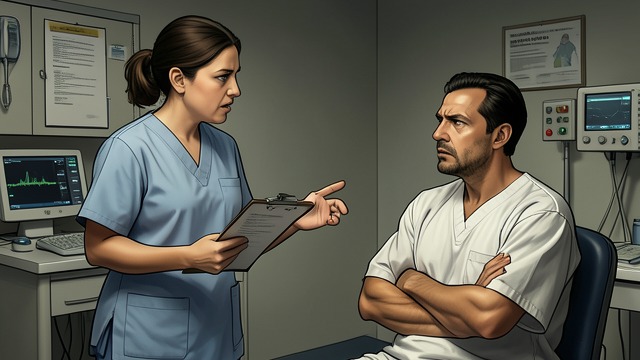
Care begins with friction
Instructions and frustration
A nurse gives Maggie an extensive account of Marco’s medication, equipment, and warning signs. Marco hears the instructions as if he were being discussed rather than addressed, and his frustration grows while Maggie tries to absorb details she never expected to manage.
When the nurse continues, Marco cuts him off and tells him to leave. The outburst is less about the individual nurse than about Marco’s sudden loss of control over his own body and surroundings.
A boundary from Maggie
Maggie rebukes Marco for being rude and makes clear that his injury does not excuse treating other people badly. She then sees the shame beneath his irritation when the nurse has gone and asks how he is feeling.
Marco admits that he feels terrible and apologizes. Their disagreement creates a first boundary for the arrangement: Maggie will care for him, but she will not silently accept his anger as part of the job.
The Coat Argument
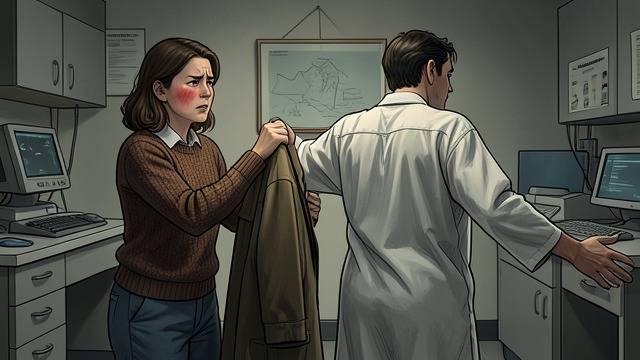
Help can feel like control
A small task with larger stakes
Before they go out, Maggie tries to help Marco into his coat. For her, the gesture is practical: he has a broken leg, the weather is cold, and she is trying to keep him safe.
For Marco, the assistance makes him feel like a helpless child. He snaps that his arms work perfectly well and orders her to leave him alone, turning a routine moment into another test of how much independence he can retain.
A necessary retreat
Maggie backs off rather than forcing the help on him. Marco recognizes afterward that his anger was misdirected, but his physical attraction to her and embarrassment at his dependence make his self-control harder to maintain.
The incident teaches them that care cannot be measured only by good intentions. Marco needs to be asked before Maggie takes over, and Maggie needs to know when stepping back is safer for their relationship than proving she can manage everything.
The Wheelchair Bargain
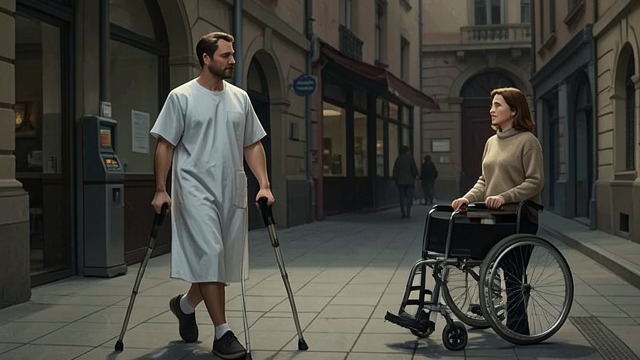
Pride meets practical risk
A public test of strength
Marco wants to abandon the wheelchair and rely on crutches, believing that constant sitting will weaken him. Maggie expects that pain, alcohol, and fatigue will make a long wedding evening dangerous, so she brings both options despite his objections.
The disagreement is not simply about equipment. Marco wants to be treated as capable, while Maggie has seen how easily his determination can outrun his healing body.
A compromise in motion
Maggie persuades him to use the chair for the entrance and keeps the crutches available. Once inside, Marco proves he can move about, talk with guests, and even entertain children, but the wheelchair remains a fallback rather than a verdict on his strength.
Their compromise lets Marco participate without pretending that he has fully recovered. It also shows Maggie adjusting her protective instincts: she gives him room to choose, while still making sure that practical support is within reach.
The Shower Negotiation
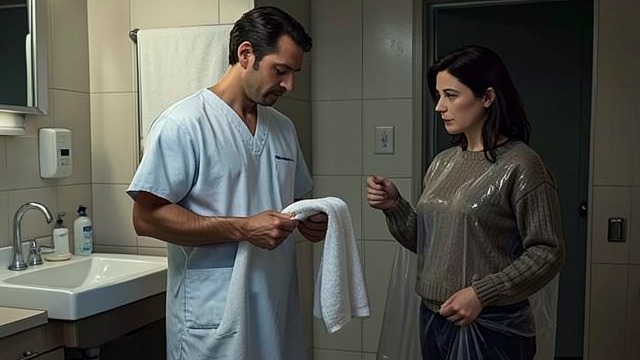
Privacy as a measure of recovery
A request for ordinary life
When the regular nurse cannot come, Marco asks Maggie to take him to his flat so he can shower and wash his own hair before his lecture. He is eager to manage a familiar task without assistance and to recover some privacy.
Maggie considers the schedule and the risk to his cast. She agrees to help improvise a waterproof covering, but their preparation makes her newly aware of his body and of her own attraction, adding emotional tension to an otherwise practical negotiation.
Progress with limits
The improvised protection lets Marco attempt the shower, but it does not make him fully independent. Maggie remains nearby and responsible for transportation, while Marco must still rely on crutches and follow restrictions.
The episode marks progress because he asks for a specific kind of help instead of rejecting all help. It also demonstrates that respecting his autonomy can mean enabling a manageable risk rather than keeping him sheltered from every difficult task.
The Dangerous Departure

Independence taken too far
A patient leaves care
After waking in hospital and discovering that Maggie has disappeared, Marco signs himself out against medical advice. Though still injured, he hires a taxi and searches for her through the cold, eventually making his way to the riverside bench where she has gone to think.
His decision resembles his earlier resistance to dependence, but the stakes are now much higher. The broken leg and newly broken arm make the journey dangerous, and he is no longer proving that he can handle a small task; he is risking further harm to confront the person he loves.
Recklessness reveals need
Maggie finds him shivering in a hospital gown and helps him back onto the bench. She wraps him in her coat and scarf, furious and frightened at what he has done, yet unable to ignore the vulnerability beneath his stubborn arrival.
Marco’s escape from care exposes the difference between autonomy and denial. He can choose to leave the ward, but he cannot make the consequences disappear. His need to speak with Maggie finally outweighs his desire to appear invulnerable.
Marco’s first evening in Maggie’s home
The morning after Marco’s first night at Maggie’s home
At Gaynor Cuddy’s wedding, during Marco’s early recovery
The morning of Marco’s Law Institute lecture
Christmas Day, after Maggie has left Scotland
